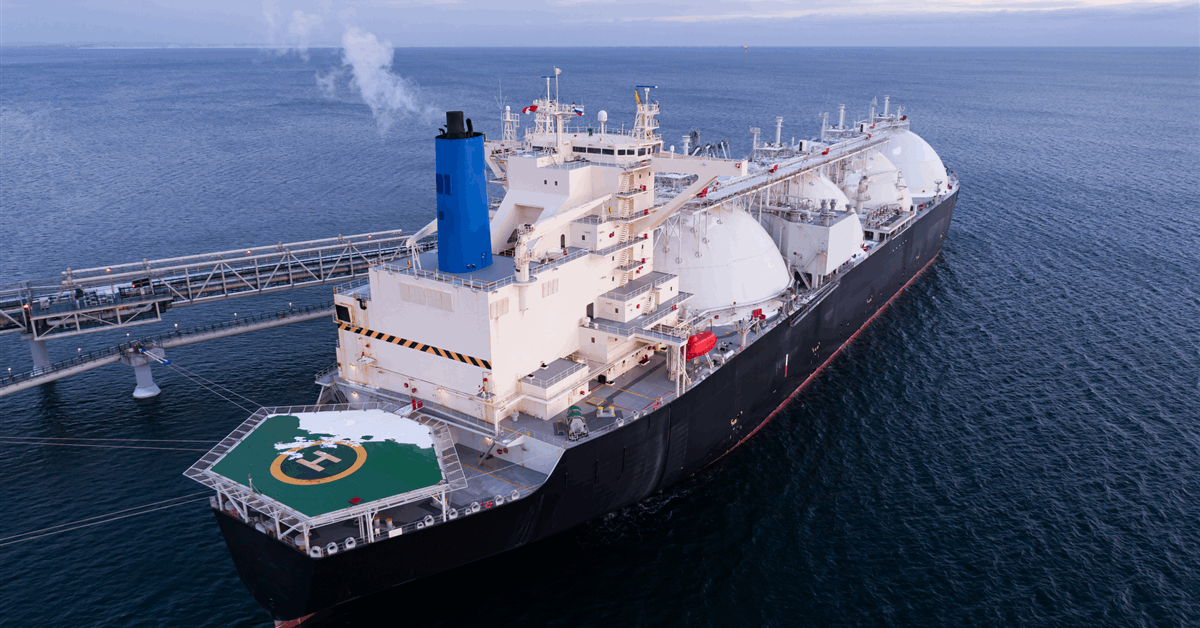
The global energy landscape continues its dynamic evolution, with liquefied natural gas (LNG) increasingly cementing its role as a cornerstone of energy security and transition. Against a backdrop of volatile crude markets, the recent long-term supply agreement between Amigo LNG and Macquarie Group’s Commodities and Global Markets division stands out as a significant development, underscoring the enduring demand for reliable gas supply. This 15-year commitment for 0.6 million metric tons per annum (mtpa) of LNG, slated to commence in the second half of 2028 from Amigo LNG’s ambitious Mexican west coast facility, offers critical insights for investors navigating the complex energy sector.
Strategic Validation and Market Positioning
The partnership with Macquarie, a global powerhouse in commodities and financial services, represents a powerful validation of Amigo LNG’s project fundamentals. For investors, Macquarie’s involvement signals confidence in the project’s viability, execution, and long-term value proposition. Amigo LNG, a joint venture between Texas-based Epcilon LNG LLC and Singapore-based LNG Alliance, is strategically positioning its 7.8 mtpa export terminal in Guaymas, Sonora, on Mexico’s Pacific coast. This location offers a distinct advantage, providing direct access to Asian markets, which are poised to drive a substantial portion of future LNG demand growth. While financial terms remain undisclosed, the sheer duration and volume of this agreement provide a predictable revenue stream for Amigo LNG, de-risking the project’s commercial profile and making it a more attractive infrastructure play for long-term investors. The targeted start date of H2 2028 aligns with projected periods of tightening global LNG supply, further enhancing the deal’s strategic timing.
Project Execution: Scale, Innovation, and Risk Mitigation
Beyond the commercial agreement, Amigo LNG is making substantial strides on the project execution front, notably with the award of an engineering, procurement, and construction (EPC) contract to Drydocks World for a floating LNG (FLNG) liquefaction facility. This contract encompasses the conversion of floating storage units (FSUs) and the construction of a new-build FLNG facility, which is designed to boast a production capacity exceeding 4.2 mtpa – a scale described as the world’s largest FLNG facility. This innovative approach harnesses key advantages over traditional onshore terminals, including faster project schedules, reduced environmental footprint, and the ability to conduct rigorous testing and pre-commissioning in a controlled fabrication yard environment in Dubai. For investors, the adoption of an FLNG solution signals a commitment to efficient capital deployment and reduced project risks, critical factors when evaluating large-scale energy infrastructure investments. The integration of process modules and systems for high-capacity production further underscores the project’s technical ambition and potential for robust operational performance.
Navigating Volatility: LNG’s Resilience Amidst Crude Swings
While the long-term outlook for LNG remains robust, the broader energy market continues to present a mixed picture. As of today, Brent crude trades at $90.38 per barrel, reflecting a sharp 9.07% decline from yesterday’s close, with a day range between $86.08 and $98.97. Similarly, WTI crude has seen a significant drop to $82.59, down 9.41%. This recent bearish sentiment follows a notable trend, with Brent having shed $20.91, or 18.5%, from $112.78 on March 30th to $91.87 just yesterday. Such volatility inevitably prompts questions from our investor community, including the pressing “what do you predict the price of oil per barrel will be by end of 2026?” and inquiries about specific integrated energy players like Repsol. While crude oil prices can influence broader energy sentiment, long-term LNG contracts like the Amigo-Macquarie deal often offer a degree of insulation from immediate crude price swings, providing more predictable cash flows for investors. This distinction is crucial for portfolio diversification, especially for those seeking exposure to growth in global gas demand rather than direct crude price speculation.
Forward Outlook: Upcoming Events and Energy Security Imperatives
Looking ahead, the energy market will be shaped by a series of critical events in the coming weeks. The OPEC+ Joint Ministerial Monitoring Committee (JMMC) meets today, April 18th, followed by the full Ministerial Meeting tomorrow, April 19th. These gatherings are pivotal, as “What are OPEC+ current production quotas?” remains a top concern for our readers, directly impacting global crude supply and price stability. Weekly data releases, such as the API Weekly Crude Inventory on April 21st and the EIA Weekly Petroleum Status Report on April 22nd, will offer fresh insights into demand and supply dynamics. While these events primarily influence crude markets, their outcomes contribute to the overall energy investment climate, subtly influencing capital allocation across the sector. The Amigo LNG project, with its 15-year horizon and strategic focus on meeting increasing energy needs in demand-heavy regions, aligns perfectly with the long-term imperative for diversified and secure energy supplies. As global economies continue to seek reliable and cleaner-burning fuels, LNG projects like Amigo’s are well-positioned to capitalize on this enduring structural demand, regardless of short-term fluctuations in the crude market.


