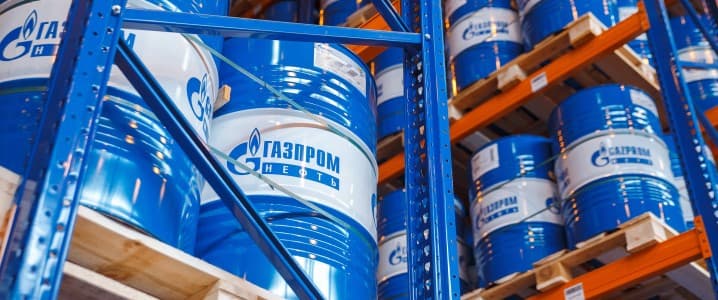
Gazprom Neft’s first-half financial results paint a stark picture of the challenges facing Russian oil and gas producers. The company reported a significant halving of its net profit to 150.5 billion rubles, a 54% year-on-year decline, primarily squeezed by an intensified domestic fiscal burden and adverse ruble exchange rates. This deep dive into the numbers, contextualized by OilMarketCap’s proprietary real-time market data and forward-looking event calendar, offers investors a unique perspective beyond the headlines, revealing the complex interplay of internal pressures and global market dynamics impacting Russian energy giants.
Fiscal Headwinds and Currency Pressures Decimate Earnings
The pronounced decline in Gazprom Neft’s profitability underscores the formidable financial gauntlet Russian energy companies now navigate. The 54% slump in net profit to 150.5 billion rubles for the first half was a direct consequence of increased export duties and higher mineral extraction levies, which collectively eroded margins across both upstream and refining segments. Top-line performance also suffered, with revenue slipping 12% year-on-year to 1.775 trillion rubles. This revenue contraction, coupled with the elevated tax burden, led to a substantial 27.6% drop in adjusted EBITDA, settling at 510.1 billion rubles. These domestic fiscal measures compound the existing structural drag from Western sanctions, which continue to force Russian producers to sell crude and refined products at discounted rates to alternative markets, primarily in Asia. The necessity of rerouting vast volumes has inflated logistics costs and diminished netbacks, further tightening the financial vise.
Adding another layer of complexity, the ruble’s volatility has significantly impacted realizations, particularly for export-oriented businesses. While the operational focus remained on project execution across core oil and condensate hubs, the external headwinds proved too strong to fully offset. This environment forced management to prioritize balance-sheet discipline, even leading to a 15.8% year-on-year reduction in capital expenditures, trimming outlays to 222.1 billion rubles. This strategic recalibration of spend, following a heavy build program in late 2024 and early 2025, reflects a pragmatic response to a weaker pricing environment and constrained cash flows.
Operational Resilience Amid Strategic Rebalancing
Despite the severe financial pressures, Gazprom Neft demonstrated a degree of operational resilience, indicating a strategic long-term vision amidst short-term volatility. The company reported higher hydrocarbon output and throughput during the period, a testament to its continued investment in core assets. Management’s commitment to advancing brownfield recovery projects and modernizing refining assets aims to protect unit cash costs and enhance operational efficiencies, crucial for maintaining competitiveness in a discounted sales market. The emphasis on technology to lift recovery factors and processing yields highlights an adaptive strategy to maximize value from existing resources and infrastructure.
The reduction in capital expenditure, while reflecting a tighter financial landscape, also signals a disciplined approach to investment. This isn’t merely a cost-cutting exercise but a re-evaluation of project priorities, ensuring that only the most efficient and high-return ventures move forward. In an environment where every ruble of investment must deliver maximum impact, strategic capex deployment becomes paramount. By focusing on operational optimization and technological advancements, Gazprom Neft is working to fortify its underlying asset base against external shocks, aiming to emerge stronger once the fiscal and geopolitical headwinds eventually subside.
Investor Focus: Crude Prices, OPEC+ Decisions, and the Ruble’s Path Ahead
Our proprietary intent data reveals a keen investor focus on the underlying drivers of crude prices and global supply management. Specifically, many of our readers are asking about OPEC+ production quotas and the current Brent crude price, underscoring the market’s sensitivity to these factors. As of today, Brent crude trades at $98.01, marking a 3.24% gain on the day, while WTI sits at $89.65. This current price environment represents a notable rebound from the recent 14-day trend, which saw Brent crude fall from $108.01 on March 26th to $94.58 on April 15th. While this uptick offers some relief to the broader market, it’s crucial for investors to remember that Russian producers often face significant discounts relative to international benchmarks, compounding the impact of domestic fiscal measures.
Looking ahead, the upcoming OPEC+ meetings are critical events for the global oil market and, by extension, for Russian producers like Gazprom Neft. The Joint Ministerial Monitoring Committee (JMMC) convenes on April 18th, followed by the Full Ministerial meeting on April 20th. Any decision regarding production quotas will directly influence global supply dynamics and the pricing environment, profoundly impacting the demand and pricing for Russian crude. Investors will be scrutinizing these meetings for signals on future supply policy, which could either alleviate or exacerbate the pressures on Russian oil exports. Furthermore, the trajectory of the ruble and the evolution of refining margins will remain pivotal watch points for assessing Gazprom Neft’s financial health and future earnings potential into the second half of the year. The price of gasoline, currently at $3.08 and up 2.33% today, offers a glimpse into product market strength, but its impact on Russian refiners is heavily mediated by domestic taxes and export restrictions.
Shareholder Returns Amidst Financial Constraints
Despite the substantial reduction in net profit, Gazprom Neft’s board backed an interim payout of 17.3 rubles per-share. This decision aligns with the company’s stated dividend policy of distributing at least 50% of its IFRS profit, demonstrating a commitment to shareholder returns even in a challenging operational environment. However, the significantly reduced profit base means that while the policy is maintained, the absolute value of the dividend per share reflects the tighter financial reality. Management’s emphasis on balance-sheet discipline is paramount in supporting such payouts. By carefully managing capital expenditures and focusing on operational efficiencies, the company aims to preserve cash flow to meet its commitments to investors.
For investors, this signals a company attempting to balance long-term strategic investments with immediate shareholder expectations. The ability to continue dividend payments, even at a reduced rate, in the face of halved earnings, underscores a management philosophy focused on maintaining investor confidence. However, the sustainability of this approach will depend heavily on the evolution of global crude prices, the ruble’s stability, and any potential modifications to Russia’s fiscal regime. The ongoing focus on technology and unit cost reduction is not just about operational excellence; it is fundamentally about protecting future earnings and, by extension, the capacity for consistent shareholder returns.


