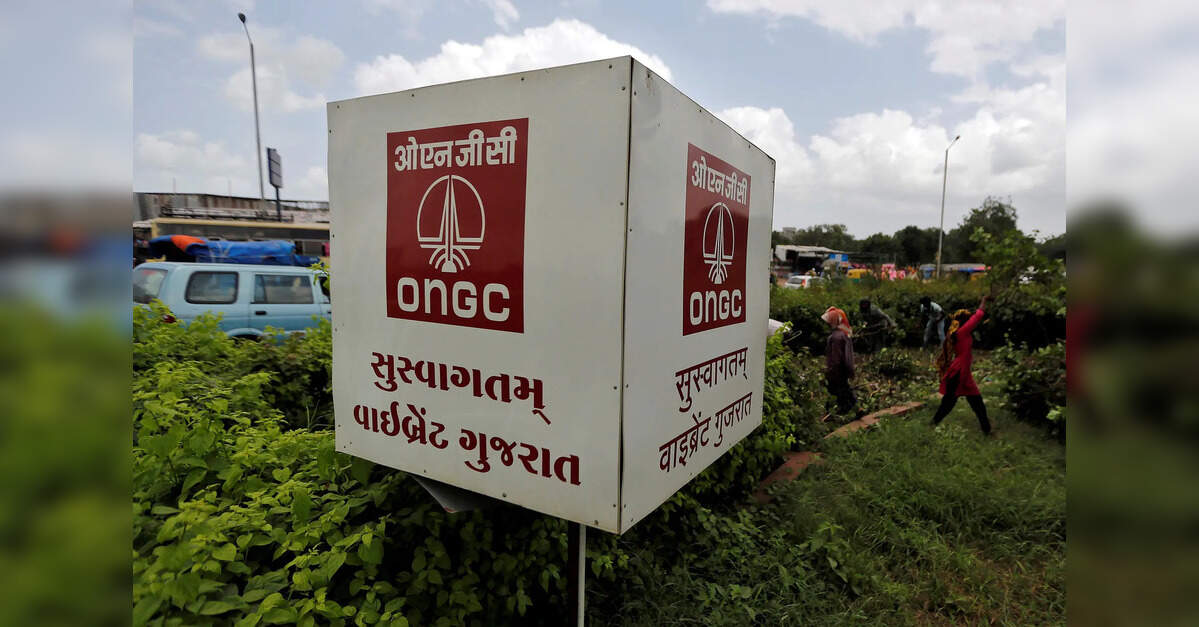
India’s state-owned energy behemoth, Oil and Natural Gas Corporation (ONGC), is embarking on a significant strategic shift with its plans to establish a dedicated trading unit. This move, aimed at managing the vast flows of crude oil, petroleum products, and petrochemicals across its group entities, signals a proactive approach to optimizing value in a volatile global energy landscape. For investors, this represents more than just an operational adjustment; it’s a fundamental step towards enhanced market agility and potential profitability in an increasingly complex commodities environment.
ONGC’s Strategic Gambit: Consolidating Massive Energy Flows
The decision to form a specialized commodity trading group underscores ONGC’s ambition to unlock greater efficiencies from its substantial operations. As detailed by Rajarshi Gupta, Managing Director of ONGC Videsh Ltd (OVL), the combined crude oil buying and selling volume for the ONGC group approaches an astounding 100 million tonnes annually. This encompasses ONGC’s own 42 million tonnes of crude production, Hindustan Petroleum Corporation Ltd’s (HPCL) procurement of 30-35 million tonnes, Mangalore Refinery and Petrochemicals Ltd’s (MRPL) 18-20 million tonnes, and OVL’s 10.5 million tonnes from overseas assets. Beyond crude, the company is also working on a plan to source approximately 5 million tonnes of LNG annually, diversifying its portfolio with a combination of Henry Hub, crude-based LNG, and other global sources. This colossal scale presents a compelling argument for a centralized trading mechanism, allowing ONGC to consolidate its market power, optimize procurement costs, and enhance revenue realization amidst India’s burgeoning energy demand driven by robust economic growth.
Navigating Volatility: A Timely Move in Current Markets
ONGC’s initiative comes at a period characterized by persistent market volatility, a trend that energy investors are all too familiar with. As of today, Brent Crude trades at $98.01, marking a significant 3.24% increase within the day, while WTI Crude stands at $89.65, up 1.72%. However, this daily uptick follows a broader pattern of price fluctuation. Over the past 14 days, Brent crude experienced a notable downturn, dropping from $108.01 to $94.58—a decline of $13.43, or approximately 12.4%. This sharp movement underscores the inherent unpredictability Gupta highlighted, where “volatility is a certainty going forward.” A dedicated trading unit offers ONGC the tools to better manage exposure to such price swings. By actively engaging in the market, the company can implement sophisticated hedging strategies, optimize inventory management, and capitalize on arbitrage opportunities, transforming market volatility from a risk into a potential source of competitive advantage. This strategic pivot is crucial for a company operating at such a vast scale, allowing it to better absorb and benefit from the dynamic global crude and gas price environment.
Investor Focus: Addressing Key Questions and Future Implications
Our proprietary reader intent data reveals that investors are keenly focused on understanding market drivers, asking questions like “What are OPEC+ current production quotas?” and seeking a “base-case Brent price forecast for next quarter.” ONGC’s move to establish a trading unit directly addresses the underlying concerns behind these inquiries. A sophisticated trading arm allows ONGC to actively respond to, rather than merely react to, global supply-demand dynamics influenced by OPEC+ decisions or broader economic forecasts. This capability offers a new dimension to ONGC’s investment thesis. Instead of being solely a price-taker based on its production volumes, the company can become a more active participant, optimizing its sales and procurement based on real-time market intelligence and forward-looking strategies. For investors, this translates into a potentially more resilient and profitable entity, less susceptible to the vagaries of commodity cycles and better positioned to capture value across the entire energy value chain. The ability to actively manage price risk and optimize trade flows can lead to more predictable earnings and enhanced shareholder value, a critical consideration for those evaluating long-term positions in the oil and gas sector.
Ahead of the Curve: Leveraging Upcoming Market Catalysts
The formation of a trading unit also positions ONGC to strategically leverage a series of upcoming market catalysts. The next 14 days alone are packed with significant events that could sway crude and gas prices. Investors will be closely watching the OPEC+ Joint Ministerial Monitoring Committee (JMMC) meeting on April 18, followed by the full OPEC+ Ministerial Meeting on April 20, where potential production quota adjustments could send ripples across global markets. Furthermore, the weekly API and EIA crude inventory reports, scheduled for April 21, 22, 28, and 29, will provide crucial insights into U.S. supply and demand balances. A dedicated trading unit, backed by real-time data and expert analysis, would be perfectly poised to anticipate and react to the outcomes of these events. For instance, proactive procurement or sales adjustments could be made ahead of anticipated price shifts resulting from OPEC+ decisions, or inventory positions could be optimized in response to U.S. storage data. This forward-looking operational capability ensures ONGC can move beyond simply producing and selling, enabling it to actively participate in market-making and value creation, further solidifying its standing as a sophisticated player in the global energy market.
ONGC’s strategic initiative to establish a dedicated trading unit marks a pivotal evolution for the Indian energy giant. By centralizing the management of its vast crude, product, and LNG flows, and by developing capabilities to navigate and capitalize on market volatility, ONGC is positioning itself for enhanced resilience and profitability. This forward-thinking approach, coupled with the ability to leverage real-time market intelligence and respond swiftly to global events, presents a compelling new dimension for investors evaluating the company’s long-term prospects in the dynamic global energy sector.


