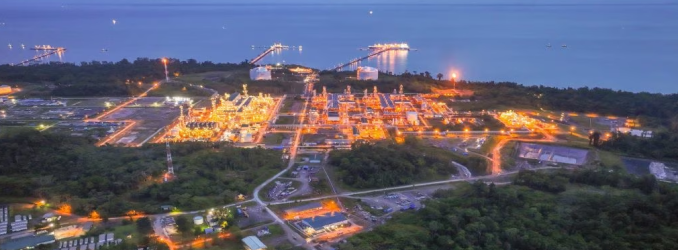
Navigating the LNG Landscape: Baker Hughes’ Strategic Move at Tangguh
In a significant development for the global liquefied natural gas (LNG) sector, Baker Hughes has secured a comprehensive 90-month service agreement with bp for the Tangguh LNG plant in Papua Barat, Indonesia. This long-term commitment underscores the critical role of reliable infrastructure support in the burgeoning Asia-Pacific energy market and provides Baker Hughes with substantial revenue visibility. For investors eyeing stability amidst fluctuating commodity prices, this deal highlights the strategic value of essential services that underpin major energy projects, reinforcing Baker Hughes’ position as a key enabler for large-scale LNG operations.
The Enduring Value of Service Agreements in LNG Infrastructure
The 90-month duration of Baker Hughes’ latest contract for Tangguh LNG is a powerful signal of commitment and foresight in the energy services sector. This agreement, covering spare parts, repair services, and field service engineering support for critical turbomachinery across three LNG trains, including heavy-duty gas turbines, steam turbines, and compressors, represents a foundational revenue stream. Such long-term arrangements are invaluable for companies like Baker Hughes, providing predictable cash flows that can buffer against the inherent volatility of other segments within the oil and gas industry. The Tangguh facility itself is a linchpin in Indonesia’s energy strategy, crucial for supplying reliable energy across the Asia-Pacific region—a market characterized by robust demand growth. This continued partnership with bp, building on a relationship dating back to 2009 and a recent 2024 award for the Tangguh UCC Project, solidifies Baker Hughes’ critical role in maintaining high performance and availability for an essential regional energy asset. The strategic inclusion of PT Imeco Inter Sarana as a local consortium partner also addresses critical local content requirements, fostering sustainable energy development within Indonesia.
Market Dynamics and Investor Resilience: A Look at Current Crude Trends
While the Tangguh agreement focuses on LNG services, the broader energy market context remains crucial for investor sentiment. As of today, Brent crude is trading at $98.01 per barrel, marking a strong daily gain of 3.24%, with its daily range spanning from $94.42 to $99.84. This upward movement is a welcome shift for many, especially considering the 14-day trend saw Brent shed $13.43, or 12.4%, moving from $108.01 on March 26th down to $94.58 by April 15th. This recent volatility in crude prices underscores why long-term service contracts, like the one Baker Hughes secured, are particularly attractive for investors. They offer a degree of insulation from short-term commodity price swings, providing consistent revenue streams regardless of whether crude is dipping or surging. For Baker Hughes, a diversified portfolio of equipment and services, particularly within the resilient LNG segment, helps stabilize its financial outlook against the backdrop of an often unpredictable global oil market. The stability offered by such contracts allows investors to focus on the underlying fundamentals of energy demand and infrastructure reliability, rather than getting caught in daily price fluctuations.
Anticipating Tomorrow: Upcoming Events and Their Impact on Energy Investments
The coming weeks are packed with key events that could shape the broader energy landscape, directly influencing the investment climate even for stable service providers. Investors are keenly watching the upcoming OPEC+ meetings, with the Joint Ministerial Monitoring Committee (JMMC) scheduled for April 18th, followed by the Full Ministerial meeting on April 20th. Discussions around production quotas and supply strategies at these gatherings will directly impact crude oil prices and, by extension, the overall confidence in new upstream and midstream project development. Our proprietary reader intent data reveals a significant interest in “OPEC+ current production quotas” and “base-case Brent price forecasts for next quarter,” highlighting the market’s focus on these critical policy decisions. While Baker Hughes’ Tangguh contract is a done deal, a bullish or bearish signal from OPEC+ could influence future project sanctioning and the demand for new equipment orders. Additionally, the recurring Baker Hughes Rig Count reports on April 17th and April 24th will offer insights into drilling activity, providing a broader pulse on the upstream segment, though the LNG service contract represents a more stable, operational expenditure-driven revenue stream compared to the more cyclical drilling market. The EIA and API weekly inventory reports on April 21st, 22nd, 28th, and 29th will also provide granular data on supply and demand balances, further informing short-term market sentiment.
Addressing Investor Priorities: Stability, Growth, and Strategic Regional Focus
Our analysis of investor queries consistently shows a strong demand for clarity on market fundamentals and factors driving long-term value. Questions like “What is the current Brent crude price?” and requests to “Build a base-case Brent price forecast for next quarter” reflect an ongoing need for reliable data and forward-looking insights. The Baker Hughes Tangguh contract directly addresses several core investor priorities. Firstly, it offers significant revenue stability through its 90-month duration, a compelling factor for those seeking predictable earnings in the energy sector. Secondly, it strengthens Baker Hughes’ presence in the Asia-Pacific region, a recognized growth engine for global energy demand, particularly for LNG. Indonesia’s strategic position and growing energy needs ensure that the Tangguh facility will remain a vital asset for years to come, securing a long-term revenue stream for Baker Hughes in a high-growth market. This strategic positioning, combined with the proven operational track record and commitment to local partnerships, presents a clear investment thesis for those looking for robust, long-term plays in the energy services space that are less susceptible to the immediate whims of commodity price fluctuations.