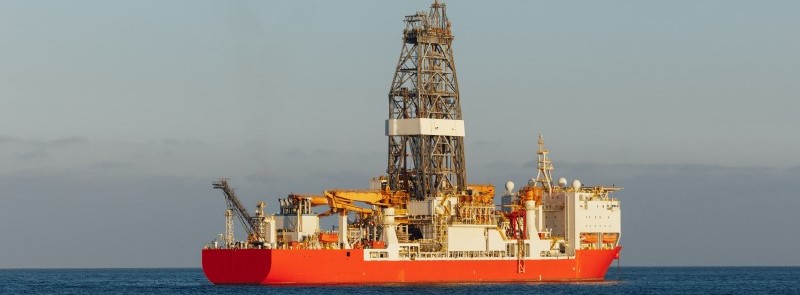
The offshore drilling sector continues to demonstrate resilience, a point underscored by the recent contract awards secured by Sonadrill Holding Ltd, the 50:50 joint venture between Seadrill Limited and an affiliate of Sonangol E.P. These new commitments in Angola highlight a strategic long-term outlook from exploration and production (E&P) companies, even as the broader crude oil market experiences significant volatility. For investors, these developments provide crucial signals about sustained deepwater activity and the value proposition of companies strategically positioned in high-demand regions.
Deepwater Resilience Amidst Market Headwinds
Sonadrill’s recent success in securing two significant contracts for its drillships operating offshore Angola signals a robust demand for deepwater services, extending well into late 2025 and early 2026. The West Gemini, a Seadrill-owned unit bareboat chartered into Sonadrill, has been awarded a contract with Sonangol Exploração & Produção, S.A. for an estimated 284 days, commencing in late 2025 or early 2026. Simultaneously, the Sonangol Libongos, one of Sonangol’s units also chartered into the JV, secured an estimated 525-day firm term contract with Azule Energy Angola B.V., with operations expected to begin in the third quarter of 2025, directly following its current engagement. These multi-month, multi-year commitments stand in stark contrast to the immediate fluctuations observed in crude markets. As of today, Brent Crude trades at $90.38, reflecting a significant 9.07% decline from its opening, while WTI Crude sits at $82.59, down 9.41% over the same period. This sharp downturn builds on a trend that saw Brent drop by 18.5% over the past 14 days. Despite this pronounced near-term price weakness, the long-term nature of these deepwater contracts suggests E&P operators are making capital allocation decisions based on a sustained demand outlook, rather than transient market swings. Angola remains a pivotal deepwater province, attracting continued investment from both national oil companies and international majors.
Seadrill’s Strategic Positioning and Revenue Stability
The structure of the Sonadrill joint venture offers Seadrill a strategic advantage and a stable revenue stream. By partnering with Sonangol E.P., Seadrill not only gains access to the Angolan market but also secures management fees for providing essential operational, technical, and management support to the JV. This fee-based model provides a degree of insulation from the direct day-rate volatility that can characterize the offshore drilling market, offering a more predictable income stream for investors. Currently, Sonadrill operates three drillships: the Seadrill-owned West Gemini, and the Sonangol-owned Sonangol Libongos and Sonangol Quenguela. The new contracts ensure high utilization for two of these key assets deep into 2026, solidifying the JV’s backlog and contributing to Seadrill’s overall financial visibility. This strategic alignment and recurring revenue model are crucial considerations for investors seeking stability in the often-cyclical oil and gas services sector, particularly given the questions about E&P company performance that often arise during periods of market flux, such as those we see investors asking this week regarding specific players.
Navigating Future Volatility: The OPEC+ Factor and Investor Outlook
The significant drop in crude prices demands immediate attention, and investors are naturally asking what the price of oil per barrel will be by the end of 2026. The answer, in large part, hinges on the upcoming OPEC+ meetings. With Brent crude having plummeted by over 9% today alone, market participants are keenly awaiting the outcomes of the Joint Ministerial Monitoring Committee (JMMC) meeting on April 18th, followed by the full OPEC+ Ministerial Meeting on April 19th. These gatherings are critical, as OPEC+ production quotas directly influence global supply dynamics and, consequently, crude prices. Any decision regarding production levels could either stabilize the market or exacerbate the current downward trend. A more aggressive cut could provide a floor for prices, potentially reassuring E&P companies about future project economics. Conversely, a less interventionist stance might signal continued price pressure, which could, in turn, influence future drilling budgets and contract awards beyond the already secured long-term commitments. Beyond OPEC+, the market will also closely monitor the API Weekly Crude Inventory (April 21st, 28th), EIA Weekly Petroleum Status Report (April 22nd, 29th), and the Baker Hughes Rig Count (April 24th, May 1st) for further insights into supply, demand, and drilling activity.
Angola’s Enduring Deepwater Potential and Investment Signals
The consistent awarding of multi-year contracts in Angola underscores the region’s enduring importance as a deepwater basin. Angola’s mature, yet still highly prospective, deepwater fields continue to attract significant capital, with operators like Sonangol E&P and Azule Energy Angola B.V. demonstrating a clear commitment to long-term development. Deepwater projects are characterized by substantial upfront investment, long lead times, and extended production horizons, making contract awards like these a powerful signal of sustained confidence in future oil demand. These projects are not initiated or sustained based on transient daily price movements; rather, they reflect a strategic conviction in the long-term fundamentals of the global energy market. For investors, these long-duration contracts provide visibility into future revenue streams for drilling contractors and indicate that despite the recent sharp decline in Brent and WTI crude prices, major E&P players continue to allocate capital to high-impact, long-cycle projects that will be crucial for meeting global energy needs years down the line. This foundational demand for deepwater drilling services in key regions like Angola offers a compelling counter-narrative to short-term market anxieties.