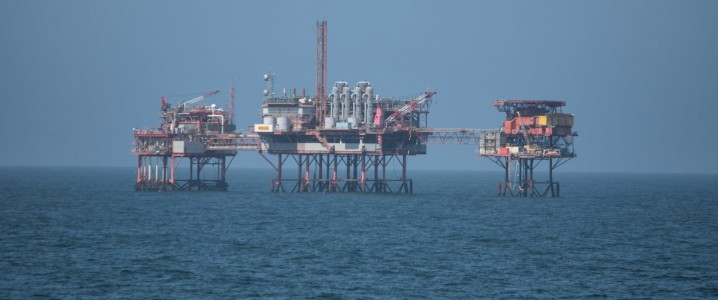
Equinor’s recent oil and gas discovery near the colossal Troll field in the Norwegian North Sea signals a strategic win for the energy major and for Norway’s long-term production outlook. This finding, provisionally named F-South and located just 9 km north of the Troll field, highlights the enduring potential of mature basins when coupled with advanced exploration techniques and existing infrastructure. With estimated recoverable resources between 0.6 and 6.9 million barrels of oil equivalent (boe), split between oil and gas, this discovery underscores the crucial role of near-field exploration in sustaining production and delivering value to investors in an evolving energy landscape.
Strategic Incremental Growth: The Value of Near-Field Discoveries
The F-South discovery, made through an exploration well encountering petroleum in two distinct reservoirs, is a testament to the economic efficiency of operating in established areas. Equinor has assessed the reservoir properties as ranging from moderate to very good, enhancing the viability of future development. Discoveries of this nature are particularly attractive because of their proximity to existing processing and transport infrastructure. This allows for potential tie-backs, significantly reducing development costs and accelerating the timeline for resources to reach the market compared to standalone projects in frontier regions. As Equinor’s Senior Vice President for Exploration & Production West, Geir Sørtveit, noted, this is an “interesting area with a well-developed infrastructure,” where the company plans further exploration, anticipating additional oil and gas finds.
This approach is not unique to Equinor; it reflects a broader strategy among operators on the Norwegian Continental Shelf. Just days prior, Aker BP announced a substantial oil discovery that will add to the Yggdrasil development area, targeting first oil by 2027. These near-field successes are vital for Norway, Western Europe’s largest hydrocarbon producer, as it seeks to offset natural production declines and maintain its energy security posture well into the next decade. For investors, these discoveries represent lower-risk, higher-return opportunities that contribute to a company’s reserve replacement ratio and provide a more predictable cash flow stream over time.
Navigating Market Volatility: A Long-Term Perspective on Upstream Investments
While the long-term implications of Equinor’s discovery are positive, it’s crucial for investors to contextualize this news within the broader, often volatile, commodity market. As of today, Brent crude trades at $90.38, marking a significant -9.07% drop from its opening, with a day range between $86.08 and $98.97. Similarly, WTI Crude stands at $82.59, down -9.41% for the day, having traded between $78.97 and $90.34. This recent downturn compounds a broader trend, with Brent having shed $20.91, or 18.5%, from $112.78 on March 30th to $91.87 just yesterday. The price of gasoline has also seen a daily decline of -5.18% to $2.93.
This immediate market weakness, driven by macroeconomic concerns and shifting supply-demand perceptions, contrasts with the fundamental value proposition of new resource additions. For a company like Equinor, adding 0.6 to 6.9 million boe, even if modest in isolation, contributes to a more robust asset base that can withstand short-term price fluctuations. Investors understand that while daily price movements grab headlines, the long-term viability and growth potential of an energy company are tied to its ability to replenish reserves and efficiently bring them to market. Such discoveries provide a tangible buffer against market uncertainty, reinforcing the stability of future production volumes, a key factor in long-term oil price predictions that our readers frequently inquire about.
Upcoming Catalysts and Norway’s Future Production Outlook
The Equinor discovery fits squarely into Norway’s ambitious strategy to bolster its hydrocarbon output, especially as it prepares for an expected decline in production from the early 2030s. This proactive stance is further evidenced by Norway’s plans for its 26th oil and gas licensing round, which will target less-explored frontier areas to unlock additional resources. These policy initiatives, combined with successful near-field exploration, paint a picture of a nation committed to maximizing its energy potential.
For investors, the coming weeks present several critical data points that will further shape the global energy outlook. The OPEC+ Joint Ministerial Monitoring Committee (JMMC) meeting this Saturday, April 18th, followed by the Full Ministerial meeting on Sunday, April 19th, will be closely watched for any signals regarding production quotas. Any adjustments here could significantly impact global supply balances and, consequently, the economic attractiveness of new discoveries. Furthermore, the weekly API Crude Inventory report on April 21st and 28th, alongside the EIA Weekly Petroleum Status Report on April 22nd and 29th, will provide crucial insights into immediate supply and demand dynamics in the U.S. market. The Baker Hughes Rig Count on April 24th and May 1st will offer a snapshot of drilling activity. These events will collectively inform investor sentiment regarding the strategic value of sustained exploration efforts in regions like the North Sea.
Investor Focus: Long-Term Supply and Portfolio Resilience
Our proprietary reader intent data consistently highlights investor interest in the long-term trajectory of oil prices and the sustainability of production from major players like OPEC+. Equinor’s F-South discovery, while not a game-changer on its own, is a perfect illustration of how sustained, incremental exploration success contributes to the long-term supply picture. These types of low-cost, near-infrastructure additions are precisely what bolster a company’s ability to maintain production levels and generate consistent returns, even as the global energy transition gains momentum.
The strategic importance of these discoveries lies in their contribution to energy security and the resilience of a company’s portfolio. For investors considering exposure to the oil and gas sector, particularly through established majors, Equinor’s repeated success in the North Sea offers a compelling argument for operational excellence and capital discipline. The ability to unlock new resources in a mature and well-understood basin, with clear paths to market, significantly de-risks investment and supports the long-term dividend capacity of such entities. As the energy landscape continues to evolve, the steady addition of recoverable resources through efficient exploration remains a cornerstone of robust oil and gas investing strategies.


