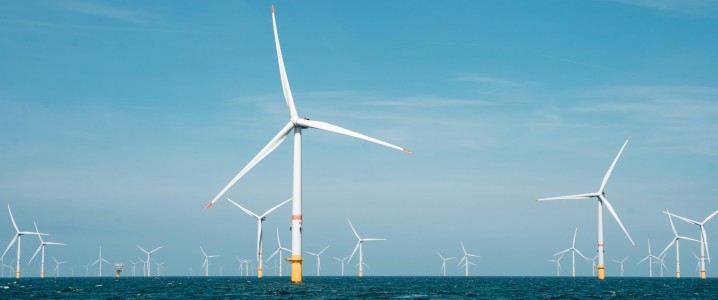
The recent dramatic downturn in Ørsted’s share price has sent tremors throughout the renewable energy sector, prompting a reevaluation of the industry’s immediate prospects and the intricate challenges facing large-scale green infrastructure projects. As the world’s leading offshore wind developer, Ørsted’s struggles serve as a potent reminder that even amidst a global push for decarbonization, the path to a sustainable energy future is fraught with financial, regulatory, and logistical hurdles. For investors navigating the complex energy landscape, this situation offers critical insights into the real-world risks of capital-intensive renewable ventures, contrasting sharply with the often-robust performance seen in traditional oil and gas markets during periods of volatility. This analysis delves into the specifics of Ørsted’s recent woes, examines the broader implications for investor sentiment, and provides a forward-looking perspective on the key market drivers for the coming weeks.
Ørsted’s Plunge: A Symptom of Systemic Stress in Offshore Wind
Ørsted’s stock experienced an extraordinary collapse, with shares plummeting by 18% to a record low of $27.28 (174 Danish crowns) shortly after market open. This recent decline exacerbates an already challenging year, seeing the company’s stock shed a staggering 46% year-to-date. The catalyst for this latest sell-off was the announcement of a stop-work order issued by the U.S. Department of the Interior’s Bureau of Ocean Energy Management (BOEM) on Revolution Wind, a 50/50 joint venture between Ørsted and Global Infrastructure Partner’s Skyborn Renewables. This project, despite being 80% complete with all offshore foundations installed and 45 out of 65 wind turbines in place, is now halted, raising significant concerns about project timelines and cost overruns. Revolution Wind holds 20-year power purchase agreements designed to supply 400 MW of electricity to Rhode Island and 304 MW to Connecticut, enough to power over 350,000 homes. The BOEM order, coming after the project had already commenced offshore construction following final federal approval last year, underscores the persistent regulatory uncertainties that can plague even advanced renewable initiatives.
This regulatory setback follows an earlier, equally impactful announcement in August regarding Ørsted’s plans for a $9.4 billion (60 billion Danish crowns) rights issue. This capital raise, intended to strengthen the company’s financial position amidst “an extraordinary situation with the adverse market development in the US on top of the past years’ macroeconomic and supply chain challenges,” signaled to investors that the structural issues facing the offshore wind industry are far from resolved. Ørsted had previously warned of a continued challenging environment, and these recent events confirm that high inflation, rising interest rates, and supply chain disruptions are formidable headwinds for an industry that requires immense upfront capital investment and operates on often-thin margins locked in by long-term power purchase agreements.
Investor Sentiment: Shifting Sands and Enduring Questions
The pronounced difficulties faced by a sector leader like Ørsted inevitably provoke broader questions among investors about the viability and risk profile of the entire renewable energy complex. While the long-term imperative for energy transition remains, the short-to-medium term investment thesis for some green energy plays is clearly under scrutiny. Our proprietary data indicates that investors are keenly focused on the foundational pillars of the energy market, with questions like “what do you predict the price of oil per barrel will be by end of 2026?” dominating recent inquiries. This focus implicitly highlights a perceived stability or even resurgence in traditional energy, especially as the renewables sector grapples with its growth pains.
The capital intensity of offshore wind projects, combined with regulatory and logistical complexities, presents a stark contrast to the often more predictable cash flow generation of established oil and gas producers, particularly in an environment of elevated crude prices. Investors are increasingly weighing the immediate returns and lower execution risk of conventional energy against the long-term promise but higher near-term volatility of renewables. The Ørsted situation underscores that while the transition is underway, it is not without significant bumps, prompting a re-evaluation of risk premiums across the energy spectrum.
Navigating Crude Volatility Amidst Renewable Headwinds
Against the backdrop of renewable sector struggles, traditional crude markets continue to present their own set of dynamics. As of today, Brent crude trades at $90.38, reflecting a significant daily decline of 9.07%, with its day range fluctuating between $86.08 and $98.97. Similarly, WTI crude sits at $82.59, marking a 9.41% drop for the day, having traded between $78.97 and $90.34. This recent dip is notable, especially considering the broader 14-day trend saw Brent decline by $20.91, or 18.5%, from $112.78 on March 30 to $91.87 on April 17. Gasoline prices have also followed suit, currently at $2.93, down 5.18%.
This pronounced downward movement in crude prices, even as a major renewable player faces severe challenges, highlights the complex interplay of global economic sentiment, supply dynamics, and geopolitical factors. While a weaker renewable sector might indirectly support fossil fuel demand in the long run by slowing the transition, the immediate drivers for crude prices are often more tied to macroeconomic indicators, inventory levels, and production decisions by key players. The current volatility in crude reinforces the need for investors to maintain a balanced perspective, recognizing that no single energy segment operates in a vacuum, and each carries its own unique set of risks and opportunities.
Forward Outlook: Key Events Shaping Energy Markets
Looking ahead, the energy market is poised for several pivotal events that could significantly influence price trajectories and investment decisions, especially for those evaluating the sustained strength of traditional oil and gas. Our proprietary calendar data highlights critical upcoming dates that demand investor attention. This weekend, the OPEC+ Joint Ministerial Monitoring Committee (JMMC) convenes on April 18, followed by the Full Ministerial OPEC+ Meeting on April 19. With Brent having shed nearly 10% in a single day and over 18% in the past two weeks, the market will be keenly watching for any signals on production quotas. Investors are actively asking about “OPEC+ current production quotas,” indicating high anticipation for these meetings. Any decision by the cartel to adjust output levels could have immediate and profound effects on global supply and prices, potentially counteracting the recent downward trend and bolstering oil & gas equities.
Beyond OPEC+, the market will process weekly inventory data from both the API (April 21, April 28) and the EIA (April 22, April 29), which provide crucial insights into U.S. demand and supply balances. These reports often serve as a barometer for the health of the world’s largest oil consumer. Furthermore, the Baker Hughes Rig Count on April 24 and May 1 will offer a glimpse into North American drilling activity, signaling future production trends. These forward-looking data points, combined with the ongoing struggles in the renewable sector exemplified by Ørsted, will shape the narrative for energy investors in the coming weeks. The ability of traditional energy producers to maintain disciplined capital allocation and robust free cash flow generation in this environment will be a key differentiator.


