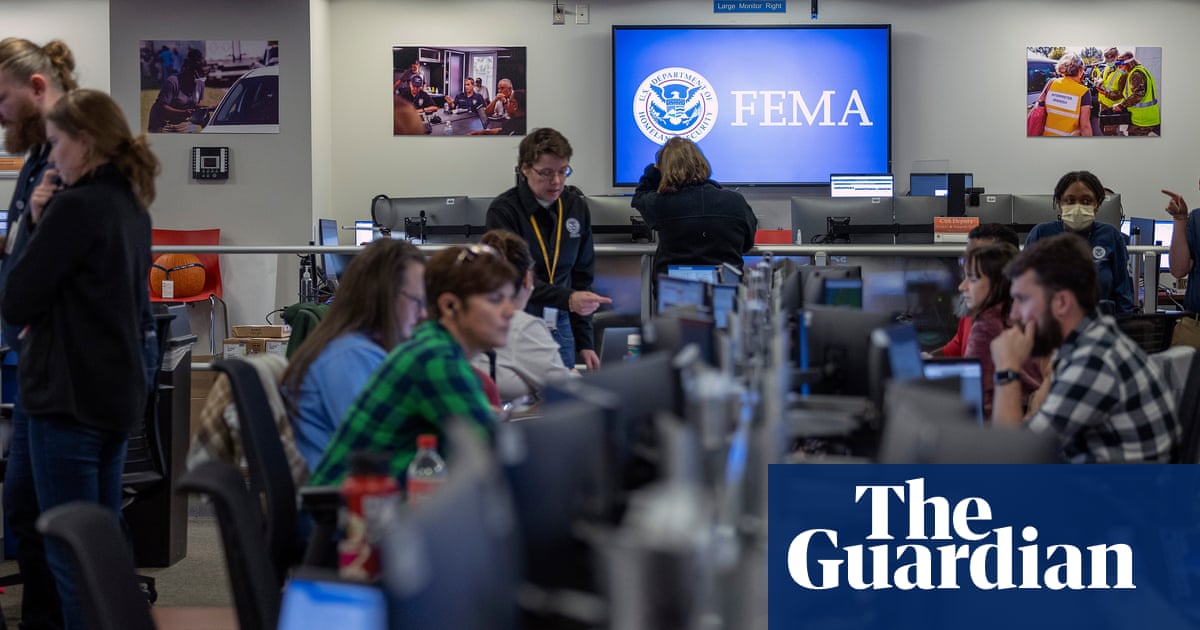
The intricate web of energy supply chains is constantly exposed to a myriad of risks, from geopolitical tensions to natural disasters. Investors in the oil and gas sector are keenly aware of the vulnerabilities inherent in critical production regions. A recent policy shift by the Federal Emergency Management Agency (FEMA), mandating an email address for disaster aid applications, has quietly introduced a new layer of concern, particularly for the vital Gulf of Mexico energy corridor. While seemingly administrative, this change, which follows a March executive order discontinuing federal paper-based payments, could significantly impede recovery efforts for communities and, by extension, the workforce that underpins Gulf Coast energy operations. For investors, understanding how this bottleneck in aid disbursement could impact regional stability, labor availability, and ultimately, energy supply, is paramount.
Navigating Market Volatility Amidst Emerging Regional Risks
The global energy market continues its dynamic dance, with recent trading reflecting considerable shifts. As of today, Brent Crude trades at $90.38, marking a significant daily decline of 9.07%, with its price ranging from $86.08 to $98.97 throughout the day. Similarly, WTI Crude has seen a sharp drop, sitting at $82.59, down 9.41%, having traded between $78.97 and $90.34. This broad market softness extends to gasoline prices, currently at $2.93, a 5.18% decrease. This current snapshot follows a noticeable downtrend for Brent, which has fallen from $112.78 on March 30th to $91.87 by April 17th, representing an 18.5% depreciation over just two weeks. Against this backdrop of significant price volatility, any new impediment to supply resilience in a key region like the Gulf of Mexico demands investor attention. The Gulf is not just a major production hub for crude and natural gas, but also home to a significant portion of the nation’s refining capacity. A slower, more cumbersome disaster recovery process, as anticipated by former FEMA officials like Jeremy Edwards and Craig Fugate, could translate directly into prolonged operational outages and upward pressure on prices, particularly if a major hurricane strikes.
Upcoming Events and Gulf Coast Vulnerability
The new FEMA policy creates a potential chokepoint just as the industry approaches the critical hurricane season. The Gulf of Mexico region, a cornerstone of U.S. energy production, is inherently susceptible to severe weather events. Historically, these events have led to significant production shut-ins and infrastructure damage. The mandate for an email address, particularly for an estimated 12% of the U.S. population lacking internet access in 2023, could delay relief for thousands of individuals, including the essential workforce supporting offshore platforms, pipelines, and refineries. Compounding this challenge, FEMA has also reportedly ended door-to-door canvassing and closed some field offices, further reducing direct assistance. Investors need to consider how this could extend recovery times for energy assets after a major storm. While the immediate focus of the next two weeks will be on broader market signals – including the OPEC+ Joint Ministerial Monitoring Committee (JMMC) meeting tomorrow, April 18th, followed by the Full Ministerial meeting on April 19th, and the regular API and EIA weekly inventory reports on April 21st/22nd and April 28th/29th – the underlying vulnerability in the Gulf could become a critical factor. Any unexpected supply disruption from the Gulf, exacerbated by slow community recovery, could quickly overshadow these scheduled events, impacting inventory levels and crude price stability.
Addressing Investor Concerns: Long-Term Outlook and Operational Resilience
Our proprietary reader intent data reveals a consistent theme among investors: a desire to understand the long-term trajectory of crude prices and the stability of global supply. Many are asking about the predicted price of oil per barrel by the end of 2026 and seeking clarity on OPEC+ current production quotas. These questions underscore a focus on both macro supply-demand fundamentals and the resilience of the supply chain. The new FEMA rule directly impacts the latter, particularly for the Gulf Coast. If disaster victims, including energy sector workers, face prolonged delays in receiving aid due to digital hurdles, it could lead to labor shortages and slower reconstruction efforts for critical energy infrastructure. This operational friction translates into tangible financial risk for companies with significant Gulf Coast exposure, from upstream exploration and production firms to midstream pipeline operators and downstream refiners. The inability to quickly restore a functioning community, which depends on timely aid, directly impacts a company’s ability to restore operations. While the convenience of email for some is acknowledged by FEMA officials, the exclusionary aspect for those without access poses a systemic risk that oil and gas investors must now factor into their regional risk assessments. The human element of disaster recovery is inextricably linked to the operational continuity of energy assets in the Gulf, and any policy that hinders this connection warrants careful scrutiny.
The Financial Impact on Gulf Energy Operators
The potential for delayed disaster recovery in Gulf Coast communities, stemming from the new FEMA email requirement, presents a nuanced financial risk for energy operators. For companies with substantial assets in the region, such as offshore platforms, onshore production facilities, and refineries, the ability to quickly restore operations post-disaster is paramount to mitigating financial losses. Extended downtime due to a lack of available local workforce, or general community instability, directly impacts revenue streams. Insurance claims might face complications if recovery timelines are protracted beyond typical estimates. Moreover, the cost of temporary housing, increased security, and specialized labor flown in from outside the region to compensate for local workforce displacement could escalate. This adds a layer of indirect operational expenditure not typically captured in conventional risk models. Firms like those engaged in deepwater exploration or extensive refining operations along the Louisiana and Texas coasts, rely heavily on a stable local infrastructure and readily available personnel. Any policy, like the mandatory email for aid, that disrupts the social fabric and economic recovery of these communities, poses a tangible threat to the financial performance and investment attractiveness of Gulf-focused energy portfolios. Investors should consider how companies are factoring this new administrative hurdle into their disaster preparedness and business continuity planning.


