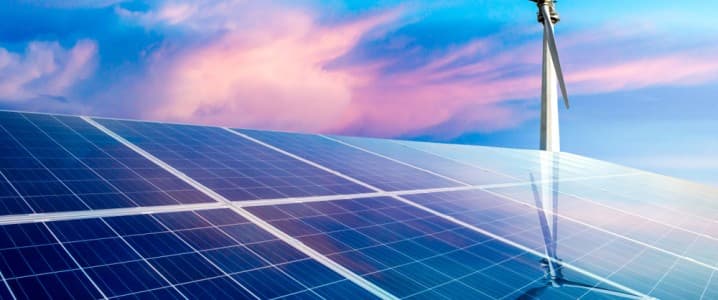
The landscape for energy investment in the United States is undergoing a significant transformation, with recent policy signals from the Trump administration creating a distinct advantage for traditional oil and gas sectors. As federal support and regulatory frameworks for wind and solar power generation are dismantled, an estimated $18.6 billion worth of renewable projects have been canceled, according to U.S. consultancy Atlas Public Policy. This dramatic shift, marked by a 20% decline in investment announcements for clean energy compared to the previous year, is reshaping the investment thesis for fossil fuels, prompting investors to re-evaluate their portfolios for renewed opportunities in crude oil, natural gas, and related infrastructure.
Policy Rollbacks Pave the Way for Hydrocarbons
The U.S. energy sector is witnessing a decisive pivot away from the aggressive push for renewable energy, with profound implications for investment. Since President Trump took office, the clean energy industry has reportedly seen $18.6 billion in wind and solar power generation projects halted. This figure underscores a substantial redirection of capital away from these sectors. Investment announcements, as tracked by Atlas Public Policy, have plummeted by 20%, falling to $15.8 billion from $20.9 billion in the preceding year. This radical change in federal government attitudes has not been without consequences for renewable players, contributing to corporate distress and stock price slumps for companies like Danish wind turbine major Orsted, which required a significant government bailout.
The administration’s stance has been made unequivocally clear, with President Trump stating that new wind and solar projects will no longer receive approval, labeling them “The Scam of the Century!” This rhetoric is being backed by tangible policy changes, including the effective suspension of new wind and solar projects by rendering them economically unviable through the axing of crucial subsidy stipulations from the Inflation Reduction Act. For oil and gas investors, this translates into a potentially less competitive environment from alternative energy sources, allowing for greater focus and potentially higher returns in a sector that has faced significant headwinds from environmental policy in recent years.
Navigating Current Market Volatility Amidst Long-Term Bullish Signals
While the long-term policy outlook for oil and gas appears increasingly favorable, investors must remain cognizant of immediate market dynamics. As of today, Brent Crude is trading at $90.38 per barrel, experiencing a notable daily decline of 9.07%, with its day range spanning from $86.08 to $98.97. Similarly, WTI Crude stands at $82.59, down 9.41%, having traded between $78.97 and $90.34. This recent weakness follows a broader downward trend, with Brent having fallen from $112.78 on March 30th to its current level, representing a nearly 20% drop in less than three weeks. Gasoline prices have also seen a dip, currently at $2.93 per gallon.
Despite this short-term bearish sentiment, the underlying policy shifts in the U.S. could provide a robust floor and future upside for crude prices. OilMarketCap.com’s readers are keenly observing these trends, with many asking “what do you predict the price of oil per barrel will be by end of 2026?” The administration’s actions provide a strong fundamental argument for increased demand and diminished domestic competition for traditional energy sources over the medium to long term, potentially driving prices higher as the market absorbs the implications of reduced renewable investment. Investors are also drilling down into specific company performance, with inquiries about how individual entities like Repsol might fare, indicating a strategic search for undervalued assets in a potentially resurgent sector.
Energy Security and the Uninterrupted Demand for Reliable Power
The debate around energy policy extends beyond economic viability to crucial questions of supply security, particularly in an increasingly digitized world. While energy transition proponents warn that ignoring renewables could compromise energy supply for critical infrastructure like data centers, arguing that “Renewables can be built and connected in a matter of a year or two,” this perspective often overlooks a fundamental limitation. Wind and solar power, by their very nature, cannot generate electricity around the clock. This inherent intermittency presents a critical challenge to grid stability and continuous energy supply, a factor that traditional pro-transition analysts frequently downplay.
The uninterrupted power requirements of modern industrial and digital economies underscore the irreplaceable role of dispatchable, baseload power sources, predominantly provided by natural gas and, to a lesser extent, other fossil fuels. As the U.S. shifts away from prioritizing intermittent renewables, the strategic importance and investment appeal of natural gas and oil in ensuring energy reliability for an expanding array of applications, including burgeoning data center demand, are set to increase significantly. This reality reinforces the long-term investment case for a sector poised to benefit from a renewed focus on energy resilience.
Key Calendar Events to Watch for Market Direction
For investors positioning themselves in this evolving energy landscape, several upcoming events on the proprietary OilMarketCap.com calendar will provide crucial directional cues. The immediate focus turns to the Middle East, with the **OPEC+ Joint Ministerial Monitoring Committee (JMMC) meeting on April 18th** and the **full OPEC+ Ministerial Meeting on April 19th**. Given the recent sharp declines in crude prices, these meetings are critical. Investors are actively asking about “OPEC+ current production quotas,” and any discussions around output adjustments or adherence to existing cuts will significantly impact market sentiment and price trajectories in the short term.
Further insights into U.S. supply and demand dynamics will come from the **API Weekly Crude Inventory reports on April 21st and 28th**, followed by the **EIA Weekly Petroleum Status Reports on April 22nd and 29th**. These reports will reveal inventory levels, refinery activity, and import/export data, offering a snapshot of the market’s health. Additionally, the **Baker Hughes Rig Count, scheduled for April 24th and May 1st**, will provide vital intelligence on drilling activity and future production outlooks in North America. Monitoring these events closely will be essential for investors seeking to capitalize on the shifting policy environment and forecast energy market movements with greater precision.


