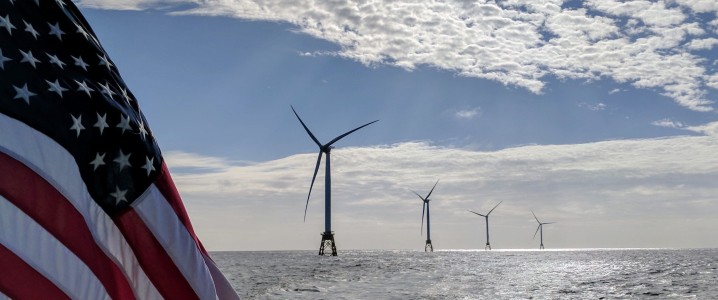
The United States’ pursuit of energy independence and domestic manufacturing is taking a significant turn, casting a new shadow over the previously buoyant wind power sector. The Commerce Department’s initiation of a Section 232 “national security” probe into imported wind turbines and components, quietly launched on August 13th and now publicly acknowledged, is more than a mere bureaucratic formality. It represents a legal on-ramp to potentially substantial new tariffs, layering additional costs on top of the existing 50% duty already imposed on the steel and aluminum content within these critical components. For energy investors, this translates directly into increased investment risk and a fundamental reshaping of project economics within the US wind market.
The Escalating Cost Burden on Wind Project Economics
The financial implications of this probe are immediate and substantial. The US wind build remains heavily reliant on imports for essential elements such as blades, drivetrains, and electrical systems. In 2023, the nation imported approximately $1.7 billion worth of wind equipment, with a significant 41% originating from Mexico, Canada, and China. Imposing tariffs on the metal content, and potentially layering further Section 232 duties, directly squeezes the profit margins of wind projects, forces renegotiations of Power Purchase Agreements (PPAs), and can lead to delays in Final Investment Decisions (FIDs).
Industry analysis has already quantified the potential impact. Wood Mackenzie previously estimated that tariff proposals could increase turbine costs by 7%, equating to a 5% rise in total project costs. Under a universal 25% tariff scenario, turbine costs were projected to climb by approximately 10%, pushing the Levelized Cost of Energy (LCOE) up by about 7%. These figures, however, predate the Commerce Department’s recent imposition of a 50% surcharge on the steel and aluminum content. This means the baseline cost has already moved significantly higher, establishing a new, elevated floor for project expenses. Original equipment manufacturers, such as Vestas, have already indicated that these increased costs will inevitably flow through to electricity prices, further complicating the economic viability of new developments.
A Broader Trade Posture Reshaping Energy Investment Landscapes
This tariff action is not an isolated incident targeting a niche sector; it signifies a “durable trade posture” by the US government, extending to other critical imports like planes, chips, and pharmaceuticals. The message is clear: “buy more domestic, pay more near-term” is now a policy directive, not just rhetoric. While offshore wind projects often capture headlines, it is onshore wind that constitutes the bulk of US volume and is far more sensitive to every dollar-per-kilowatt swing, gearbox delivery delay, and tower steel price jump. This places a wide array of existing and planned projects under increased financial pressure.
For investors, this policy shift creates a distinct set of winners and losers. Near-term beneficiaries are likely to be US tower fabricators and any domestic blade or drivetrain manufacturer capable of quickly and credibly localizing production. Conversely, developers locked into fixed-price PPAs and engineering firms operating with thin contingencies face significant downside risk. While grid bottlenecks and permitting challenges remain formidable choke points for the industry, these new tariffs are no longer a rounding error; they represent tangible, line-item pain that must be rigorously underwritten in project finance models. As of today, Brent crude trades at $98.21, marking a +3.46% increase, with WTI at $90.05. While distinct from the direct costs of wind components, this upward swing in the broader energy complex signals an environment of elevated commodity prices, impacting everything from raw material extraction to transportation and manufacturing inputs for wind infrastructure. This general inflationary pressure only exacerbates the direct tariff impact on wind projects.
Navigating Policy Uncertainty and Future Market Shifts
Our proprietary reader intent data reveals a consistent investor focus on the crude oil market, with frequent inquiries about current Brent prices, OPEC+ production quotas, and base-case Brent price forecasts for the next quarter. While the spotlight often shines on hydrocarbons, the evolving policy landscape in renewable energy, particularly wind, warrants equal attention for a comprehensive energy investment strategy. The Section 232 probe highlights how government policy can swiftly alter the economic fundamentals of an entire sector, regardless of underlying demand for clean energy.
Investors should anticipate several key outcomes from this new trade posture. First, expect delayed Commercial Operation Dates (CODs) as developers grapple with higher costs and supply chain reconfigurations. Second, PPA negotiations will become significantly tougher, with developers pushing for terms that account for increased capital expenditures and operational risks. Third, there will be an accelerated push for greater US content across the wind supply chain, creating both challenges and niche opportunities for domestic manufacturers and service providers. This complex environment demands a nuanced approach, looking beyond traditional market drivers to understand the full spectrum of investment risk and opportunity.
Strategic Implications for Energy Portfolios Amidst Upcoming Events
The confluence of domestic trade policy shifts and global energy market dynamics creates a challenging but opportunity-rich environment for energy investors. Looking ahead, the next 14 days include critical events such as the Baker Hughes Rig Count reports on April 17th and April 24th, followed closely by the OPEC+ Joint Ministerial Monitoring Committee (JMMC) meeting on April 18th and the full OPEC+ Ministerial Meeting on April 20th. While these events are directly focused on crude oil production and supply, their outcomes will undoubtedly shape the broader energy commodity complex.
For instance, any OPEC+ decision impacting crude supply will ripple through global energy prices, influencing not only the competitiveness of alternative energy sources but also the cost of energy inputs for manufacturing and logistics across the entire wind value chain. The 14-day Brent trend, which saw prices decline from $108.01 on March 26th to $94.58 on April 15th before today’s rebound, underscores the inherent volatility in global energy markets. Investors must integrate this understanding of dynamic commodity pricing with the new realities of domestic trade policy. Strategic energy portfolios will increasingly need to factor in geopolitical considerations and supply chain resilience alongside traditional financial metrics to navigate this evolving investment landscape effectively.


