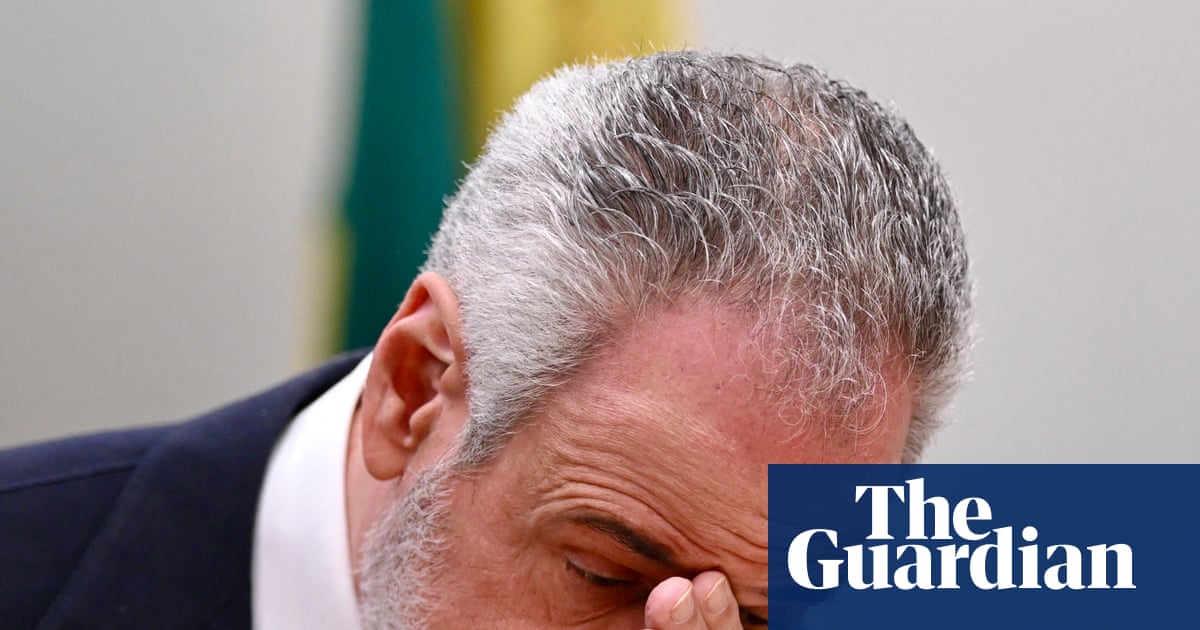
Brazil’s fervent call for strengthened national climate plans ahead of COP30 is not merely a diplomatic maneuver; it signals a significant escalation in global climate ambition that carries tangible policy risk for the oil and gas sector. As host of the crucial UN climate summit this November, Brazil, under veteran diplomat André Corrêa do Lago, is pushing an urgent agenda, demanding all nations submit their updated Nationally Determined Contributions (NDCs) by September 25th. This looming deadline, coupled with the explicit warning that insufficient ambition will necessitate further action at COP30, creates a charged environment where the regulatory landscape for hydrocarbon investments could shift dramatically. Investors must recognize that this accelerated timeline and the high-stakes diplomatic pressure could translate directly into more stringent environmental policies, increased carbon pricing, or even direct limitations on exploration and production in key regions.
Brazil’s Deadline: A Catalyst for Policy Overhaul
The September 25th deadline for NDCs is a critical pivot point, designed to provide the UN with a comprehensive “synthesis report” on global climate progress ahead of COP30. Currently, only 28 countries have submitted their carbon-cutting proposals, leaving major emitters like China and the European Union conspicuously absent. Brazil’s push, including a recent high-level call between President Lula da Silva and China’s Xi Jinping, indicates a strong commitment to securing ambitious pledges. André Corrêa do Lago’s assertion that NDCs represent “the vision of our shared future” is more than rhetoric; it underscores the potential for these national commitments to become the bedrock for future energy policies. For oil and gas companies, this means the risk of stranded assets, higher compliance costs, and increased scrutiny on new projects is on the rise. A disappointing global response to the NDC call will only intensify pressure for more aggressive measures to be agreed upon in Belém, potentially accelerating the energy transition away from fossil fuels in unexpected ways.
Market Turbulence Meets Policy Uncertainty: What Investors Are Asking
Against the backdrop of escalating climate policy discussions, global energy markets are exhibiting significant volatility, adding another layer of complexity for investors. As of today, Brent crude trades at $90.38, marking a notable 9.07% decline, with its daily range spanning $86.08 to $98.97. Similarly, WTI crude stands at $82.59, down 9.41% for the day. This downturn is part of a broader trend; Brent has shed $20.91, or 18.5%, over the past 14 days, falling from $112.78 on March 30th to $91.87 on April 17th. Gasoline prices reflect this instability, currently at $2.93, a 5.18% drop. Amidst such price swings, our reader intent data reveals a clear focus on future stability and corporate performance. Investors are actively asking for predictions on oil prices by the end of 2026 and the implications for major players like Repsol. This demonstrates a deep concern about long-term value in a volatile market. The interplay between immediate market forces and the growing specter of climate-driven policy shifts makes precise forecasting exceptionally challenging, elevating the risk profile for oil and gas investments and demanding robust scenario planning.
Geopolitical Undercurrents and COP30’s Obstacles
The path to a successful COP30 is fraught with geopolitical challenges that could either amplify or dilute the climate ambition Brazil is pushing. The recent red-carpet treatment of Vladimir Putin by Donald Trump, a figure associated with the US withdrawal from the Paris climate agreement, highlights the deep political divisions that hinder global climate action. Furthermore, Russia’s war in Ukraine has paradoxically provided a bonanza for fossil fuel interests, as nations prioritize energy security over immediate climate goals. Brazil’s own logistical challenges, including the selection of Belém as the summit host, a smaller city lacking extensive hotel infrastructure, could also distract from substantive negotiations. To mitigate potential gridlock, Brazil has initiated unprecedented “presidency consultation” meetings on September 25th and October 15th, outside the typical COP schedule. These meetings aim to ensure negotiations can begin without delay. However, the confluence of a challenging geopolitical landscape and internal logistical hurdles means that while Brazil is pushing for stronger NDCs, the actual outcomes at COP30 could be heavily influenced by these external pressures, creating an unpredictable environment for policy development.
Navigating the Near-Term: Upcoming Events and Strategic Implications
Looking ahead, the immediate horizon presents critical catalysts for oil markets that will undoubtedly influence the tenor of pre-COP30 climate discussions and investor sentiment. This weekend, the OPEC+ Joint Ministerial Monitoring Committee (JMMC) meets on April 18th, followed by the Full Ministerial Meeting on April 19th. Investors are closely monitoring these gatherings, particularly given recent inquiries about OPEC+ current production quotas, as any shift in output policy could further influence price trajectories and global supply stability. Following these crucial meetings, the market will turn its attention to the API Weekly Crude Inventory reports on April 21st and 28th, and the EIA Weekly Petroleum Status Reports on April 22nd and 29th, providing vital insights into U.S. supply and demand dynamics. Additionally, the Baker Hughes Rig Count on April 24th and May 1st will offer a snapshot of drilling activity. These near-term events will shape the immediate market environment, which in turn impacts the financial health and strategic positioning of oil and gas companies. A period of sustained high prices might embolden producers, while a continued downturn could increase pressure to diversify or scale back, all while the long-term policy risks from Brazil’s COP30 push continue to gather momentum.