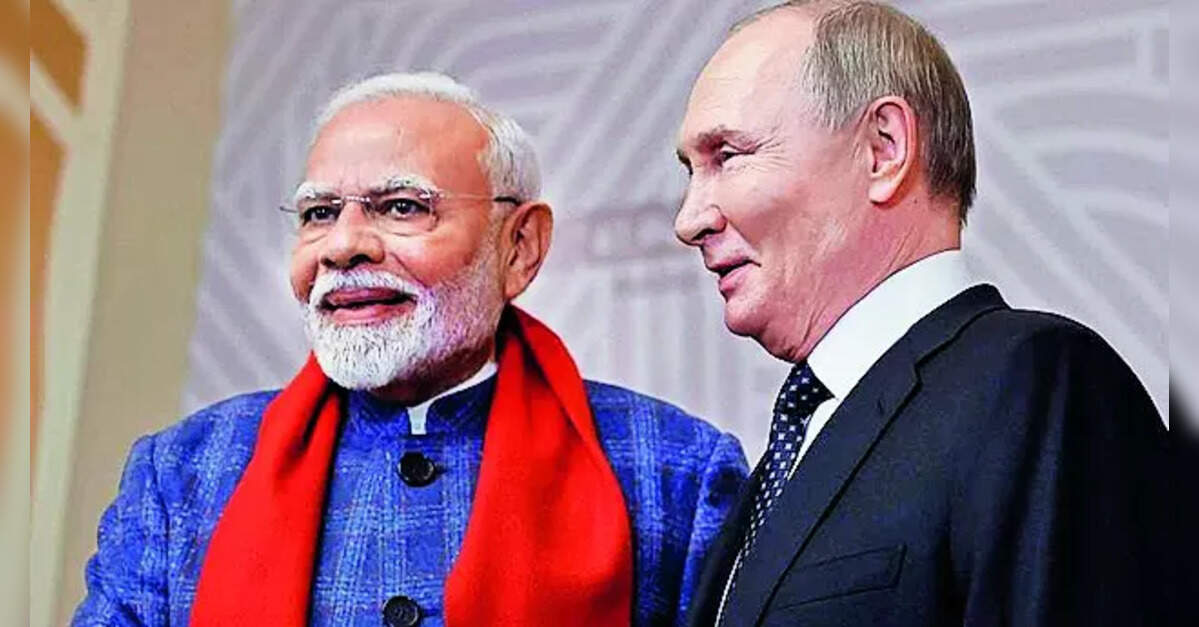
The global energy landscape continues to be shaped by a complex interplay of geopolitical maneuverings and fundamental market forces. Recent high-level diplomatic engagements underscore this dynamic, with Russian President Vladimir Putin and Indian Prime Minister Narendra Modi engaging in a phone call to discuss bilateral cooperation and the ongoing Ukraine conflict. This dialogue, following Putin’s meeting with US President Donald Trump on August 15, 2025, in Alaska, highlights the intricate web of alliances and strategic energy imperatives that dictate global crude flows and price stability. For investors, understanding these diplomatic signals in conjunction with market data is crucial for navigating the inherent volatility in the oil and gas sector.
Geopolitical Stability vs. Market Volatility: A Delicate Balance
The recent exchange between President Putin and Prime Minister Modi, where Modi reiterated India’s consistent call for a peaceful resolution to the Ukraine conflict, reflects a broader global desire for stability. This sentiment aligns with the Ministry of External Affairs’ welcoming of the earlier Trump-Putin discussions, emphasizing dialogue and diplomacy as the path forward. From an energy perspective, geopolitical stability is paramount for ensuring undisrupted supply chains. India’s strategic partnership with Russia, particularly in energy, remains a cornerstone of its import strategy; Russia has emerged as India’s top crude oil supplier, fulfilling approximately 36% of its import needs. This significant reliance underscores India’s vested interest in a stable global environment, even as it navigates complex international relations. Investors must weigh the potential for diplomatic progress against the persistent risks of geopolitical fragmentation, which can introduce sudden shocks to the supply side.
Crude Markets React to a Shifting Landscape
Current market dynamics reflect a heightened sense of uncertainty, even as diplomatic channels remain open. As of today, Brent crude trades at $90.38 per barrel, marking a significant intraday decline of 9.07%, with prices ranging from $86.08 to $98.97. Similarly, WTI crude has seen a sharp drop, trading at $82.59, down 9.41% on the day, traversing a range of $78.97 to $90.34. This aggressive downward movement comes after Brent crude experienced a substantial 14-day decline from $112.78 on March 30, 2026, to $91.87 on April 17, 2026, representing an 18.5% erosion of value. Such volatility leaves many investors questioning the future trajectory of oil prices. Indeed, a frequent inquiry from our readers this week is, “What do you predict the price of oil per barrel will be by end of 2026?” While direct predictions are challenging amidst such flux, the current price action suggests that underlying demand concerns or an anticipated increase in supply may be outweighing the perceived stability offered by bilateral deals, at least in the short term. The broad declines across both benchmarks and gasoline prices ($2.93, down 5.18%) point to a systemic market adjustment rather than an isolated event.
India’s Energy Security: A Strategic Imperative
India’s continued engagement with Russia on energy deals, including crude oil and defense equipment, is a critical component of its national energy security strategy. By diversifying its crude import sources and securing substantial volumes from Russia, India aims to insulate itself from the volatility of traditional suppliers and geopolitical pressures. The 36% share of Russian crude in India’s import basket is not merely a number; it represents a significant strategic pivot that has implications for global shipping routes, refinery operations, and pricing benchmarks. This robust bilateral cooperation highlights India’s pragmatic approach to energy procurement, prioritizing its economic and developmental needs. For investors eyeing the downstream sector or companies with significant exposure to Indian markets, understanding these long-term supply agreements is vital for assessing future profitability and operational stability. The strategic depth of these energy ties helps mitigate some supply risks, even as global prices fluctuate.
Upcoming Catalysts and Investor Focus
The coming weeks are packed with events that could provide further direction to the crude markets, and investors are keenly focused on these potential catalysts. Our reader intent data reveals significant interest in the mechanics of supply management, particularly the question, “What are OPEC+ current production quotas?” This highlights the market’s anticipation of the upcoming OPEC+ Joint Ministerial Monitoring Committee (JMMC) meeting scheduled for April 18, 2026, immediately followed by the Full Ministerial Meeting on April 19, 2026. Any adjustments to production targets by the cartel could either exacerbate or alleviate the current downward pressure on prices. Beyond OPEC+, weekly inventory data will offer crucial insights into supply and demand balances: the API Weekly Crude Inventory reports are due on April 21 and April 28, with the more comprehensive EIA Weekly Petroleum Status Reports following on April 22 and April 29. These reports will be closely scrutinized for signs of demand strength or weakness in key consuming regions. Furthermore, the Baker Hughes Rig Count on April 24 and May 1 will provide a gauge of future production capacity from North America. For investors wondering how individual companies, such as “Repsol, will end in April 2026,” these macroeconomic indicators, coupled with geopolitical developments, will be critical determinants of performance. Monitoring these events is essential for making informed investment decisions in a market prone to rapid shifts.


