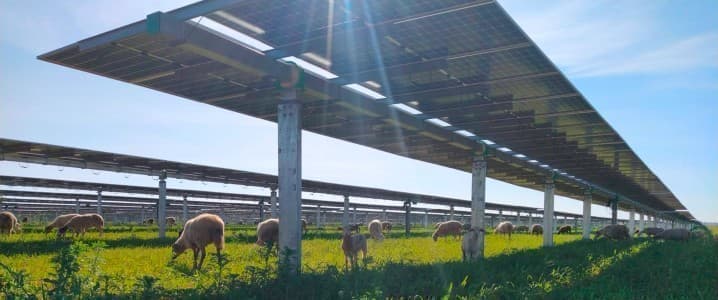
The energy investment landscape is perpetually in motion, and while the spotlight often fixates on crude oil prices, astute oil and gas investors must keep a vigilant eye on developments across the entire spectrum. The recent surge in U.S. solar equities serves as a potent reminder of how policy shifts, even in seemingly distant sectors, can redefine market dynamics and influence capital allocation. Following updated Treasury Department guidance on renewable energy tax credits, the solar sector experienced one of its most significant rallies this year, delivering much-needed clarity for developers and investors. For O&G investors, this event is not merely a footnote; it underscores the profound impact of government policy on energy investments and highlights the competitive pressures and evolving risk profiles across the broader energy complex.
Policy Clarity Ignites Solar, Shifting Energy Sector Momentum
The U.S. solar sector received a powerful jolt of confidence with the Treasury’s latest guidance on renewable energy tax credits. This long-awaited clarity effectively lifted a significant overhang that had depressed valuations and fueled uncertainty, particularly for residential solar providers. The decision confirmed that residential and other small distributed systems would retain eligibility under existing terms, safeguarding the business models of key players. The market responded decisively: Sunrun shares surged nearly 9% on Monday, extending its impressive five-day gains to almost 30%. Similarly, SolarEdge climbed by approximately 22% over five days, while First Solar recorded an 18% increase. Even Enphase Energy, which had faced considerable headwinds, saw its shares rise by 3% on Monday, adding to a 9% gain over five days. This dramatic re-rating in solar equities, reversing a portion of the heavy losses suffered earlier in 2025, illustrates the immediate and profound impact of policy certainty. For oil and gas investors, this phenomenon is critical: it demonstrates how policy can quickly re-channel investment, create new competitive landscapes, and rapidly alter the risk-reward calculus within the broader energy market. Capital flows are highly sensitive to regulatory predictability, and when it materializes for one sector, it inherently affects the relative attractiveness of others.
Crude Markets Grapple with Volatility Amidst Renewable Surge
The buoyancy in solar equities stands in stark contrast to the current temperament of the crude oil market. As of today, Brent crude trades at $90.38, reflecting a significant 9.07% drop from yesterday’s close, with WTI similarly down 9.41% at $82.59. This intraday volatility, highlighted by Brent’s wide range between $86.08 and $98.97, underscores a cautious sentiment in the traditional energy markets. This sharp daily decline compounds a broader downward trend observed over the past two weeks, with Brent having shed over $20 per barrel, or 18.5%, since late March, when it traded at $112.78. Gasoline prices have also felt the pressure, currently at $2.93 per gallon, down 5.18% today. While the specific drivers of this crude weakness are multifaceted – encompassing macro concerns, shifting supply-demand perceptions, and geopolitical uncertainties – the divergence from the policy-fueled rally in renewables is noteworthy. It highlights a potential rotation of investor capital, or at minimum, a recalibration of risk across the energy complex, where the clarity offered to solar stands in contrast to the persistent ambiguities facing traditional oil and gas. This dynamic demands careful consideration from O&G investors, who must weigh the immediate market headwinds against the long-term implications of a policy environment increasingly supportive of alternative energy sources.
Decoding Investor Sentiment: Policy and Price Stability Remain Key
Our proprietary reader intent data offers a direct window into the minds of oil and gas investors, and this week’s signals are unequivocal: a strong desire for price prediction and stability dominates concerns. Investors are intensely focused on the future trajectory of crude prices, with questions like “What do you predict the price of oil per barrel will be by end of 2026?” dominating queries. This reflects a palpable anxiety about long-term stability and the impact of geopolitical and policy shifts. Furthermore, there’s a clear interest in understanding the supply side, as evidenced by frequent questions regarding “What are OPEC+ current production quotas?” This deep dive into future prices and supply management underscores that, despite the immediate focus on crude, investors are keenly aware that policy decisions, whether from the Treasury Department impacting renewables or from OPEC+ influencing crude supply, are paramount. The solar sector’s recent gains, driven by policy clarification, serve as a tangible example of how government action can directly de-risk an investment, potentially drawing capital away from sectors perceived as having higher policy or regulatory uncertainty, including parts of the oil and gas industry. O&G investors are not just asking about oil prices; they are implicitly asking about the policy environment that will shape those prices and the competitive landscape.
Navigating Upcoming Catalysts: OPEC+ and Inventory Reports
While solar revels in policy clarity, the immediate future for oil and gas markets hinges on a series of critical upcoming events that could significantly influence price direction and investor sentiment. The market is on high alert for signals from the OPEC+ Joint Ministerial Monitoring Committee (JMMC) meeting scheduled for tomorrow, April 18th, followed by the full Ministerial meeting on Sunday, April 19th. Any indication regarding current production quotas or future supply strategies will be closely scrutinized and could either amplify or counteract the current downward pressure on crude prices. Beyond OPEC+, weekly inventory data provides crucial short-term insights into supply-demand balances. The API Weekly Crude Inventory report on April 21st and 28th, alongside the EIA Weekly Petroleum Status Report on April 22nd and 29th, will offer essential updates on U.S. stockpiles. Significant builds or draws could swing market sentiment. Furthermore, the Baker Hughes Rig Count on April 24th and May 1st will provide a snapshot of drilling activity, indicating future supply potential. These near-term catalysts highlight the inherent volatility and event-driven nature of crude markets, contrasting with the policy-induced stability that recently benefited solar. O&G investors must remain agile, interpreting these data points and policy signals to position themselves effectively in a rapidly evolving energy market.


