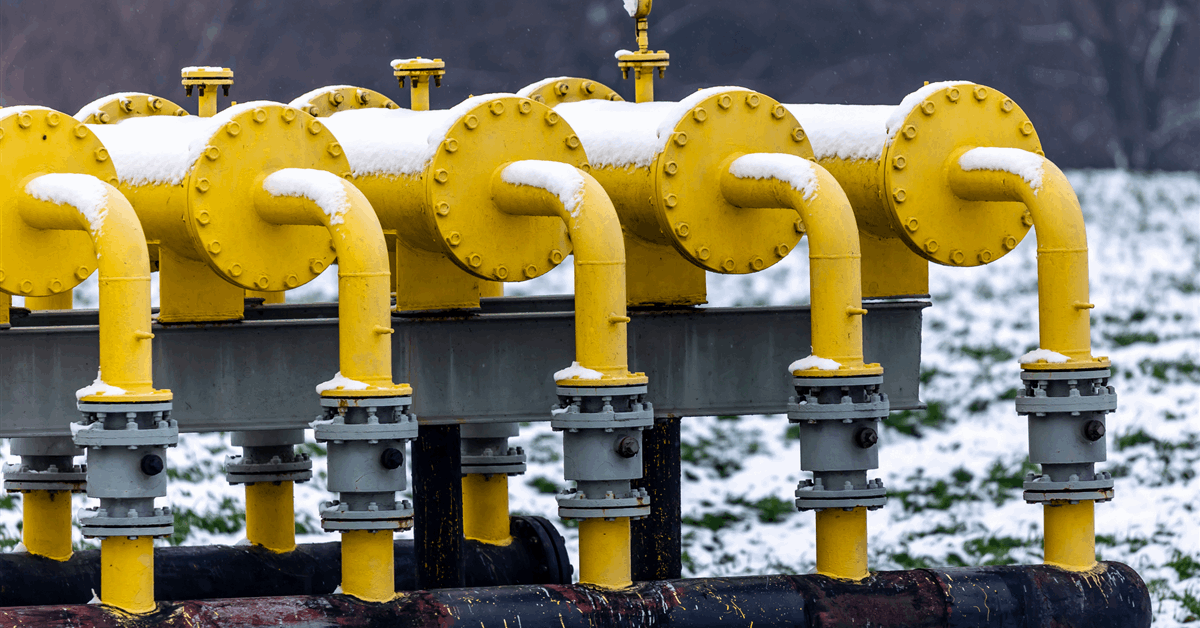
The European Bank for Reconstruction and Development (EBRD) has once again demonstrated its unwavering commitment to Ukraine’s energy security, extending a substantial EUR 500 million ($585.17 million) two-year revolving loan to state-owned Naftogaz Group. This critical financing package is designed to facilitate the procurement of natural gas, ensuring Ukraine’s vital infrastructure and population have access to energy supplies through the upcoming winter and beyond. Crucially, this loan marks a significant departure from previous arrangements, being the first to be provided under a European Union guarantee through the Ukraine Investment Framework’s HiBar program, thereby removing the need for a sovereign guarantee from Ukraine itself. For energy investors, this development signals not only a fortified energy supply chain for a key European nation but also a de-risked financial structure backed by the EU, offering a unique perspective on stability amidst broader market volatility.
Strategic Gas Procurement Fortifies European Energy Resilience
The immediate impact of this EUR 500 million facility is to bolster Ukraine’s natural gas reserves, which currently stand at a concerning 60.16 terawatt hours, representing an 18.7% filling level as of Tuesday. This low storage capacity underscores the urgency and strategic importance of the EBRD’s intervention. By enabling Naftogaz to competitively secure gas from over 30 prequalified international suppliers, the financing directly addresses a critical vulnerability ahead of the colder months. This proactive measure not only safeguards Ukraine’s domestic energy needs but also contributes significantly to broader European energy stability. Any disruption in Ukrainian gas supply, whether due to insufficient reserves or infrastructure issues, has the potential to ripple across the interconnected European grid. Therefore, this investment can be viewed as a foundational element in maintaining regional energy equilibrium, mitigating potential price spikes that could otherwise arise from supply anxieties.
This latest package elevates the EBRD’s total financing to Naftogaz to EUR 1.6 billion, comprising EUR 1.27 billion in direct loans and EUR 330 million in grants facilitated by Norway via the EBRD. Such sustained financial backing from the largest institutional investor in Ukraine highlights a long-term strategic partnership aimed at not only immediate crisis response but also at integrating the Ukrainian gas market with that of the EU. This integration aligns with reform objectives, promising increased transparency and efficiency, which are attractive signals for future private sector engagement in the region’s energy infrastructure and supply chains.
Navigating Volatility: Gas Security Amidst Crude Market Swings
While the focus of this loan is firmly on natural gas, investors cannot ignore the broader energy market context, particularly the dynamics in crude oil. As of today, Brent Crude trades at $94.25, reflecting a 1.29% decline within the day’s range of $93.98 to $95.69. Similarly, WTI Crude stands at $85.90, down 1.74% from its daily range of $85.50 to $86.78. Gasoline prices are also experiencing a slight dip, trading at $3.01, down 0.66%. These daily movements are part of a more significant trend: Brent Crude has seen a substantial downturn of 19.8% over the past 14 days, plummeting from $118.35 on March 31st to $94.86 yesterday. This considerable softening in crude prices provides a unique backdrop to the Naftogaz financing. While the crude market reacts to global demand signals and geopolitical tensions, the EBRD’s gas loan underscores a specific, insulated demand driver rooted in fundamental energy security. For energy investors, this divergence highlights that while the overall energy complex may exhibit volatility, targeted investments in critical infrastructure and supply, particularly those with strong sovereign or supranational guarantees, can offer a degree of resilience and strategic importance that transcends short-term price fluctuations.
Forward-Looking Catalysts and Strategic Repositioning
Beyond immediate winter preparedness, the implications of this financing extend into Ukraine’s long-term energy future. The European Commission has indicated that upon reimbursement of the two-year loan, the EBRD and the Commission will reallocate the available guarantee coverage to support capital investment projects, specifically eyeing the renewables sector. This forward-looking approach signals a strategic pivot for Ukraine’s energy landscape, gradually shifting from crisis-driven fossil fuel procurement to sustainable, long-term energy transition initiatives. For investors, this creates a clear roadmap for future opportunities in Ukrainian infrastructure and green energy development, backed by substantial EU funding frameworks like the Ukraine Facility, which offers up to EUR 50 billion for 2024-2027, with EUR 40 billion earmarked for investment mobilization.
Upcoming energy events within the next 14 days will further shape the market sentiment, interacting with the stability provided by the Naftogaz deal. The OPEC+ JMMC Meeting on April 21st could signal shifts in crude supply strategy, while the EIA Weekly Petroleum Status Reports (April 22nd and April 29th) will offer crucial insights into U.S. inventory levels and demand. The Baker Hughes Rig Counts (April 24th and May 1st) provide leading indicators for future North American production. Critically, the EIA Short-Term Energy Outlook on May 2nd will offer a comprehensive forecast that could influence both crude and natural gas markets. These events will undoubtedly introduce new variables into the energy equation, but the foundational security provided by the EBRD’s gas loan allows European markets to absorb these potential impacts from a position of greater stability, particularly concerning natural gas supply for critical needs.
Addressing Investor Sentiment and Unlocking Opportunity
Our proprietary reader intent data reveals a strong focus among investors on directional market movements, with frequent queries such as “is WTI going up or down?” and “what do you predict the price of oil per barrel will be by end of 2026?” This underscores the prevailing uncertainty and the desire for clear guidance in a volatile market. While the immediate trajectory of crude oil remains a subject of intense debate, influenced by global economic health and geopolitical developments, the EBRD’s loan to Naftogaz presents a compelling, albeit distinct, investment narrative.
For investors seeking stability and strategic exposure within the broader energy sector, this deal highlights the enduring importance of natural gas and the increasing role of multilateral financial institutions in de-risking critical energy projects. The EU’s robust guarantee and the commitment to reallocate funds towards renewable capital investments post-repayment illustrate a thoughtful, long-term strategy for Ukraine’s energy independence and transition. This isn’t merely a short-term fix; it’s an integral component of a larger framework designed to rebuild and modernize Ukraine’s energy infrastructure. Therefore, while crude oil investors grapple with near-term price swings, those with a strategic focus on energy security, European integration, and the nascent renewable energy opportunities emerging from geopolitical shifts may find the developments surrounding Naftogaz and the EBRD to be a significant indicator of future investment landscapes.


