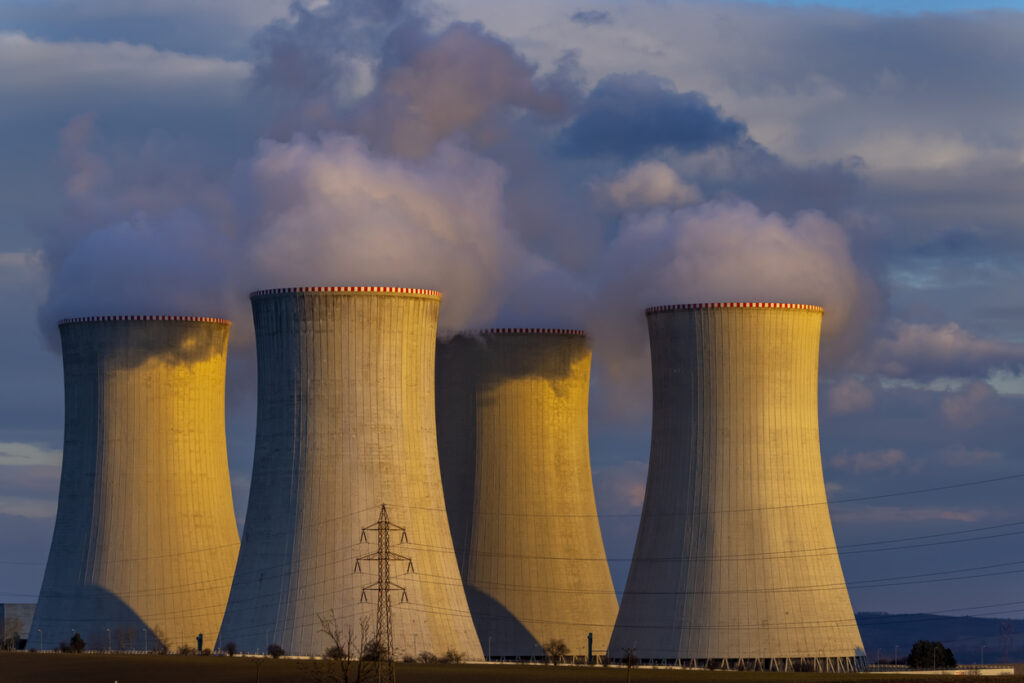
The AI Energy Conundrum: Nuclear’s Strategic Pivot and O&G Implications
The insatiable energy demands of artificial intelligence are rapidly reshaping global power landscapes. What was once a theoretical future is now a present challenge, with data centers consuming unprecedented amounts of electricity. This week’s pivotal announcement from a major data center operator, Equinix, detailing agreements for advanced nuclear electricity—including power purchase agreements and a pre-order for microreactors—marks a significant strategic shift. This move to secure over one gigawatt of nuclear power from developers like California-based Oklo (500 megawatts), Radiant Nuclear (20 microreactors), and European partners ULC-Energy and Stellaria, underscores a proactive approach to sustainable energy for future growth. While these are long-term planning initiatives, also complemented by advanced fuel cell agreements with Bloom Energy, the clear signal is that the tech sector views advanced nuclear as a viable, scalable solution for its voracious energy appetite. For oil and gas investors, this development is not an isolated event; it’s a critical indicator of evolving power generation strategies that could have profound, albeit gradual, impacts on the long-term demand outlook for fossil fuels, particularly natural gas in the electricity sector.
Current Market Dynamics: Navigating Short-Term Volatility Amidst Long-Term Shifts
While the long-term energy transition plays out, oil and gas markets continue to grapple with immediate supply-demand fundamentals and geopolitical uncertainties. As of today, Brent Crude trades at $98.63, reflecting a robust 3.9% gain for the day, having oscillated between $94.42 and $99.84. Similarly, WTI Crude stands at $90.51, up 2.7%, with its daily range spanning $87.32 to $91.82. Gasoline prices have also seen an uptick, currently at $3.08 after a 2.66% increase. These daily movements underscore the market’s sensitivity to current events, often driven by inventory reports, geopolitical flare-ups, or macro-economic sentiment.
However, it’s crucial to contextualize these daily gains against recent trends. Over the past 14 days, Brent Crude has experienced a notable downtrend, falling from $108.01 on March 26th to $94.58 on April 15th, a significant decline of 12.4%. This broader weakening suggests underlying concerns about global demand strength or an anticipation of increased supply. Investors are constantly weighing these immediate price signals against the nascent, yet powerful, structural shifts like the tech sector’s pivot to nuclear. While the direct impact of a few gigawatts of nuclear power on global oil demand is minimal in the short term, the trend signals a potential cap on future growth for natural gas in power generation, which could indirectly influence overall energy commodity prices by altering the supply-demand balance of competing fuels.
Investor Focus: Forecasting Demand Amidst Shifting Power Paradigms
Our proprietary reader intent data reveals a clear investor preoccupation with future price trajectories, with queries like “Build a base-case Brent price forecast for next quarter” and “What is the consensus 2026 Brent forecast?” dominating discussions. These questions highlight the market’s perennial challenge: accurately predicting demand against a backdrop of evolving energy sources and consumption patterns. The strategic embrace of advanced nuclear by major data center operators directly impacts this forecasting exercise.
Historically, significant data center expansion would translate to increased demand for grid electricity, much of which is generated from natural gas or, less commonly, fuel oil. By directly sourcing nuclear power, these tech giants are effectively removing a substantial future demand component from the fossil fuel sector’s growth equation. While the immediate scale is manageable, the precedent set by Equinix and others signals a potential long-term decoupling of AI-driven economic growth from fossil fuel-based power generation. This has direct implications for natural gas demand forecasts, potentially freeing up gas for other industrial uses or making the market looser than previously anticipated. Furthermore, investor interest in specific regional dynamics, such as “How are Chinese tea-pot refineries running this quarter?” and “What’s driving Asian LNG spot prices this week?”, indicates a granular focus on demand pockets that could be more sensitive to these broader shifts in energy sourcing strategies. A reduced need for natural gas in global power grids, even if gradual, could reshape regional LNG pricing and trade flows.
Upcoming Calendar Events: Short-Term Catalysts vs. Long-Term Signals
The immediate horizon is packed with events that will undoubtedly drive short-term market volatility and provide critical insights into supply-side dynamics. This Friday, April 17th, the Baker Hughes Rig Count will offer a snapshot of North American drilling activity, a key indicator for future production. The following week brings even more significant catalysts with the OPEC+ Joint Ministerial Monitoring Committee (JMMC) meeting on Saturday, April 18th, followed by the full Ministerial OPEC+ Meeting on Monday, April 20th. These gatherings are paramount, as any signals regarding production quotas or supply management strategies will have an immediate and profound impact on global crude prices.
Further data points, including the API Weekly Crude Inventory on April 21st and 28th, and the EIA Weekly Petroleum Status Report on April 22nd and 29th, will provide granular detail on U.S. crude and product inventories, offering crucial insights into the health of demand and domestic supply. For savvy investors, the challenge lies in balancing the immediate trading implications of these high-impact events with the slow-burning, structural changes signaled by the tech sector’s pivot to nuclear. While OPEC+’s decisions will dictate the short-term supply-demand balance, the long-term trajectory of energy consumption, particularly in rapidly growing sectors like AI, will be increasingly shaped by alternative energy solutions. The astute investor will monitor whether OPEC+ begins to incorporate these longer-term demand transition signals into their strategic deliberations, which could introduce new dimensions of volatility and opportunity.
Conclusion: Redefining the O&G Demand Horizon
The strategic move by major data center operators to secure advanced nuclear power for AI infrastructure is more than just an energy news item; it’s a significant marker in the ongoing energy transition. While the oil and gas sector remains dominated by short-term supply-demand balances and geopolitical influences, as evidenced by current price movements and upcoming OPEC+ meetings, the long-term demand outlook is undeniably being reshaped. This pivot towards nuclear, alongside other advanced fuel cell technologies, suggests that the exponential growth of AI may not translate into a proportional increase in fossil fuel-based electricity demand. For O&G investors, this necessitates a recalibration of future demand models, particularly for natural gas in power generation. The market is increasingly complex, requiring a holistic view that integrates immediate catalysts with the powerful, underlying currents of technological innovation and energy diversification. Successful navigation will depend on understanding how these long-term strategic shifts in critical growth sectors will ultimately redefine the demand horizon for traditional energy commodities.