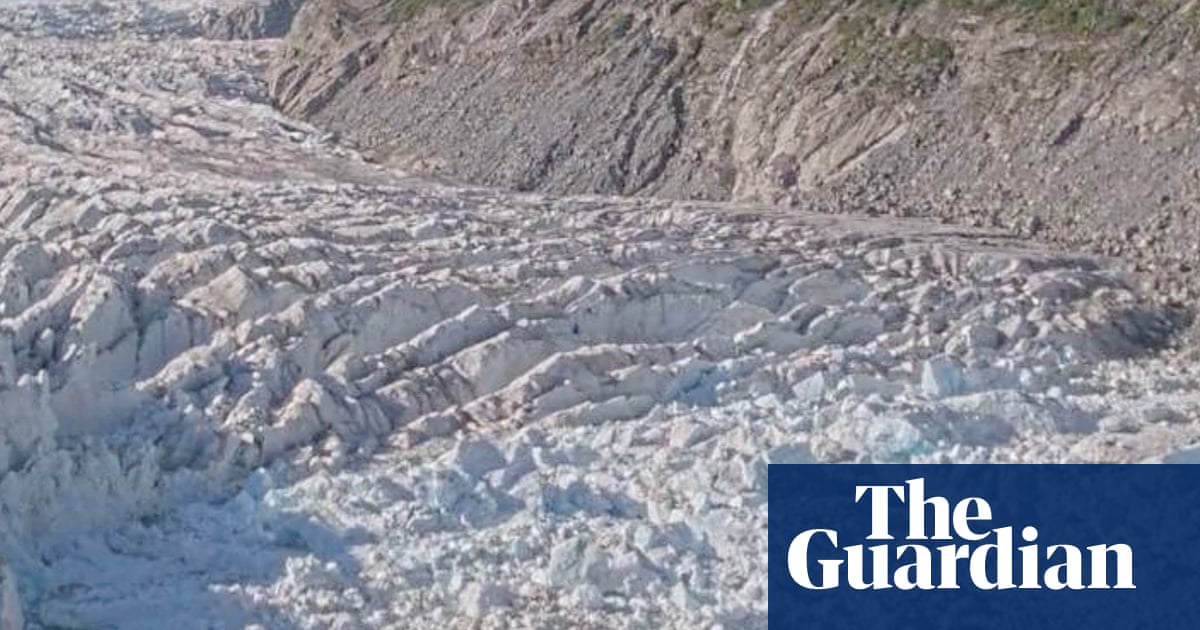
As Alaska faces an escalating series of climate-driven challenges, a significant glacial lake outburst flood (GLOF) currently unfolding in Juneau serves as a stark reminder of the evolving risks to the region. While the immediate threat centers on residential areas of the state capital, the intensifying frequency and severity of such events raise critical questions for energy investors regarding the long-term viability and operational resilience of oil and gas assets across the broader Alaskan landscape. Understanding these emerging physical risks is paramount for accurately assessing future capital expenditures, potential production disruptions, and ultimately, the investment outlook for Arctic energy plays.
Alaska’s Intensifying Climate Risks and Local Impacts
Juneau is currently grappling with a potentially record-setting glacial lake outburst flood, originating from the Mendenhall Glacier’s Suicide Basin. Authorities confirmed that water began escaping the ice dam on Tuesday, with flooding expected to crest around 16 feet on Wednesday morning, significantly surpassing previous records. This annual phenomenon, driven by meltwater from the glacier filling the basin, has been intensifying since 2011. Data from the National Oceanic and Atmospheric Association (NOAA) highlights the underlying cause: Alaska has warmed at double the rate of the rest of the United States over recent decades, with its average annual temperature increasing by 3.1 degrees Fahrenheit over the last century. This rapid warming accelerates glacial retreat, melting, and thinning, creating conditions ripe for more frequent and severe GLOFs. While Juneau itself is not a major oil and gas production hub, the escalating environmental instability underscores a broader trend of climate-induced physical risks impacting infrastructure across the state.
Broader Implications for Alaskan Oil and Gas Infrastructure
The Juneau flood, though localized, is a microcosm of the systemic climate-related challenges facing Alaska’s extensive oil and gas infrastructure. The warming trend, specifically the rapid thawing of permafrost across the Arctic, poses a significant threat to critical assets like the Trans-Alaska Pipeline System (TAPS), drilling platforms, and associated transportation networks. Permafrost degradation can compromise the structural integrity of pipeline supports, foundations for production facilities, and road networks essential for logistics and maintenance. This necessitates substantial capital expenditure for monitoring, reinforcement, and adaptation strategies, increasing operational costs and potentially impacting project economics. Investors assessing Alaskan energy opportunities must factor in these rising physical risks, which could lead to unexpected downtime, increased maintenance burdens, and higher insurance premiums, fundamentally altering the risk-reward profile of assets in the region.
Global Crude Market Navigates Volatility Amid Emerging Risks
Against the backdrop of these escalating regional climate challenges, the global crude market continues to exhibit significant volatility. As of today, Brent crude trades robustly at $99.28 per barrel, reflecting a strong 4.58% gain for the session, while West Texas Intermediate (WTI) crude stands at $91.06 per barrel, up 3.32%. This recent upward momentum follows a notable period of decline, with Brent having fallen from $108.01 on March 26th to $94.58 just yesterday, April 15th. This whipsaw action highlights the market’s sensitivity to supply-demand dynamics and geopolitical tensions. While the immediate impact of the Juneau flood on global crude supply is negligible, the broader trend of climate-induced operational challenges in key production regions like Alaska can subtly contribute to a long-term supply risk premium. Investors are increasingly evaluating how these localized, but intensifying, environmental disruptions could cumulatively constrain future supply growth and influence pricing models, particularly for high-cost, logistically complex regions such as the Arctic.
Forward Outlook: OPEC+ Decisions and Investor Focus on Supply Resilience
The coming weeks are crucial for the oil market, with a series of key events poised to shape the near-term supply outlook. The OPEC+ Joint Ministerial Monitoring Committee (JMMC) meeting on April 18th, followed by the full Ministerial Meeting on April 20th, will be closely watched for any signals regarding production policy. These decisions are critical for investors currently asking for a base-case Brent price forecast for the next quarter, and for those seeking the consensus 2026 Brent forecast. In parallel, weekly data releases such as the API Crude Inventory on April 21st and 28th, and the EIA Weekly Petroleum Status Report on April 22nd and 29th, will provide immediate insights into market balances. While these events primarily drive short-to-medium term price action, the escalating climate risks in regions like Alaska add a layer of long-term supply uncertainty that must be integrated into investment models. The Baker Hughes Rig Count reports on April 17th and 24th will offer glimpses into future drilling activity, but even increased drilling may face headwinds from the operational complexities and higher costs associated with a rapidly changing Arctic environment. Investors must expand their analytical frameworks to encompass not just OPEC+ quotas and inventory levels, but also the increasing influence of climate change on the physical resilience and long-term production capacity of key oil and gas basins.


