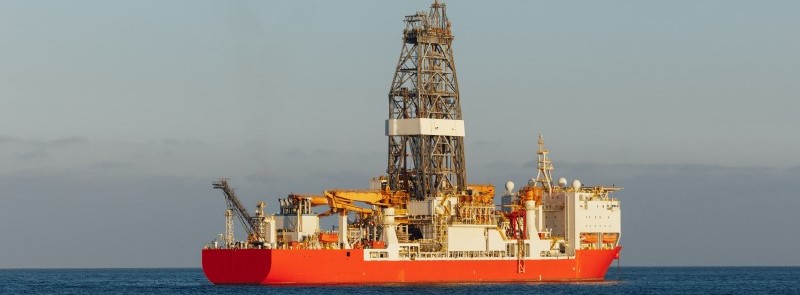
ExxonMobil’s New Caribbean Frontier: A Deep Dive into the Trinidad and Tobago Exploration Deal
ExxonMobil’s latest strategic move into Trinidad and Tobago’s ultra-deepwater offshore block, TTUD-1, marks a significant expansion of its Caribbean footprint, building on the phenomenal success of its Guyana operations. This new production sharing contract signals a renewed push into frontier exploration for the oil major, aiming to unlock substantial hydrocarbon resources in a region eager to reclaim its status as a premier energy hub. For investors, this deal presents a compelling long-term value proposition, contrasting with the short-term gyrations of the crude market, and underscores the enduring importance of large-scale exploration in securing future global energy supply.
ExxonMobil’s Strategic Deepwater Play in the Caribbean
ExxonMobil’s decision to commit to a 7,165 square kilometer exploration block off Trinidad and Tobago is a testament to its confidence in the region’s geological potential and its own deepwater expertise. This move comes a decade after the company’s transformative discovery of over 11 billion barrels of crude in Guyana, a success story that reshaped the global exploration landscape. The integration of “leading technology capability directly from Guyana,” as noted by Exxon’s Vice President for Exploration, John Ardill, is a crucial element of this strategy. This suggests a direct transfer of geological understanding, operational efficiencies, and risk mitigation strategies honed in a geologically similar, albeit technically challenging, environment. The initial mandatory phase of the production sharing contract involves acquiring 3D seismic data over a portion of the block, with an estimated cost of $42.5 million. This relatively modest initial outlay, compared to the potential $20 billion-plus investment if a discovery is made, highlights a phased approach to risk management inherent in deepwater exploration. For shareholders, this represents a calculated bet on unlocking multi-decade production potential, leveraging proven capabilities to de-risk a new frontier.
Trinidad and Tobago’s Revitalization Bid Amidst Evolving Market Dynamics
The government of Trinidad and Tobago is making a concerted effort to re-establish the nation as the “energy capital” of the Caribbean. This ambition is underpinned by significant policy shifts aimed at attracting major international players like ExxonMobil. The consolidation of seven smaller blocks into the single, larger TTUD-1 block for negotiation with ExxonMobil is a prime example of this proactive approach, explicitly designed to “remove risk in both exploration and development.” This strategic flexibility, coupled with commitments to accelerate the responsible exploration of untapped acreage and a comprehensive review of the oil and gas taxation regime, signals a competitive environment for investment. From a market perspective, these long-term supply commitments arrive at an interesting juncture. As of today, Brent crude trades at $99.28, marking a robust 4.58% gain within the day’s range of $94.42-$99.84. Similarly, WTI crude is strong at $91.06 (+3.32%). However, this daily strength contrasts with a recent downward trend, with Brent having declined from $108.01 on March 26th to $94.58 on April 15th, representing a 12.4% drop over 14 days. This volatility underscores the importance of securing diversified, long-term supply sources that can weather price fluctuations, a key driver for both resource-rich nations and major producers.
Navigating Future Volatility: Investor Outlook on Long-Term Supply
For many investors, the immediate focus remains on short-term market signals and price movements, with frequent queries circling around base-case Brent price forecasts for the next quarter and consensus 2026 Brent projections. While these concerns are valid for trading and near-term portfolio adjustments, ExxonMobil’s new venture in Trinidad and Tobago represents a fundamentally different investment horizon. Deepwater exploration and development projects typically span years, often a decade or more, from initial seismic acquisition to first oil. The decisions made today, such as this production sharing contract, are predicated on a long-term outlook for global energy demand and supply dynamics. Upcoming calendar events, such as the OPEC+ JMMC and Full Ministerial Meetings scheduled for April 18th and 20th respectively, will undoubtedly influence near-term sentiment and crude price trajectories. Similarly, weekly data releases like the API and EIA Crude Inventory reports (due April 21st/22nd and April 28th/29th) and the Baker Hughes Rig Count (April 17th and 24th) provide snapshots of current market health. However, these short-term indicators, while crucial for tactical positioning, do not diminish the strategic imperative for oil majors to continuously replenish their resource base through significant exploration plays. Investors with a long-term view understand that projects like TTUD-1 are essential for future cash flow generation, mitigating the natural decline of existing fields, and positioning companies to meet demand decades from now, irrespective of immediate price swings.
The Ultra-Deepwater Risk/Reward Equation for XOM and Investors
The ultra-deepwater environment inherently carries higher geological and operational risks compared to shallow-water or onshore plays. However, the potential rewards, as demonstrated by the Guyana success, can be colossal. ExxonMobil’s initial commitment of $42.5 million for 3D seismic data acquisition represents the first critical step in de-risking the TTUD-1 block. This investment helps to map subsurface structures and identify potential hydrocarbon traps with greater precision, reducing the uncertainty before committing to multi-million dollar drilling campaigns. Energy Minister Roodal Moonilal’s projection of a potential spend exceeding $20 billion if oil or gas is found underscores the massive scale of the prize. This type of investment typically funds multiple exploration wells, extensive appraisal programs, and ultimately, the development of production facilities, including subsea infrastructure and floating production, storage, and offloading (FPSO) vessels. For investors, the risk/reward profile of such ventures is clear: a significant initial exploration expenditure with no guarantee of success, but with the potential for truly transformative discoveries that can add billions of barrels to reserves and drive shareholder value for decades. ExxonMobil’s track record in Guyana, where it successfully navigated similar deepwater challenges, provides a strong precedent for its ability to execute on this ambitious new project in Trinidad and Tobago.