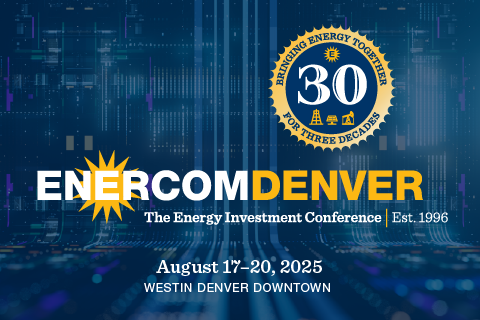
In a global energy landscape defined by rapid shifts and persistent volatility, the value of direct engagement with industry leaders and policymakers cannot be overstated. As investors navigate complex market signals, platforms that offer deep strategic insights become indispensable. The upcoming EnerCom Denver conference, celebrating its 30th anniversary from August 17 to 20, 2025, stands as a critical forum for dissecting the future trajectory of oil, gas, and the broader energy sector. Bringing together a diverse array of executives from governmental bodies, upstream services, midstream infrastructure, and emerging energy technologies, this event promises to deliver perspectives essential for shaping robust investment strategies in the year ahead.
Navigating Persistent Market Headwinds with Strategic Clarity
The current market environment underscores the urgent need for clear strategic direction. As of today, Brent crude trades at $90.38 per barrel, reflecting a sharp 9.07% decline within the day, with its price oscillating between $86.08 and $98.97. Similarly, WTI crude has seen a significant drop, settling at $82.59, down 9.41% on the day, after trading in a range of $78.97 to $90.34. This immediate downturn follows a broader trend: our proprietary data reveals Brent crude has shed $20.91, or 18.5%, over the past 14 days, falling from $112.78 on March 30 to $91.87 on April 17. The retail gasoline market mirrors this bearish sentiment, with prices at $2.93 per gallon, down 5.18% today. Such pronounced volatility and downward pressure demand a proactive, informed approach from investors. Conferences like EnerCom provide a vital opportunity to hear directly from those steering major energy enterprises through these challenging conditions, offering insights into how they are adapting capital allocation, operational efficiencies, and growth strategies amidst fluctuating commodity prices and evolving global demand.
Executive Insights Across the Energy Value Chain
The roster of keynote speakers at EnerCom Denver offers a comprehensive view of the energy landscape, from policy-making to infrastructure and next-generation solutions. Andrew Rapp, Senior Advisor in the U.S. Department of Energy, is set to provide crucial governmental perspectives, likely touching on regulatory frameworks, energy security, and the pace of the energy transition. His insights will be invaluable for understanding the macro policy environment impacting oil and gas investments. Ron Gusek, CEO of Liberty Energy, represents the vital oilfield services segment, offering a ground-level view of upstream activity, drilling efficiency, and the technological innovations driving production. His address will be key for investors assessing the health and future output capacity of the exploration and production sector. Chad Zamarin, CEO of Williams, will focus on the midstream sector, an often-overlooked but critical component of energy infrastructure. His discussions are expected to cover natural gas transportation, pipeline capacity, and the strategic importance of reliable delivery in both domestic and international markets. Finally, Craig Bealmear, CFO of Oklo, brings a forward-looking perspective on emerging energy technologies, including advanced fission. His participation highlights the conference’s commitment to exploring diversification beyond traditional hydrocarbons, providing a glimpse into potential future investment horizons. This diverse panel ensures investors gain a multi-faceted understanding of the challenges and opportunities across the entire energy value chain.
Anticipating Future Catalysts: OPEC+ and Inventory Dynamics
While the EnerCom conference is set for August 2025, the immediate future holds several critical events that will undeniably shape the backdrop for those discussions. Investors must remain attuned to these near-term catalysts to position effectively. This weekend, April 18-19, marks the critical OPEC+ Joint Ministerial Monitoring Committee (JMMC) and full Ministerial meetings. Given the recent significant price declines observed in Brent and WTI crude, the market will be keenly watching for any signals regarding production quotas or supply adjustments. A decision to maintain or deepen cuts could provide a floor for prices, while inaction or an unexpected increase could exacerbate the current downward trend. Following these, the API Weekly Crude Inventory reports on April 21 and 28, alongside the EIA Weekly Petroleum Status Reports on April 22 and 29, will offer granular detail on U.S. supply and demand dynamics. These reports often trigger short-term market reactions and provide essential indicators of underlying consumption trends and storage levels. Furthermore, the Baker Hughes Rig Count on April 24 and May 1 will offer a proxy for producer activity and future supply intentions. The insights gleaned from these immediate events will undoubtedly inform the strategic dialogues and outlooks presented by executives at EnerCom, making continuous market monitoring a prerequisite for maximizing conference value.
Addressing Key Investor Questions: Price Outlook and Portfolio Resilience
Our proprietary reader intent data reveals a clear focus among investors on future oil price trajectories and the resilience of specific energy players. Common questions include “What do you predict the price of oil per barrel will be by end of 2026?” and inquiries about OPEC+ current production quotas. These questions highlight a pervasive uncertainty about long-term market stability and the effectiveness of supply-side management. While definitive predictions are challenging, the insights provided by EnerCom speakers like Andrew Rapp on policy, Ron Gusek on supply capabilities, and Chad Zamarin on infrastructure bottlenecks will be instrumental in constructing informed outlooks. Furthermore, investors are asking about the performance of specific companies, such as “How well do you think Repsol will end in April 2026?” This underscores the need for deep-dive analysis into individual company strategies, balance sheet strength, and exposure to various commodity cycles. The networking opportunities at EnerCom, including the Charity Golf Tournament, Monday Mixer, and Casino Night, provide unparalleled access to financial analysts, portfolio managers, and industry professionals who are actively grappling with these very questions. Engaging with peers and presenters in these informal settings can yield nuanced perspectives beyond formal presentations, helping investors refine their own price forecasts and evaluate the comparative strengths of companies within their portfolios. Ultimately, a blend of macro-level analysis, direct executive insights, and peer-to-peer discussions, as offered by events like EnerCom, is crucial for navigating today’s complex investment landscape and building resilient energy portfolios.