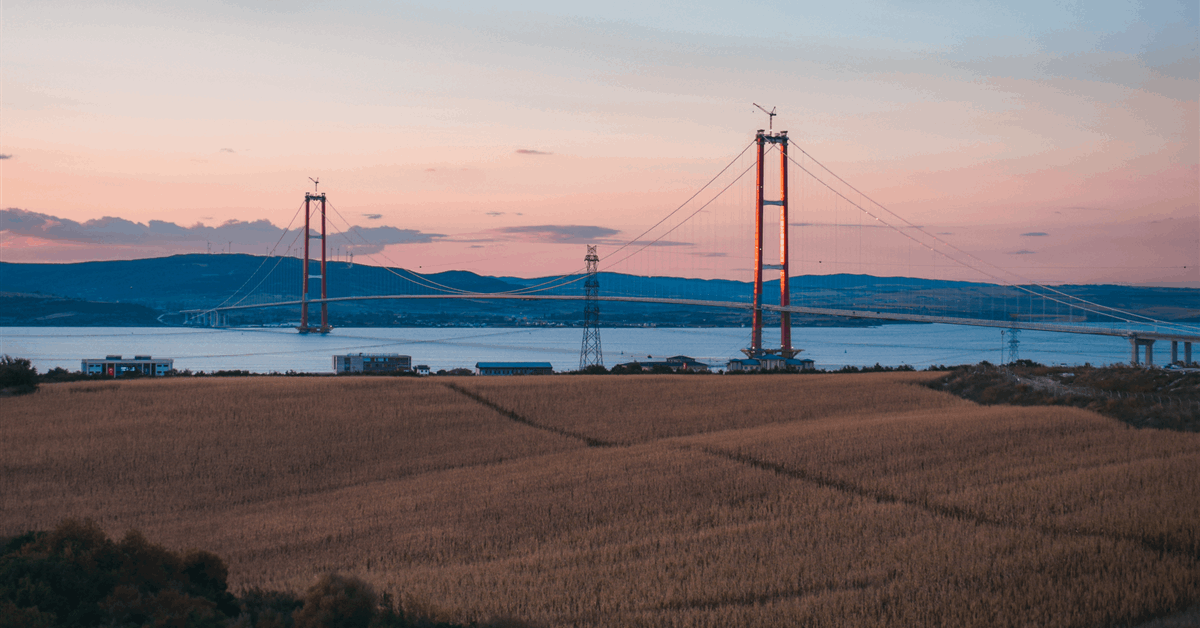
The temporary shutdown of the Dardanelles Strait to shipping on Monday, triggered by raging wildfires across Turkey’s north Aegean coast, serves as a potent reminder of the escalating vulnerabilities within global energy supply chains. This critical maritime chokepoint, a vital conduit for Black Sea and Central Asian oil and gas transit, saw operations halted, albeit briefly, as firefighting efforts intensified. While the strait has since reopened, this incident, set against a backdrop of widespread extreme weather across Europe, underscores how climate-driven events are increasingly becoming direct threats to energy security and, by extension, investment stability in the oil and gas sector. For investors, understanding these emerging risks and their potential for market disruption is paramount in formulating robust energy strategies.
Chokepoint Under Threat: The Dardanelles Incident
The Dardanelles, a narrow and strategically crucial passage connecting the Aegean Sea to the Sea of Marmara and further into the Black Sea, is a linchpin for global energy flows. On Monday, this vital artery was temporarily closed to shipping, including critical oil and gas tankers, as firefighting aircraft utilized the strait’s waters to combat encroaching blazes along Turkey’s north Aegean coast. The wildfires, fueled by extreme heat and strong winds, led to the evacuation of nearly 2,900 residents in Canakkale province, with towns and pine forests still under threat. While the Turkish firefighters eventually contained the most immediate danger, allowing the strait to reopen within hours, the implications for commodity flows were immediate and significant. This brief disruption highlights the precarious balance of relying on such geographically constrained transit routes. Investors must recognize that even short-duration interruptions at key chokepoints can send ripples through global energy markets, forcing a re-evaluation of risk premiums associated with these vulnerable pathways, especially as climate change intensifies the frequency of such events.
European Heatwave and Broader Market Dynamics
Across Europe, a scorching heatwave is fueling an unprecedented series of wildfires, from the outskirts of Madrid and London to Greek islands and the Balkans. Temperatures are forecast to exceed 44C (111F) in parts of Portugal and Spain on Tuesday, with southwest France topping 42C, pushing power prices significantly higher in France and Germany as cooling demand surges. This localized energy strain, however, has not insulated crude markets from broader bearish sentiment. As of today, Brent crude trades at $90.38 per barrel, marking a notable 9.07% decline within a single trading day, with a day range between $86.08 and $98.97. WTI crude has similarly fallen by 9.41% to $82.59 per barrel, fluctuating between $78.97 and $90.34. Even gasoline prices have retreated to $2.93, down 5.18% from the previous close, with a daily range of $2.82 to $3.10. This current market behavior, with prices trending lower, suggests that while specific supply disruptions like the Dardanelles closure capture headlines, broader macroeconomic concerns or anticipated shifts in global supply-demand balances are exerting a more dominant influence on investor sentiment. Indeed, this daily drop comes against a backdrop of a significant multi-week downtrend, with Brent crude having shed nearly 18.5% over the past fortnight, falling from $112.78 on March 30th to $91.87 just yesterday, indicating a pre-existing bearish sentiment in the market that localized disruptions are currently failing to fully offset.
Navigating Upcoming Catalysts: OPEC+ and Inventory Data
The Dardanelles incident, though quickly resolved, serves as a timely reminder of supply fragility as the market looks ahead to several critical events that will shape the near-term energy landscape. Investors are keenly focused on the upcoming OPEC+ Joint Ministerial Monitoring Committee (JMMC) meeting this Saturday, April 18th, followed by the Full Ministerial Meeting on Sunday, April 19th. Against a backdrop of a Brent crude market that has declined by over 18% in just two weeks, their decisions on production quotas will be pivotal. Will the alliance maintain current output levels, or will they signal further adjustments to stabilize prices if demand concerns persist? Any indication of supply tightening from this influential group could quickly reverse some of the recent bearish momentum, especially if global supply risks, like those highlighted by the Dardanelles event, remain elevated.
Beyond OPEC+, weekly data releases will offer crucial insights into market balances. The API Weekly Crude Inventory report on Tuesday, April 21st, and the EIA Weekly Petroleum Status Report on Wednesday, April 22nd, will provide granular detail on U.S. crude, gasoline, and distillate stocks. These reports, alongside the Baker Hughes Rig Count on Friday, April 24th, will be essential for gauging the health of U.S. production and demand. Investors should monitor these releases closely, as unexpected builds or draws could significantly influence short-term price movements and inform long-term investment strategies. Further API and EIA reports are scheduled for April 28th and 29th, respectively, followed by another Baker Hughes Rig Count on May 1st, ensuring a continuous stream of data points to assess market equilibrium.
Investor Outlook: Long-Term Price & Strategic Resilience
The recent market volatility and the Dardanelles event naturally lead to questions frequently posed by our readers, such as “what do you predict the price of oil per barrel will be by end of 2026?” and queries regarding “OPEC+ current production quotas.” These questions underscore a pervasive concern about both near-term stability and long-term price trajectories amidst an increasingly complex global energy picture. Forecasting oil prices for late 2026 demands a holistic view, integrating geopolitical stability, global economic growth, and crucially, the accelerating impact of climate change on infrastructure and demand patterns. While the Dardanelles re-opened quickly, the underlying trend of more frequent and intense extreme weather events—from wildfires forcing evacuations on Greek islands to red heat warnings across Spain, France, Croatia, Serbia, and Romania—suggests that physical supply disruptions will become a more regular feature of the energy market. This ongoing vulnerability could introduce a higher risk premium into crude prices over time, even as demand dynamics evolve.
Regarding OPEC+ quotas, their upcoming meetings are critical. Any adjustments to their current production levels will directly influence global supply and thus price formation. An aggressive stance on cuts could support prices, while maintaining current output might signal confidence in demand recovery or a desire to avoid ceding market share. For integrated energy players, exemplified by inquiries about “how well Repsol will end April 2026,” resilience lies in diversified portfolios, robust hedging strategies, and a focus on operational efficiencies that can absorb such shocks. Companies with strong refining margins and a strategic pivot towards lower-carbon solutions might be better positioned to navigate both short-term market turbulence and the longer-term energy transition. Ultimately, long-term oil price predictions must factor in the increasing frequency and intensity of climate-related disruptions, which add an inherent layer of uncertainty and potential for sudden supply shocks to an already intricate market.


