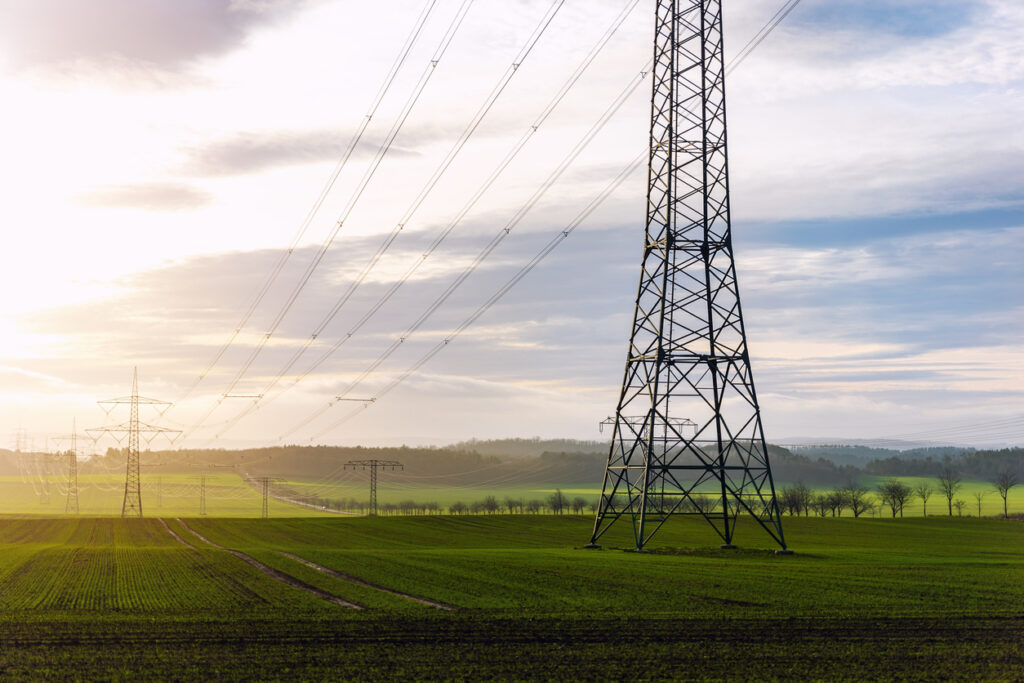
The energy landscape is undergoing a profound transformation, and new projections from the Energy Information Administration (EIA) underscore a critical, often underestimated, driver for future demand: electricity consumption. The EIA’s latest Short-Term Energy Outlook reveals that U.S. power demand is set to reach unprecedented highs in both 2025 and 2026. This isn’t just incremental growth; it’s a structural shift fueled by the accelerating adoption of artificial intelligence, burgeoning cryptocurrency operations, and a broader societal pivot towards electrification in homes and businesses. For investors tracking the pulse of the global energy markets, understanding this surge in electricity demand and its implications for the fuel mix is paramount to positioning portfolios effectively.
The Electrification Imperative: Record Power Demand Looms
The United States is on a trajectory to shatter previous records for electricity consumption, with the EIA forecasting a robust increase over the next two years. Total power demand is projected to climb from a record 4,097 billion kilowatt-hours (kWh) in 2024 to 4,186 billion kWh in 2025, further escalating to 4,284 billion kWh in 2026. This significant expansion is not evenly distributed but driven by distinct, powerful forces. A substantial portion of this growth stems from the insatiable energy requirements of data centers dedicated to artificial intelligence and cryptocurrency mining, rapidly expanding sectors that demand constant, high-volume power. Concurrently, a secular trend towards electrification means homes and businesses are increasingly relying on electricity, rather than direct fossil fuel combustion, for heating, cooling, and transportation needs, further bolstering demand figures.
Breaking down the 2025 forecasts, residential consumers are expected to account for 1,515 billion kWh, surpassing their 2022 high of 1,509 billion kWh. Commercial customers are projected to consume 1,476 billion kWh, well above their 2024 peak of 1,434 billion kWh. Industrial customers, while not setting a new all-time high (forecast at 1,051 billion kWh against a 2000 record of 1,064 billion kWh), will still contribute significantly to the overall demand surge. These figures collectively paint a clear picture: electricity is becoming the backbone of the modern economy, and its expanding role creates ripple effects across the entire energy complex, influencing everything from natural gas prices to infrastructure investment.
Natural Gas: A Shifting Role Amidst Surging Demand
While overall electricity demand is surging, the role of natural gas in the U.S. power generation mix is undergoing a subtle yet critical recalibration. The EIA projects that natural gas’s share of power generation will slightly decline from 42% in 2024 to 40% in both 2025 and 2026. This indicates that while the absolute demand for power is growing, other energy sources are capturing a larger slice of the generation pie. Specifically, natural gas sales for power generation are forecast to fall to 35.8 billion cubic feet per day (bcfd) in 2025, down from an all-time high of 36.9 bcfd in 2024. This trend suggests increased competition from renewable sources, which are projected to rise from 23% in 2024 to 26% in 2026, and a temporary increase in coal’s share to 17% in 2025 before it slides to 15% in 2026.
However, natural gas demand outside of power generation remains robust, albeit with its own historical context. In 2025, residential consumers are expected to demand 13.1 bcfd, commercial customers 9.7 bcfd, and industrial customers 23.5 bcfd. While these figures do not match their respective historical peaks (residential 14.3 bcfd in 1996, industrial 23.8 bcfd in 1973), the commercial sector’s forecast of 9.7 bcfd in 2025 slightly exceeds its 2019 high of 9.6 bcfd. This nuanced outlook for natural gas is crucial for investors. While its dominance in power generation faces headwinds from renewables, its foundational role across other sectors ensures sustained demand. Questions from our readers, such as “What’s driving Asian LNG spot prices this week?”, highlight the global interconnectedness of gas markets. U.S. domestic gas dynamics, including its utilization in a shifting power generation mix, directly impact the availability and pricing of liquefied natural gas (LNG) for export, thereby influencing global spot markets.
Crude Volatility and the Macro Energy Picture
The broader commodity markets, particularly crude oil, continue to exhibit significant volatility, influencing the investment landscape even as electricity demand surges. As of today, Brent crude trades strongly at $99.56, marking a robust +4.88% gain within a day range of $94.42 to $99.84. Similarly, WTI crude has seen a substantial increase of +3.74% to $91.43, trading between $87.32 and $91.82. Gasoline prices also reflect this upward momentum, rising +2.66% to $3.08. This recent surge follows a significant correction, with Brent falling from $108.01 just weeks ago on March 26 down to $94.58 yesterday, before today’s sharp rebound. This 14-day trend, showing a $13.43 decline followed by a strong recovery, underscores the inherent sensitivity of crude markets to geopolitical developments, supply expectations, and global economic signals.
While crude oil is not a primary fuel for U.S. power generation, its price trajectory and overall market sentiment are inextricably linked to the macro energy picture. The EIA’s projections of surging electricity demand, driven by AI and electrification, signal robust economic activity and a foundational shift in energy consumption patterns. These macro trends inevitably influence investor expectations for overall energy demand, indirectly impacting crude oil forecasts. Many of our readers are actively seeking clarity, asking “Build a base-case Brent price forecast for next quarter” and “What is the consensus 2026 Brent forecast?” The underlying strength in electricity demand, coupled with persistent geopolitical risks and OPEC+ supply management, provides a bullish undercurrent that investors must factor into their long-term crude price models. The shift away from direct fossil fuel use in specific sectors, as highlighted by the EIA, may temper some demand growth for refined products, but the overall energy intensity of a digitally transforming economy remains high.
Navigating the Near-Term: Key Catalysts for Energy Investors
For energy investors, the confluence of long-term demand shifts and immediate market catalysts requires careful attention. The coming weeks are packed with events that will shape crude oil and natural gas price action. This Friday, April 17, brings the latest Baker Hughes Rig Count, offering a crucial barometer of U.S. drilling activity and potential future supply. This will be followed by another update on April 24, providing a near-real-time pulse on producer response to current prices and the forward demand outlook.
Crucially, the OPEC+ Joint Ministerial Monitoring Committee (JMMC) is scheduled to meet on Saturday, April 18, preceding the full OPEC+ Ministerial Meeting on Monday, April 20. These gatherings are pivotal, as member nations will review market conditions and potentially adjust production quotas, directly impacting global crude supply dynamics. Any decisions made here will inevitably influence the base-case Brent price forecasts our readers are seeking. Furthermore, weekly inventory data from the American Petroleum Institute (API) on April 21 and April 28, followed by the official EIA Weekly Petroleum Status Report on April 22 and April 29, will provide vital insights into U.S. crude, gasoline, and distillate stock levels, acting as key short-term sentiment drivers. Investors must integrate these forward-looking events with the EIA’s long-term power demand projections to develop a comprehensive strategy for navigating the evolving energy landscape.