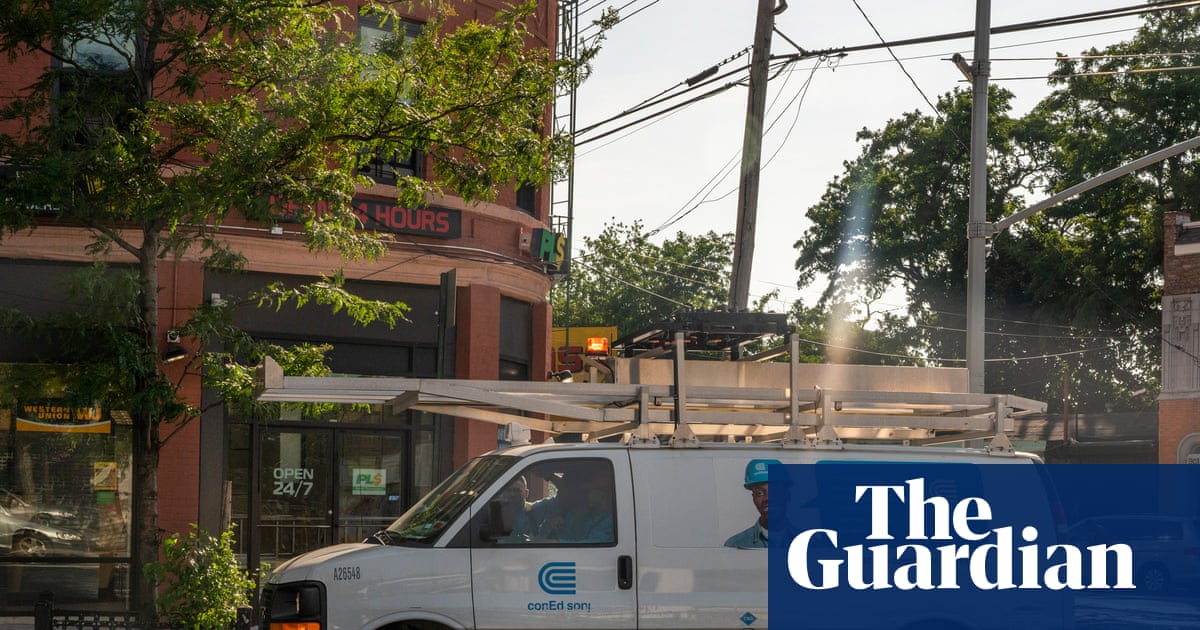
The urban utility sector, traditionally seen as a stable haven for investors, is increasingly navigating a complex landscape where financial imperatives clash with growing energy affordability crises. In one of the nation’s largest metropolitan areas, a major energy provider is proposing an 11% hike in utility bills while simultaneously escalating customer disconnections. This aggressive cost recovery strategy, which has seen tens of thousands of households cut off from power, presents a nuanced risk-reward profile for investors seeking exposure to essential infrastructure assets, particularly as global energy markets experience significant shifts.
The Aggressive Pursuit of Cost Recovery in Urban Utilities
In the first half of 2025, this New York-based energy company, a monopoly provider to 3.6 million homes, disconnected over 88,000 households. This figure represents a dramatic increase, tripling the total number of families left without power in the entirety of 2024. The data reveals a focused effort to address outstanding debts, with 16,327 households losing power in June alone, coinciding with the region’s first heatwave. This period saw record-breaking temperatures and a surge in emergency room visits, underscoring the critical nature of reliable energy access. While the utility’s aggressive approach has seemingly yielded results in the short term—total customer debt fell from $948 million at the end of 2024 to $840 million by the end of June 2025—it has also left 12.5% of its customers still behind on payments. Projections indicate that if current trends persist, the utility could disconnect as many as 150,000 households by year-end, a number that would mark it as the highest in the nation. For investors, this signals a utility prioritizing balance sheet health, but at what potential cost to its regulatory standing and public relations?
Global Crude Downturn Collides with Local Utility Price Hikes
The proposed 11% rate increase for customers in one of the country’s most expensive electricity markets comes at a peculiar time for the broader energy complex. Our proprietary market data shows a recent downward trend in crude prices. As of today, Brent Crude trades at $90.38, down 9.07% within a day range of $86.08 to $98.97, while WTI Crude is at $82.59, marking a 9.41% decline. Over the past 14 days, Brent has shed 18.5%, falling from $112.78 to $91.87. Gasoline prices have also seen a dip, currently at $2.93, down 5.18%. This significant softening in global crude prices, which often correlates with lower input costs for electricity generation, presents a stark contrast to the local utility’s push for substantial rate hikes. Investors must consider this divergence: will falling wholesale energy costs mitigate the need for such steep increases, or are the utility’s pressures primarily driven by distribution infrastructure, regulatory compliance, and other fixed costs that are less sensitive to crude price fluctuations? The optics of rising consumer bills amidst a declining global commodity market could intensify public and regulatory scrutiny, potentially impacting the swift approval of the proposed rate increase.
Regulatory Battlegrounds and the Forward Price Curve: What Investors Need to Watch
The forward-looking analysis for this utility, and indeed for the broader energy sector, is heavily influenced by both local regulatory decisions and global market dynamics. The proposed 11% rate increase will undoubtedly face a rigorous review process. From an investment perspective, the outcome of this regulatory battle will be a key determinant of the utility’s future revenue stability and profitability. Concurrently, investors are keenly focused on the trajectory of global oil prices, with many of our readers asking about our predictions for oil prices by the end of 2026 and the current production quotas set by OPEC+. These questions highlight the interconnectedness of local utility costs and the international crude market. Upcoming energy events on our calendar will offer critical insights: the OPEC+ Joint Ministerial Monitoring Committee (JMMC) meeting on April 18th and the Full Ministerial Meeting on April 19th could signal shifts in production policy that directly impact global supply and pricing. Further, weekly API and EIA inventory reports, scheduled for April 21st, 22nd, 28th, and 29th, will provide near-term indicators of supply-demand balances. While these macro factors don’t immediately dictate local electricity rates, a sustained period of lower crude prices could empower regulators to push back on future rate increases or demand greater investment in grid modernization and efficiency, thereby influencing the utility’s long-term capital expenditure and return on investment.
ESG Imperatives: Navigating Social Risk in Utility Portfolios
Beyond the financial and regulatory aspects, the aggressive disconnection strategy introduces significant environmental, social, and governance (ESG) risks for investors. The narrative of 88,000 households, including 1 in 5 remaining without power for at least a week, losing essential services amidst extreme heatwaves, creates a powerful social backlash. The data indicates a disproportionate impact on Black and Latino residents, who are almost eight times more likely to experience a utility shutoff. Experts characterize these disconnections as “inhumane” and “traumatizing,” with severe consequences for vulnerable families. Heat-related deaths already account for approximately 3% of fatalities in New York from May through September, underscoring the life-or-death implications of energy access. For investors, this is not merely a humanitarian concern; it translates into tangible risks. Heightened public outcry can lead to stricter regulatory oversight, legislative action to cap rate increases or prohibit disconnections during extreme weather, and even mandates for utilities to absorb more of the cost of arrears. Such interventions could directly impact the utility’s cash flow, operational flexibility, and ultimately, its asset valuation. Investors in the utility sector must increasingly integrate these social impact metrics into their due diligence, recognizing that a perceived failure in social responsibility can erode trust, invite punitive measures, and diminish long-term shareholder value, regardless of short-term financial gains from aggressive cost recovery.


