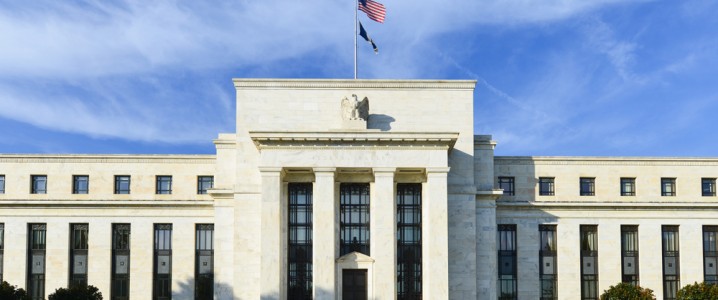
The nomination of Stephen Miran to a temporary seat on the Federal Reserve’s Board of Governors signals a clear and aggressive intent to reshape U.S. monetary policy, with profound implications for interest rates, economic growth, and ultimately, the energy markets. As a vocal critic of the central bank’s current direction and a close economic advisor, Miran’s potential confirmation places a direct voice of the executive branch within the Federal Open Market Committee (FOMC) during a period of significant economic uncertainty. For oil and gas investors, understanding this evolving dynamic is crucial, as shifts in interest rate policy directly influence demand, commodity pricing, and investment flows across the sector.
The Fed’s Shifting Sands: A Direct Challenge to Monetary Independence
President Trump’s decision to nominate Stephen Miran to fill the remainder of Adriana Kugler’s term, which concludes on January 31, 2026, represents more than a mere placeholder appointment. Analysts widely interpret this as a tactical maneuver designed to secure immediate policy influence within the Fed without committing to a permanent Chair nominee. Miran, long an advocate for significant presidential control over the central bank, has previously proposed reforms such as shorter Fed terms, public ownership of Federal Reserve Banks, and stricter limitations on officials rotating between the White House and the Fed. While these radical overhauls would require congressional approval and are unlikely to materialize within his brief tenure, the nomination itself sends an unmistakable message regarding the executive’s desire to recalibrate the balance of power with the traditionally independent central bank. This assertion of influence introduces a new layer of political risk to the Fed’s decision-making framework, a factor that energy investors must now weigh alongside traditional economic indicators.
Interest Rate Trajectory: Disinflationary Arguments vs. Persistent Inflation Risks
At the core of Miran’s appointment lies a fundamental disagreement over the causes and remedies for inflation, particularly concerning the impact of protectionist trade policies. Federal Reserve Chair Jerome Powell and other Fed leaders have consistently cited the inflationary risks of tariffs as a rationale for maintaining elevated interest rates, holding the federal funds target range at 4.25%–4.5% following their July meeting. Miran, however, vehemently disputes this assessment, asserting that many Fed officials suffer from “tariff derangement syndrome” and that Trump’s fiscal policies were, in fact, “extremely disinflationary.” His alignment with Governor Christopher Waller, whom he has praised for avoiding “tariff hysteria,” suggests a potential shift towards a more dovish stance within the FOMC. This policy clash gains immediate relevance as new data points to a sharp slowdown in hiring and growing concerns about labor market softness, fueling expectations for a rate cut in September. Major financial institutions like JPMorgan and Evercore ISI now anticipate a 25-basis-point reduction at the next FOMC meeting, a move Miran would almost certainly support if confirmed in time. This potential easing of monetary policy could provide a much-needed tailwind for economic activity, influencing demand forecasts for crude and refined products.
Investor Focus: Navigating Macro Headwinds and Energy Market Fundamentals
Our proprietary market data indicates that investors are keenly focused on what these monetary policy shifts mean for future crude trajectories. We consistently see questions about our base-case Brent price forecast for the next quarter and the broader consensus for 2026. This intense focus underscores the market’s recognition that monetary policy directly influences the demand side of the energy equation. A more dovish Fed, potentially influenced by Miran’s arguments, could lead to lower interest rates, stimulating economic growth and, consequently, increasing global energy consumption. However, this is balanced against concerns about the underlying health of the economy, as evidenced by recent labor market softness. As of today, Brent crude trades at $99.62, showing a robust daily gain of 4.94% within a range of $94.42-$99.65. WTI crude similarly advanced, reaching $91.18, up 3.46% on the day. Gasoline prices also saw a significant boost, climbing to $3.08, an increase of 2.66%. This strong daily performance for crude and products, despite broader economic anxieties, suggests that the market may be pricing in the potential for future stimulus and resilient demand, even as it has navigated a challenging fortnight where Brent shed over 12% from $108.01 on March 26th to $94.58 on April 15th.
Upcoming Catalysts: Monetary Policy Meets Supply-Side Dynamics
As we look ahead, the immediate horizon is packed with critical energy market catalysts that will intersect with this evolving monetary policy narrative. The OPEC+ Joint Ministerial Monitoring Committee (JMMC) meets on April 18th, followed by the full Ministerial Meeting on April 20th. These gatherings are pivotal for assessing global supply strategies, and any adjustments to output quotas will be heavily influenced by members’ perceptions of future demand. A potentially looser Fed stance, encouraging economic growth, could embolden OPEC+ to maintain or even slightly increase production if they foresee stronger consumption. Furthermore, the regular Baker Hughes Rig Count reports on April 17th and April 24th will provide crucial insights into North American production trends, while the API Weekly Crude Inventory (April 21st, April 28th) and EIA Weekly Petroleum Status Report (April 22nd, April 29th) will offer granular data on U.S. supply and demand. The interplay between these fundamental energy market indicators and the potential for a more interventionist, rate-cutting Federal Reserve will define the investment landscape for the coming months. Investors must remain vigilant, as the ripple effects of Miran’s nomination could soon become tangible in the commodity markets.
Stephen Miran’s nomination represents a significant inflection point for the Federal Reserve and a critical development for oil and gas investors. His potential influence on interest rate policy, driven by a divergent view on inflation and economic stimulus, could materially alter the demand outlook for crude and refined products. While the path to confirmation and the extent of his impact remain subject to political and economic realities, the message is clear: the Fed’s traditionally independent approach to monetary policy is under renewed scrutiny. Navigating the intersection of these evolving macro policies with fundamental supply-side dynamics, as reflected in upcoming OPEC+ decisions and inventory reports, will be paramount for capital preservation and growth in the energy sector.


