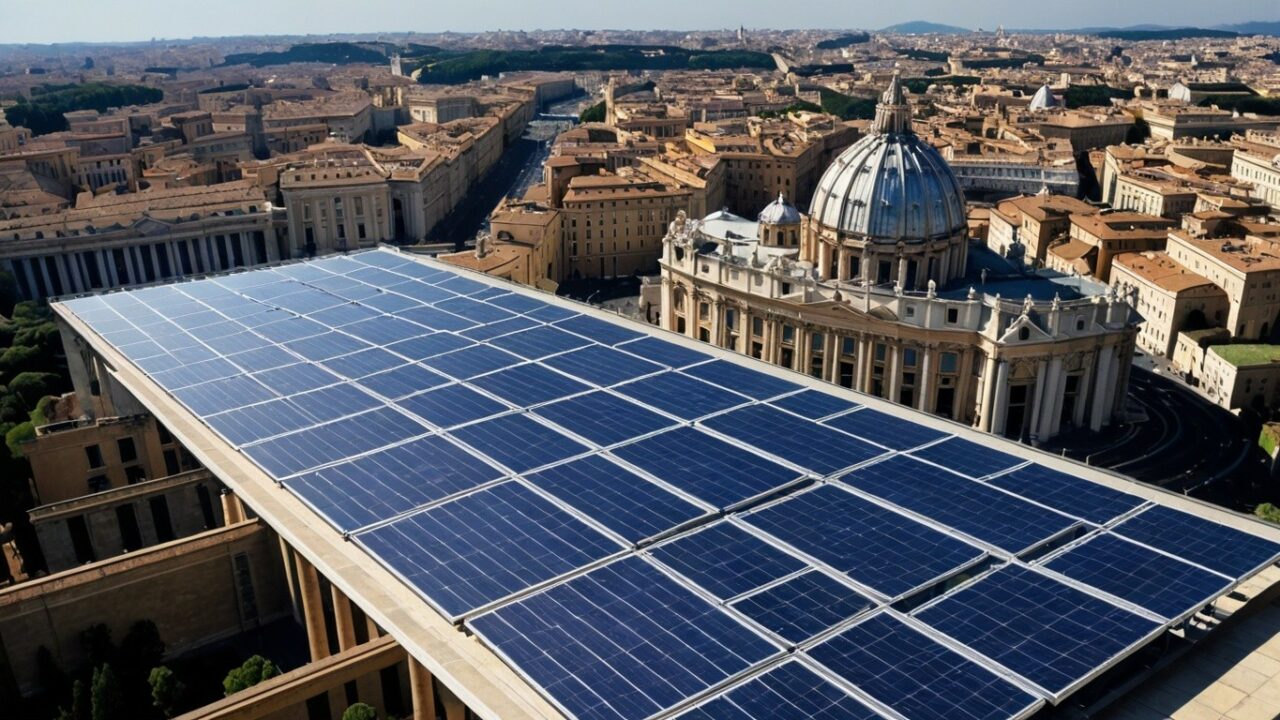
In a world increasingly focused on sustainable energy, a significant, albeit often overlooked, development from the heart of Europe offers profound insights into the ongoing energy transition. The agreement between Italy and the Holy See to transform the 430-hectare Santa Maria Galeria site north of Rome into a substantial solar farm is more than just a symbolic gesture; it’s a concrete step towards making Vatican City the world’s first carbon-neutral state. This initiative, designed to fulfill the Vatican’s entire electricity demand with excess power benefiting the local community, carries an estimated price tag under €100 million. For energy investors, this project, championed by Pope Francis’s commitment to clean energy, underscores a powerful global pivot that demands attention, reflecting broader trends in energy independence, long-term cost stability, and the strategic diversification of energy portfolios.
The Vatican’s Green Play: A Microcosm of Macro Trends
The decision to develop the Santa Maria Galeria solar facility is a prime example of strategic energy planning, even for a microstate. This 430-hectare site, previously known for its Vatican Radio towers, is set to become a beacon of renewable energy generation. The agreement with Italy provides the Vatican with crucial exemptions from import taxes on solar panels, while Italy benefits by counting the generated clean energy towards its European Union targets. This symbiotic relationship highlights how nations and institutions are increasingly leveraging renewable projects to achieve both environmental goals and practical energy security.
From an investment perspective, such a move by a globally recognized entity like the Vatican offers a stark contrast to the immediate volatility dominating traditional fossil fuel markets. As of today, Brent Crude is trading at $94.45, reflecting a 1.08% decline within its day range of $93.98 to $95.69. Similarly, WTI Crude stands at $86.12, down 1.49% from its opening, having fluctuated between $85.5 and $86.78. This short-term price action is part of a larger trend; our proprietary data shows Brent crude has plummeted from $118.35 on March 31st to $94.86 yesterday, representing a significant 19.8% contraction in just three weeks. This substantial depreciation underscores the inherent price instability in crude oil markets, making long-term, fixed-cost renewable energy solutions, like the Vatican’s solar farm, increasingly attractive for entities seeking predictable energy expenditures and environmental sustainability.
Shifting Energy Portfolios and Investor Sentiment
The Vatican’s commitment to a €100 million solar farm speaks volumes about the evolving investment landscape in energy. It signals a move away from reliance on fluctuating fossil fuel markets towards stable, domestically generated clean power. This strategic shift resonates deeply with questions our readers are actively posing. Many investors are keenly asking about the future trajectory of crude oil, with queries like “is WTI going up or down” and predictions for “the price of oil per barrel by end of 2026.” While short-term market dynamics are influenced by myriad factors, the Vatican’s long-term bet on solar energy provides a powerful counter-narrative, suggesting that for some, the ‘up or down’ question is being answered by a decisive shift ‘towards renewables.’
This institutional embrace of solar power suggests that investors should be evaluating their portfolios not just on immediate price movements, but on future resilience and alignment with global energy trends. The project’s goal of achieving carbon neutrality for Vatican City serves as a tangible example of a broader societal push for decarbonization, a force that will undeniably shape demand for traditional oil and gas products in the coming decades. Companies with robust renewable energy strategies or those facilitating the energy transition are likely to capture increasing investor interest, providing a hedge against the uncertainties and potential long-term decline in demand for conventional energy sources.
Navigating Near-Term Volatility Amidst Long-Term Transition
While the Vatican’s solar initiative represents a long-term strategic play, investors in the broader energy market must simultaneously navigate immediate market catalysts. The coming weeks are packed with events poised to influence short-term oil and gas prices. Just today, April 21st, the OPEC+ JMMC Meeting is underway, with market participants eagerly awaiting any signals regarding production policy. Tomorrow, April 22nd, brings the EIA Weekly Petroleum Status Report, a critical indicator of U.S. inventory levels and demand. Later this week, on April 24th, the Baker Hughes Rig Count will provide insights into drilling activity, offering a forward look at potential supply changes.
These regularly scheduled events, along with subsequent reports like the API Weekly Crude Inventory on April 28th and May 5th, and the EIA Short-Term Energy Outlook on May 2nd, create a dynamic and often volatile trading environment. For investors, the challenge lies in balancing these short-term market reactions with the undeniable long-term transition exemplified by projects like the Vatican’s. While an OPEC+ decision or an unexpected inventory build can move Brent crude prices by several dollars in a single day, the strategic imperative for clean energy generation, driven by environmental mandates and energy security concerns, continues to gain momentum globally. Savvy investors are increasingly looking for opportunities that offer both exposure to the traditional energy sector’s immediate movements and strategic positioning within the burgeoning renewable energy infrastructure.
Investment Implications: Beyond the Barrel
The Vatican’s solar project underscores a fundamental shift in how institutions view energy. It’s a clear signal that even entities with unique geopolitical standing are prioritizing energy independence and carbon neutrality over traditional energy procurement. For investors, this translates into several key implications. Firstly, it reinforces the growing importance of Environmental, Social, and Governance (ESG) factors in investment decisions. Projects like Santa Maria Galeria demonstrate that sustainability is not just a moral imperative but a practical, economic strategy for long-term operational stability.
Secondly, it highlights the increasing viability and scalability of renewable energy infrastructure. A 430-hectare solar farm designed to power an entire sovereign state, with excess capacity for local communities, represents a significant undertaking. This type of large-scale development creates substantial opportunities for investment in solar technology manufacturers, project developers, grid infrastructure providers, and energy storage solutions. As more nations and major institutions follow suit, the demand for these technologies and services will continue to surge, offering compelling growth prospects beyond the traditional oil and gas exploration and production sectors. The strategic moves by even non-commercial entities serve as powerful indicators of where the global energy capital is flowing, guiding astute investors towards the next wave of energy innovation and long-term value creation.


