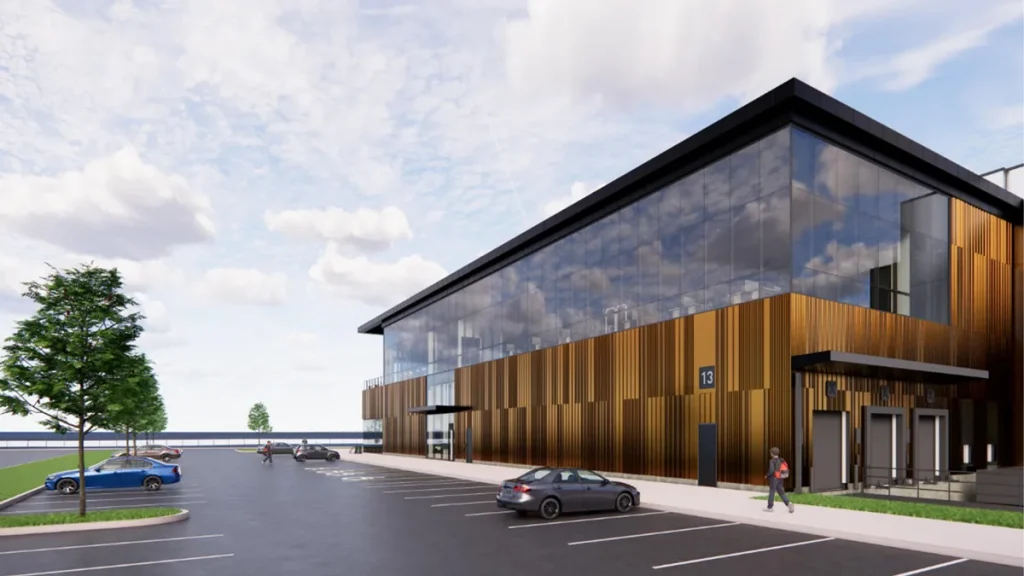
A New Blueprint for Industrial Energy Demand: Meta’s Shift to Mass Timber
The global industrial landscape witnesses a significant strategic pivot as major tech players re-evaluate their infrastructure development. Meta Platforms, a titan in the digital realm, is spearheading an innovative approach to data center construction, one that promises to reshape demand profiles for traditional industrial materials and the energy systems that support them. This strategic move, focusing on mass timber for its sprawling U.S. data center campuses, signals a deeper commitment to decarbonization that extends beyond operational energy consumption to the very building blocks of its physical assets. For energy investors, understanding such shifts is paramount for forecasting long-term demand trends and evaluating market resilience.
Decarbonizing Capital Expenditure: A 2030 Net-Zero Vision
Meta’s ambitious target to achieve net-zero emissions across its entire value chain by 2030 is driving profound changes in its capital expenditure allocation and supply chain management. A critical component of this strategy involves dramatically reducing the embodied carbon in its new data center construction. The company explicitly acknowledges that achieving this objective necessitates viable, lower-carbon alternatives to conventional, energy-intensive materials like structural steel and concrete. This isn’t merely an environmental initiative; it’s a strategic de-risking of future infrastructure investments against tightening carbon regulations and evolving investor expectations regarding environmental, social, and governance (ESG) performance. While Meta concurrently explores avenues for near-zero-emissions steel through its participation in RMI’s Sustainable Steel Buyers Platform and pilots various low-carbon concrete solutions, its embrace of mass timber represents a tangible, deployable pathway for immediate impact.
Mass Timber: A Bio-Based Answer to Industrial Scale
What exactly is mass timber, and why is it attracting the attention of industrial-scale developers? This category encompasses engineered wood products specifically designed for demanding applications, ranging from high-rise buildings to critical data infrastructure. Key examples include glue-laminated beams and columns (glulam), robust mass plywood panels, prefabricated timber wall assemblies, and cross-laminated timber (CLT). CLT, in particular, stands out for its structural integrity, formed by gluing thickly sawn lumber in alternating 90-degree grain directions. The fundamental appeal of these materials for industrial construction lies in their inherently lower embodied carbon footprint compared to many manufactured alternatives. Sourced from sustainably managed forests, these bio-based materials inherently sequester carbon during their growth cycle, offering a compelling natural carbon sink within the built environment. This characteristic directly challenges the carbon intensity of traditional materials, providing a significant advantage in the race to net-zero.
Operational Efficiencies and Project Acceleration
Beyond the environmental benefits, mass timber presents compelling operational and financial advantages for large-scale construction projects. Meta’s assessment indicates that incorporating mass timber into its administrative buildings alone slashes the embodied carbon of substituted materials by an impressive 41%. The nature of mass timber products, largely prefabricated off-site, introduces significant efficiencies. This prefabrication drastically reduces the need for extensive on-site steel welding, which not only lowers direct emissions from construction activities but also accelerates project timelines by several weeks. Furthermore, the lighter weight of mass timber compared to conventional steel structures translates into substantial reductions in foundation concrete requirements—potentially by as much as half in some applications. This directly impacts the demand for cement, a notoriously energy-intensive commodity. Additional benefits include reliable fire resistance, a superior strength-to-weight performance, and the psychological advantages of biophilic design for on-site personnel, contributing to a more productive work environment. These combined factors underscore a robust investment case for mass timber beyond mere environmental compliance.
Scaling the Timber Revolution: From Pilots to Critical Infrastructure
Meta’s commitment to mass timber is not merely theoretical; it is rapidly moving from pilot projects to widespread deployment across its U.S. data center portfolio. The company initiated its mass timber integration across data center campuses in 2025. The first administrative building constructed with mass timber rose at its Aiken, South Carolina, data center campus, a collaborative effort with DPR utilizing materials supplied by SmartLam. Building on this initial success, Meta plans to launch additional mass timber buildings later in 2025. These include projects at its Cheyenne, Wyoming, site, partnering with Fortis Construction and Mercer Mass Timber, and at its Montgomery, Alabama, campus, in conjunction with Hensel Phelps and Binderholz. This phased rollout demonstrates a systematic approach to integrating new materials. Crucially, Meta intends to expand the application of mass timber beyond administrative structures to include warehouses and, significantly, the critical data halls themselves—the very nerve centers housing the servers that power its vast digital platforms. This expansion signals a profound shift in industrial construction standards, potentially influencing future infrastructure development across various sectors.
Implications for Industrial Energy Demand and Commodity Markets
For investors focused on the energy sector and commodity markets, Meta’s strategic embrace of mass timber serves as a potent indicator of evolving industrial energy demand. The displacement of significant volumes of concrete and structural steel, both requiring immense energy inputs for their production—often reliant on fossil fuels—will inevitably impact the demand profiles for coking coal, natural gas, and electricity across heavy industries. As more corporations follow suit in their decarbonization efforts, the long-term outlook for traditional material supply chains faces re-evaluation. Capital deployment in sectors like cement, steel, and even chemical inputs for construction may need to adapt to this accelerating trend towards bio-based, lower-carbon alternatives. This paradigm shift underscores the importance of scrutinizing not just the operational energy consumption of industries but also the embodied energy within their infrastructure. For oil and gas investors, this represents a crucial signal to assess exposure to industries heavily reliant on high-carbon materials and to identify opportunities in emerging green material supply chains that align with a net-zero future. The ripple effect of such decisions from a tech giant like Meta will undoubtedly resonate through global industrial energy consumption patterns for years to come.


