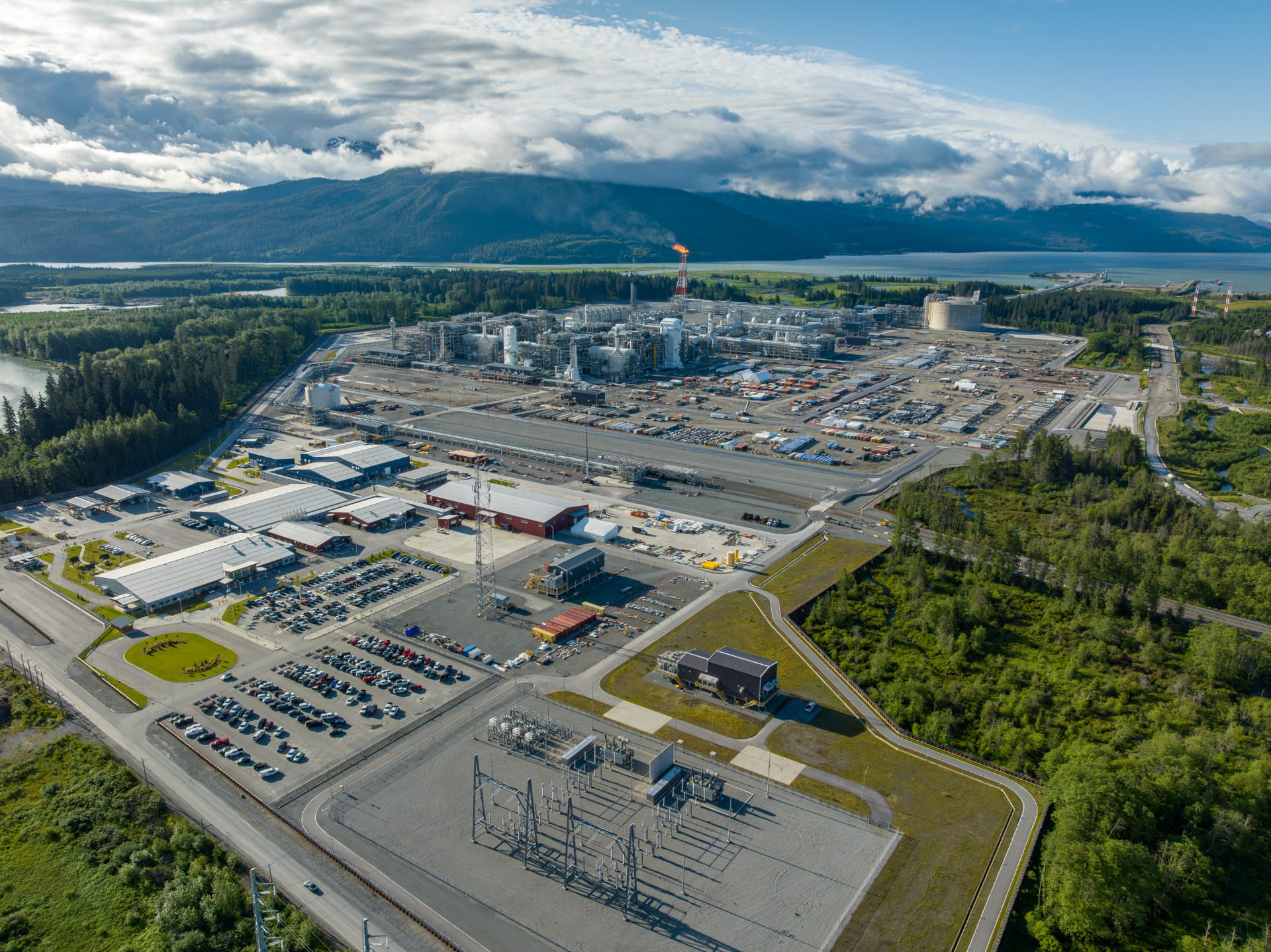
The global energy landscape continues its dynamic shift, and a significant development signals Canada’s potential to further cement its position as a key player in the liquefied natural gas (LNG) market. A joint venture between engineering giants Fluor Corporation and JGC Corporation has secured a pivotal contract to refresh the Front-End Engineering and Design (FEED) for a proposed Phase 2 expansion of the acclaimed LNG Canada facility. This critical project is situated on the traditional territory of the Haisla Nation in Kitimat, British Columbia, Canada, underscoring its strategic location and collaborative foundation.
This award arrives on the heels of the successful commissioning of LNG Canada’s Phase 1, which recently achieved a major milestone with the shipment of its inaugural LNG export cargo. The successful execution of Phase 1 serves as a powerful testament to the capabilities of the JGC Fluor joint venture, which has been instrumental since 2018 in bringing the initial phase to fruition. Their comprehensive involvement spanned crucial engineering, procurement, fabrication management, construction, and commissioning services, culminating in a safe and operational facility. This proven track record positions the JV as a natural choice for advancing the expansion plans.
Strategic Positioning and Market Advantages
The LNG Canada facility boasts an enviable strategic location on Canada’s west coast, offering unparalleled access to abundant, cost-effective natural gas resources and a deep, ice-free harbor. This combination provides a competitive edge in delivering energy to global markets. As the first facility of its kind in Canada, Phase 1 establishes an annual production capacity of up to 14 million tonnes of LNG, a substantial volume that immediately places Canada in a prominent role as a supplier of lower-carbon natural gas globally. Operating under a robust 40-year license, the project is designed to contribute significantly to global greenhouse gas (GHG) emission reductions by enabling the transition from higher-carbon energy sources like coal to cleaner-burning natural gas.
A potential Phase 2 expansion would substantially augment the facility’s existing capabilities, enhancing its processing, storage, and shipping infrastructure. While the joint venture participants—Shell, Petronas, PetroChina, Mitsubishi Corporation, and KOGAS—continue to meticulously explore the pathways to this expansion, a final investment decision (FID) has not yet been reached. However, the initiation of the FEED update signals a strong commitment to thoroughly evaluate and prepare for this significant growth opportunity.
The Significance of FEED in Project Development
For investors monitoring large-scale energy infrastructure projects, the award of a FEED contract is a critical development. FEED is a fundamental stage in project development, involving detailed engineering studies that refine the scope, cost, and schedule estimates, laying the groundwork for a robust FID. This updated FEED for Phase 2 will involve a meticulous re-evaluation of technical specifications, equipment selection, and construction methodologies, ensuring that any expansion is optimized for efficiency, safety, and environmental performance, while aligning with current market conditions and technological advancements. It’s a crucial step in de-risking the subsequent stages of engineering, procurement, and construction (EPC).
Mike Alexander, Fluor’s Business Group President of Energy Solutions, articulated the significance of this ongoing partnership: “We’ve been a proud partner of LNG Canada through Phase 1, and we look forward to contributing to the next chapter in the construction of this world-class facility. We commend the LNG Canada team for its foresight and commitment to the energy transition by providing natural gas, a lower-carbon energy alternative, to global markets.” His remarks underscore the strategic alignment of the project with broader energy transition goals and the long-term vision shared by the project partners.
Investment Implications and Future Outlook
The progression towards a potential Phase 2 at LNG Canada carries substantial implications for investors tracking the global LNG market and the energy transition. An expansion would solidify Canada’s long-term export capacity, providing diversified supply to an energy-hungry world, particularly in Asia. For the joint venture participants—Shell, Petronas, PetroChina, Mitsubishi Corporation, and KOGAS—this represents a strategic investment in a high-quality asset with robust fundamentals. Their continued commitment to exploring Phase 2 underscores confidence in the long-term demand for LNG and the project’s intrinsic advantages.
The project’s narrative as a provider of “lower-carbon energy” positions it favorably within the evolving ESG (Environmental, Social, and Governance) investment landscape. By offering a viable alternative to coal, Canadian LNG plays a tangible role in global decarbonization efforts, attracting capital from funds increasingly mandated to support sustainable energy initiatives. The 40-year license provides long-term revenue predictability, a highly attractive feature for institutional investors and pension funds seeking stable, infrastructure-backed returns.
While the final investment decision for Phase 2 remains pending, the engagement of the Fluor and JGC joint venture for the FEED update signals strong momentum. It reflects the project owners’ thorough due diligence and their intent to be shovel-ready when market conditions and internal strategic objectives align. Investors should closely monitor the progress of this FEED study, as its successful completion will be a significant precursor to a potential FID, unlocking further growth and value creation in Canada’s burgeoning LNG sector.