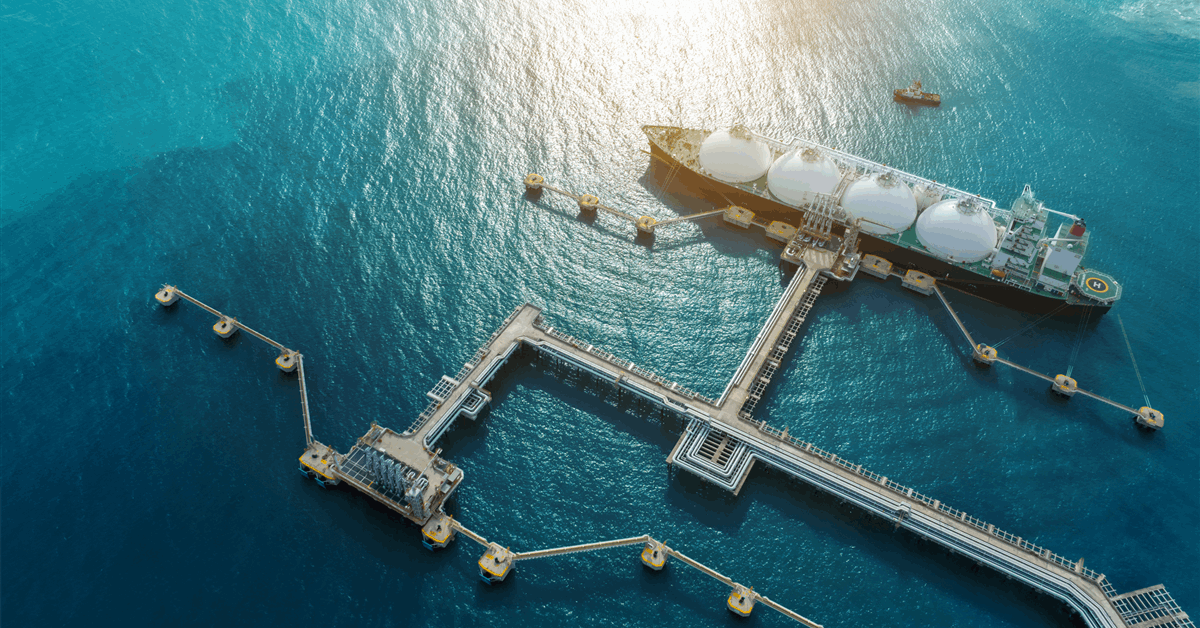
Venture Global’s recent announcement marking a positive Final Investment Decision (FID) and the successful close of $15.1 billion in financing for Phase 1 of its CP2 LNG project, alongside the associated CP Express Pipeline, signals a powerful vote of confidence in the future of U.S. liquefied natural gas exports. This monumental financial undertaking, representing the largest standalone project financing ever recorded, underscores the strategic importance of expanded LNG capacity for global energy security and the robust appetite of institutional investors for stable, long-term energy assets.
Monumental Financing Propels CP2 LNG Forward
The financial bedrock of CP2 LNG Phase 1 is nothing short of historic. Securing $15.1 billion in financing establishes a new benchmark for standalone project funding, with Venture Global noting it’s only surpassed by the combined financings of their Plaquemines LNG project. The sheer scale of interest from the world’s leading financial institutions is evident in the over $34 billion in commitments garnered, remarkably achieved without requiring any outside equity investment. This level of oversubscription, with ING and Santander leading as arrangers for the construction term loan and working capital, and Bank of America and Scotiabank heading the equity bridge loan, reflects a profound belief in the project’s economic viability and the enduring demand for U.S. LNG.
Venture Global’s track record, boasting three greenfield projects reaching FID in under six years and over $80 billion in capital markets transactions, reinforces this investor confidence. With CP2 LNG expected to begin operations in 2027, the project is positioned to contribute significantly to the United States’ export capacity, which currently holds federal authorization to export the equivalent of 1.45 trillion cubic feet annually, or approximately 28 million metric tons per annum (MMtpa) of LNG. The swift progression, including site work commencing last month after final FERC clearance, further demonstrates the project’s advanced stage and readiness for execution.
U.S. LNG: A Strategic Hedge Amidst Crude Market Volatility
The robust financial backing for CP2 LNG stands in stark contrast to the recent turbulence observed in broader crude oil markets. As of today, Brent crude trades at $90.38 per barrel, experiencing a sharp 9.07% decline within the day, with WTI not far behind at $82.59, down 9.41%. This recent volatility, which has seen Brent drop over 18% from its late March high of $112.78 to $91.87 just yesterday, underscores a broader uncertainty in the conventional oil markets, often influenced by geopolitical tensions and evolving supply-demand dynamics. Gasoline prices have also felt the pressure, trading at $2.93, a 5.18% decrease today.
However, the LNG sector, particularly projects with substantial long-term Sale and Purchase Agreements (SPAs) like CP2 LNG Phase 1, offers a distinct value proposition. These contracts, already secured with customers across Europe, Asia, and other global markets, provide a more predictable revenue stream and a degree of insulation from the daily swings of the crude market. Investors are increasingly seeking such stability, recognizing LNG’s critical role in both energy transition strategies and immediate energy security needs for importing nations. This divergence highlights a strategic shift where long-term infrastructure plays are viewed as more resilient investments than pure commodity plays, especially as global energy matrices evolve.
Navigating Regulatory Landscapes and Future Market Signals
The path to FID for CP2 LNG was not without its regulatory intricacies, particularly concerning export permits. While the project secured its federal permit for export volumes under a Department of Energy (DOE) order from April 2022, this initial authorization was limited to countries with a free trade agreement (FTA) with the United States. The crucial non-FTA portion received conditional approval in March, with the final order contingent on a review initiated by the previous administration. Encouragingly, the DOE signaled in May its readiness to issue final orders on pending applications, following a ruling that supported U.S. LNG expansion objectives. This clarity is vital for unlocking the full export potential of projects like CP2 LNG and fostering investor confidence in the long-term stability of U.S. energy policy.
While CP2 LNG’s long-term off-take agreements provide a degree of insulation from short-term price movements, the broader energy market sentiment remains crucial for the sector’s continued growth and future project financings. Investors are closely watching the upcoming OPEC+ Joint Ministerial Monitoring Committee (JMMC) meeting this Saturday, April 18th, followed by the full Ministerial meeting on Sunday, April 19th. Decisions from these gatherings regarding production quotas will undoubtedly influence crude prices, which, despite their recent dip, still impact overall energy sector valuations. Furthermore, the weekly API and EIA crude inventory reports, scheduled for April 21st and 22nd respectively, and again on April 28th and 29th, will offer fresh insights into U.S. supply-demand balances, alongside the Baker Hughes Rig Count on April 24th and May 1st, all contributing to the dynamic investment landscape.
Investor Focus: Long-Term Value in a Volatile World
Our proprietary reader intent data reveals a keen focus among investors on the future trajectory of crude oil, with many asking for predictions on where oil prices will settle by the end of 2026 and what OPEC+’s current production quotas are. This persistent inquiry into crude price stability underscores a broader concern about market volatility and its impact on energy portfolios. However, the successful financing of CP2 LNG offers a compelling counter-narrative, illustrating how projects anchored by long-term contracts and essential global demand can thrive even when the spot crude market experiences significant swings.
The investment thesis for LNG is distinct: it’s not solely about the immediate price of a barrel, but rather the strategic value of reliable, cleaner-burning natural gas in a world grappling with both energy security imperatives and climate goals. The substantial interest from a consortium of leading banks signals that sophisticated investors view U.S. LNG as a critical component of the global energy mix for decades to come. Venture Global’s CP2 LNG project, with its robust financing and advanced stage of development, exemplifies the kind of long-term, high-capital investment that is essential for meeting burgeoning global energy demand and securing the U.S. position as a dominant force in the international LNG market.


