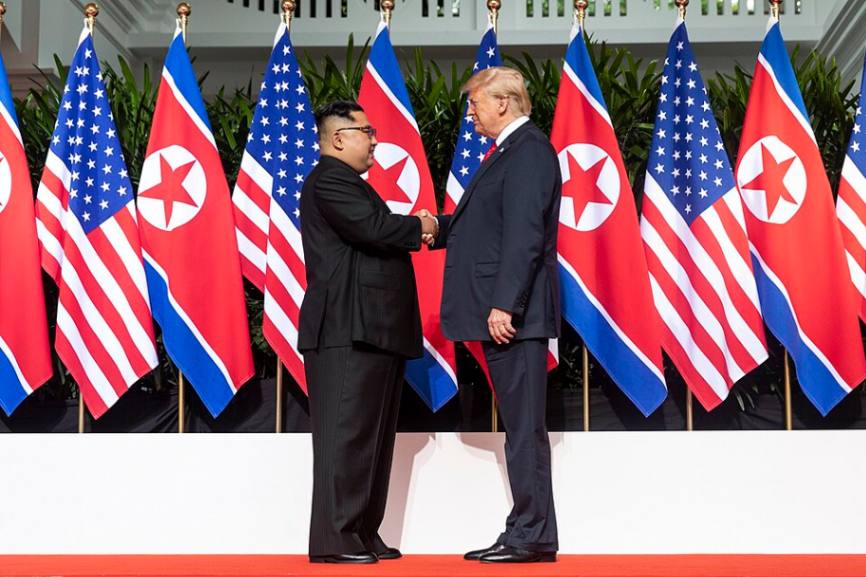
For astute investors navigating the intricate landscape of global energy markets, understanding persistent geopolitical flashpoints is paramount. North Korea’s nuclear ambitions represent a significant, albeit often simmering, risk factor with the potential to inject volatility into crude oil prices and broader energy security discussions. As the prospect of a second Donald Trump presidency looms, the question of denuclearization re-emerges with renewed relevance, prompting a critical re-evaluation of its potential impact on global stability and, by extension, the energy sector.
Our analysis suggests that genuine denuclearization could materialize, but only if Pyongyang receives a meticulously crafted, comprehensive agreement that unequivocally guarantees the regime’s long-term survival and economic viability. This perspective stems from a fundamental understanding: North Korea views its nuclear arsenal not as an ultimate objective, but rather as a critical instrument for its continued existence, a powerful bargaining chip, and a deterrent against perceived external threats.
Pyongyang’s Existential Imperative: The Quest for Regime Survival
For energy market participants, comprehending the deep-seated motivations behind North Korea’s nuclear program is essential for assessing future geopolitical stability and potential impacts on oil supply. Pyongyang’s paramount objective remains the uninterrupted survival of its ruling structure, a concept that extends far beyond mere political continuity. It encompasses robust economic development and general national prosperity, crucial elements for internal stability and the regime’s legitimacy.
The nation recalls the profound existential crisis of the mid-1990s, dubbed the ‘Arduous March,’ a period defined by devastating famine and catastrophic natural disasters that severely tested the regime’s resilience. Moreover, the enduring legacy of the Korean War, which commenced in 1950 and concluded with a fragile ceasefire in 1953, fuels a deeply ingrained perception of constant threat from South Korea and the United States. This historical context shapes North Korea’s security doctrine.
The disparity in capabilities between the two Koreas is stark. South Korea, a regional economic powerhouse and a major energy consumer, boasts an economy approximately 60 times larger than its northern counterpart and possesses the world’s fifth-strongest military. Historically, Seoul has articulated aspirations of reunification, sometimes interpreted by Pyongyang as absorption. Compounding this perceived threat, the United States maintains a significant military presence, with 28,500 troops stationed in South Korea, and notably deployed nuclear weapons on the peninsula for 33 years, from 1958 to 1991. These historical and contemporary realities solidify the regime’s conviction that its nuclear capabilities are an indispensable guarantor of its future.
The Atomic Deterrent: A Multifaceted Strategic Asset
North Korea’s nuclear policy is a decisive response to its profound security and economic vulnerabilities. The regime adamantly refuses to relinquish its nuclear program unless its survival is unequivocally assured, and unless it receives substantial compensation for the perceived strategic and political losses that would accompany denuclearization. The nuclear program serves several critical functions for Pyongyang:
- Military Deterrence: Primarily, the arsenal acts as a powerful deterrent against potential military actions from the United States and South Korea. It is perceived as a ‘spearhead’ for countering the overwhelming conventional military imbalance, providing a credible retaliatory capability.
- Political Legitimacy: Domestically, the nuclear program is a key source of legitimacy for the Kim regime. It is a tangible outcome of Chairman Kim Jong-un’s ‘byungjin policy’ (parallel development of nuclear weapons and the economy), symbolizing national strength and resilience against external pressure.
- International Leverage: Globally, the nuclear program functions as a potent bargaining chip, enabling North Korea to pursue a hostile foreign policy when necessary and extract concessions on the international stage.
The strategic implications of these weapons are immense. Chairman Kim Jong-il, father and predecessor to the current leader, publicly declared on February 10, 2005, that North Korea had successfully acquired nuclear weapons. This was followed by the nation’s inaugural nuclear test on October 9, 2006. At the time, North Korea’s Ministry of Foreign Affairs attributed the test “entirely to the U.S. nuclear threat and sanctions pressure.” Following a second test on May 25, 2009, Pyongyang again cited “the imperialist U.S.’ preemptive nuclear attack threat” as the underlying justification. Furthermore, in its “Memorandum on the Korean Peninsula and Nuclear Weapons,” released on April 21, 2010, North Korea explicitly stated that the primary objective of its nuclear weapons is to “deter invasions and attacks.” This consistent messaging underscores the deep-seated belief that nuclear capabilities are foundational to national defense and survival.
A Path to Denuclearization? Conditions for a Grand Bargain
Given the deeply ingrained strategic value of its nuclear program, any viable path to denuclearization for North Korea must address its core security and economic concerns. The potential return of Donald Trump to the U.S. presidency introduces a unique dynamic, as his past direct engagement with Kim Jong-un created an unconventional diplomatic channel. A comprehensive ‘package deal’ would likely need to encompass several critical elements:
Firstly, an ironclad assurance of regime survival, perhaps through a formal peace treaty replacing the existing armistice, would be fundamental. This would signify a definitive end to the perceived threat of external aggression and absorption. Secondly, the deal would need to offer substantial economic incentives and relief from debilitating international sanctions, allowing for sustained economic development and integration into the global economy. This would compensate for the perceived loss of the nuclear program’s economic bargaining power and demonstrate a tangible path to prosperity without relying on nuclear capabilities.
Thirdly, security guarantees from both the U.S. and South Korea, potentially involving a reduction or repositioning of military assets and a clear commitment against regime change, would be crucial. Without these multifaceted assurances and compensatory measures, Pyongyang is unlikely to relinquish what it considers its ultimate safeguard.
Investment Implications: Monitoring Korean Peninsula Dynamics for Energy Security
For energy investors, the geopolitical stability of the Korean Peninsula directly impacts global oil and gas markets. Escalations in tensions, such as missile tests or nuclear provocations, often trigger a risk premium in crude oil prices, reflecting fears of supply disruptions in a vital shipping region and broader geopolitical instability. While North Korea itself is not a major oil producer or consumer on a global scale, its actions can ripple through the market by influencing international relations, particularly involving China, Russia, Japan, and South Korea – all significant players in the energy trade.
A successful denuclearization deal, however unlikely it may seem, could usher in an era of reduced regional tensions, potentially lowering the geopolitical risk premium on oil. This scenario could free up capital for development, improve trade routes, and foster greater economic stability in Northeast Asia, benefiting energy demand in the long term. Conversely, a failure to reach an agreement, or a renewed cycle of confrontation, would sustain or elevate the risk premium, increasing oil price volatility and complicating investment decisions in the region.
Investors must closely monitor diplomatic overtures, leadership changes, and any shifts in North Korea’s rhetoric or actions. The potential for a U.S. administration willing to pursue a grand bargain, coupled with Pyongyang’s consistent demand for survival guarantees, creates a unique, albeit high-stakes, opportunity for a transformative shift. Such a shift would inevitably have profound implications for global energy security and market dynamics.
Conclusion: Geopolitical Stability and the Future of Oil Markets
The prospect of North Korea’s denuclearization remains a complex and formidable challenge, yet it is not an insurmountable one. The critical determinant lies in the political will to construct a comprehensive package deal that satisfies Pyongyang’s fundamental demand for regime survival and offers tangible economic benefits. For oil and gas investors, this geopolitical dynamic represents a persistent source of potential market volatility and a key factor in assessing regional energy security.
As the global energy landscape continues its evolution, the stability of critical geopolitical regions like the Korean Peninsula will remain a central concern. Understanding the deep-seated motivations driving North Korea’s nuclear posture allows investors to better anticipate potential shifts in policy, assess associated risks, and position their portfolios accordingly in an increasingly interconnected and volatile global market. The future trajectory of denuclearization, particularly under a potentially renewed Trump administration, will cast a long shadow over energy prices and international relations for years to come.