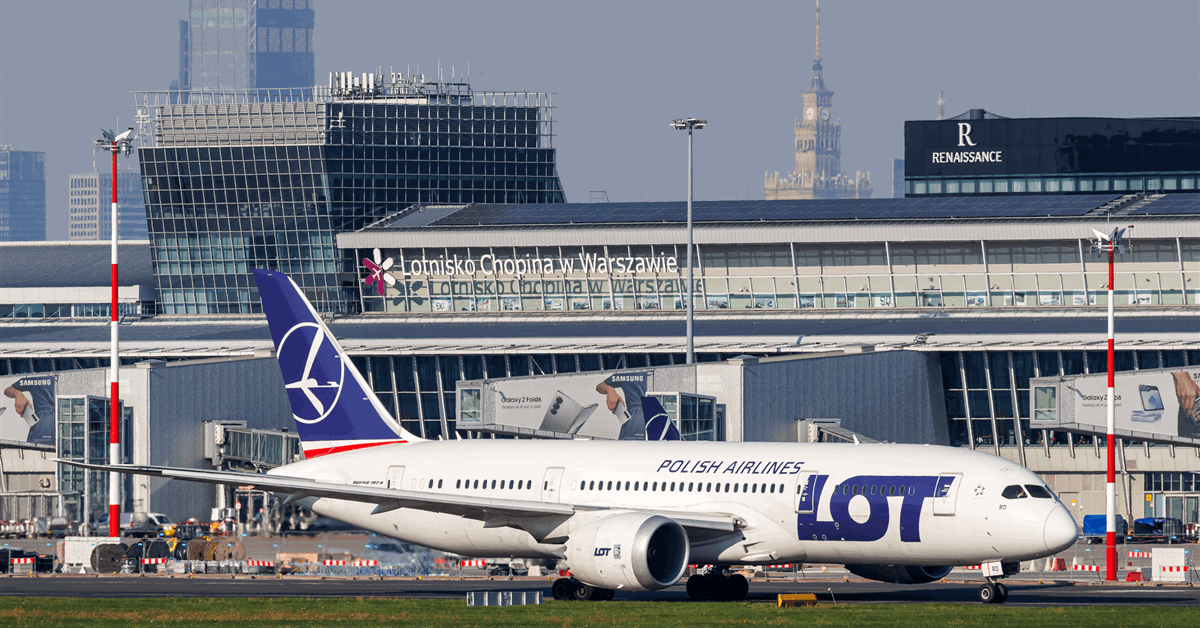
ORLEN’s strategic entry into the sustainable aviation fuel (SAF) market at key Polish airports — Warsaw, Krakow, and Katowice — marks a significant pivot for the energy giant and signals a broader trend in the oil and gas sector. This move is more than just an expansion of their aviation fuel portfolio; it’s a direct response to evolving regulatory landscapes and a proactive step towards decarbonization, offering a compelling case for investors keen on understanding diversification plays within traditional energy companies navigating the global energy transition.
Driving Forces: Regulation and Strategic Vision
ORLEN’s decision to offer SAF aligns directly with its ambitious 2035 strategy, which prioritizes expanding its product portfolio while simultaneously addressing the growing imperative for decarbonization across both supply and demand chains. This strategic foresight is heavily underpinned by the European Union’s ReFuelEU Aviation Regulation, adopted in October 2023. This landmark legislation mandates a gradual increase in SAF’s share of the total fuel consumption at larger EU airports, setting a predictable, long-term demand curve for this nascent market.
The regulatory roadmap is clear: airports exceeding 800,000 passengers or 100,000 tonnes of freight annually must incorporate at least two percent SAF into their fuel mix starting this year. This percentage is set to rise sharply to six percent by 2030, twenty percent by 2035, and eventually reach seventy percent by 2050. Such aggressive targets provide a robust, regulatory-driven demand floor for SAF, distinguishing it from other, more speculative green energy ventures. ORLEN, already a major supplier of conventional aviation fuels like Jet A-1 and AVGAS 100 LL, is leveraging its existing infrastructure and market position to capture a significant share of this emerging, high-growth segment.
Navigating Volatility: SAF as a Strategic Hedge for Investors
Our proprietary reader intent data reveals a consistent investor focus on future crude price forecasts, with many actively seeking a base-case Brent price forecast for the next quarter and the consensus 2026 Brent forecast. While the core of our readers remains deeply engaged with traditional crude market dynamics, the interest in how companies like ORLEN are diversifying speaks volumes about a broader strategic shift in investment priorities. Investors are increasingly looking for opportunities that offer a degree of insulation from the inherent volatility of the conventional oil market.
As of today, Brent crude trades at $94.85, showing only a slight daily dip of 0.08%, while WTI crude sits at $90.98, down 0.34%. However, a broader look at the past two weeks shows Brent softening significantly, dropping from $102.22 on March 25th to $93.22 by April 14th, an 8.8% decline. This recent volatility in conventional crude prices underscores the strategic rationale behind diversifying into less volatile, regulation-driven markets like SAF. By venturing into SAF, which is produced from renewable or waste-derived feedstocks such as used cooking oils and various industrial and agricultural wastes, ORLEN is not only addressing decarbonization goals but also securing a revenue stream less directly tied to the geopolitical and supply-demand fluctuations that dictate crude prices.
Upcoming Events and Future Market Outlook
The broader energy calendar is packed with events that could introduce further volatility or clarity to the global oil market, influencing investor sentiment and strategic decisions. The upcoming OPEC+ Joint Ministerial Monitoring Committee (JMMC) meeting on April 18th, followed by the full OPEC+ Ministerial meeting on April 20th, will be closely watched for any shifts in production policy that could impact crude prices. Weekly data points, such as the API Weekly Crude Inventory reports on April 21st and 28th, alongside the EIA Weekly Petroleum Status Reports on April 22nd and 29th, will provide critical insights into short-term supply-demand balances in the conventional market. Furthermore, the Baker Hughes Rig Count on April 17th and 24th will offer a pulse on upstream activity.
While these events will undoubtedly shape the near-term crude market, the long-term, policy-driven demand for SAF offers a distinct investment thesis. ORLEN’s proactive engagement in this sector, particularly given the “limited access to SAF” noted by major carriers like LOT Polish Airlines, positions the company as a key enabler for the aviation sector’s decarbonization efforts in the region. This initiative supports airlines in meeting their regulatory obligations under ReFuelEU Aviation and their own sustainability strategies, creating a robust and growing market for ORLEN’s new offering. Investors tracking energy companies should view this as a clear signal of strategic foresight and an early-mover advantage in a market poised for exponential growth.
Operational Readiness and Competitive Advantage
The successful deployment of SAF requires precise logistical planning and established infrastructure, areas where ORLEN demonstrates considerable strength. As an incumbent supplier of aviation fuels, the company already possesses the extensive network and operational expertise necessary to distribute specialized fuels to major airports. The appreciation expressed by LOT Polish Airlines and Polish Airports SA for ORLEN’s initiative highlights not just the need for SAF, but also the logistical challenges associated with its integration. ORLEN’s existing capabilities, therefore, represent a significant competitive advantage, enabling them to be an early and reliable provider in a market where supply infrastructure is still developing.
By offering SAF at critical hubs like Warsaw Chopin Airport, Krakow, and Katowice, ORLEN is directly addressing a crucial supply gap and facilitating the aviation sector’s transition toward climate neutrality. This move is not merely about compliance; it’s about positioning ORLEN as a leader in a strategic segment of the energy transition. The ability to blend renewable components with regular jet fuel, utilizing various waste-derived feedstocks, showcases a flexible and sustainable production approach. As the mandatory SAF percentages increase over the coming decades, ORLEN’s early investment and operational readiness will likely translate into sustained market leadership and significant long-term value for investors.


