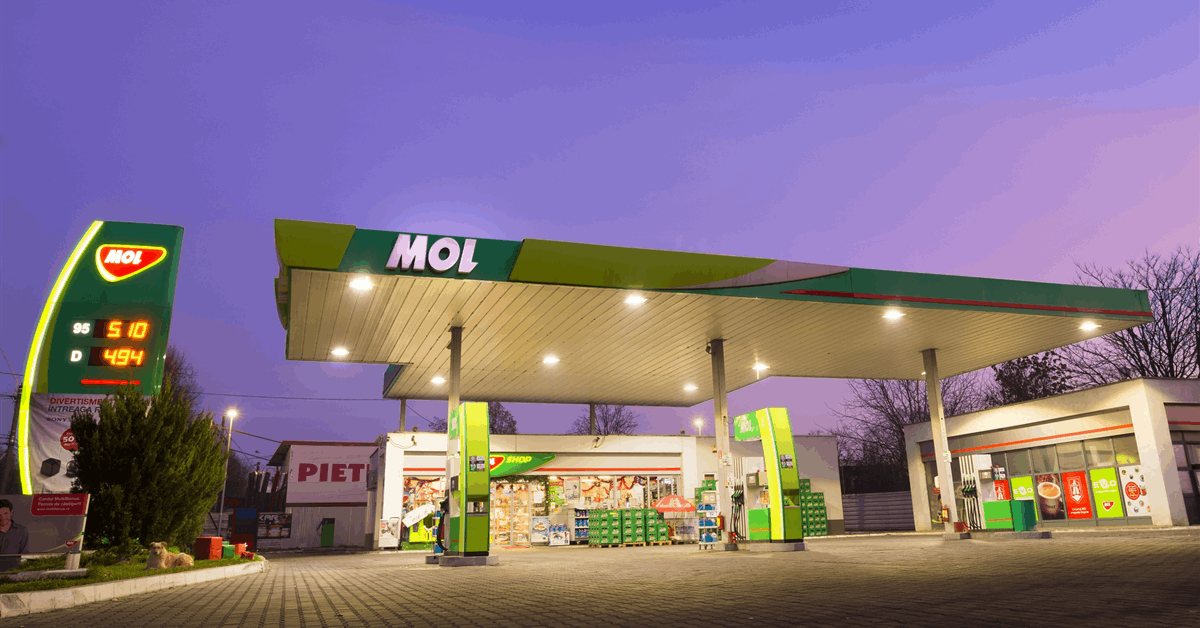
Mol Charts New Course: Odesa Port Plan Aims to Fortify European Energy Security
Hungarian energy giant Mol Nyrt., long a focal point for its deep reliance on Russian energy supplies, is now spearheading a bold strategic pivot. The company sees the activation of a critical pipeline linking to Ukraine’s Black Sea port of Odesa as its most viable pathway to achieving genuine supply diversification and bolstering regional energy independence.
This initiative, if successful, promises to unlock access to a global crude oil market, significantly de-risking Mol’s operational future and the broader Central European energy landscape. Szabolcs Pal Szabo, Mol’s senior vice president for value chain management, articulated the company’s vision for gaining access to the Odesa-Brody crude pipeline. This vital artery, stretching from Ukraine’s Black Sea port to a point near its border with Poland, would enable Mol to procure seaborne crude from a diverse array of international producers, fundamentally transforming its supply chain dynamics.
The proposed plan involves routing these newly acquired seaborne supplies through the southern Druzhba link into Hungary. This particular segment of the Druzhba network currently transports Russian oil into the country and conveniently connects with the Odesa pipeline in proximity to the Ukrainian-Polish frontier. Szabo underscored the transformative potential of this connectivity, noting that “the Odesa pipeline would mean access to all sorts of alternative crude due to the sea link. This pipeline would serve regional, EU, and Ukrainian supply security.” For investors, this represents a significant move towards mitigating geopolitical supply risks and enhancing the long-term stability of Mol’s energy procurement strategy.
Navigating Geopolitical Complexities and Investment Hurdles
While the strategic benefits are clear, the path to realizing this vision is fraught with considerable challenges. Hungary, despite being granted an exemption from the European Union’s 2022 ban on Russian crude oil imports, faces relentless pressure to diminish its reliance on these supplies. The EU’s overarching directive targets a complete cessation of energy imports from Russia by 2027, making Mol’s diversification efforts not just strategic, but an imperative for regulatory compliance and market alignment.
Connecting to Ukrainian infrastructure, however, presents substantial operational and geopolitical hurdles. The city of Odesa has consistently been a target for Russian missile attacks since the full-scale invasion in 2022, creating an inherently high-risk environment. Furthermore, the Odesa-Brody pipeline itself is currently out of commission, necessitating substantial capital investment for its rehabilitation and modernization. Adding to the complexity, the Black Sea waters surrounding Ukraine’s coastline have been extensively mined, posing significant logistical and security challenges for maritime operations.
The political dimension of this project is equally intricate. Hungarian Prime Minister Viktor Orban, known for his pro-Russian stance, has openly advocated for the EU to curtail its financial support for Ukraine and lift sanctions against Russia. Orban’s administration has also solidified numerous energy agreements with Moscow and is actively campaigning for re-election on a platform that includes blocking Ukraine’s accession to the EU. This creates a delicate political tightrope for Mol, as securing EU backing for a major infrastructure project in Ukraine would require significant diplomatic maneuvering and a potential shift in regional political alignments.
Strategic Investments and Regional Synergy
Despite these formidable obstacles, Mol is actively seeking broad support for the “revitalization” of the Odesa pipeline. The company is appealing to both the EU and other affected nations to participate in this critical infrastructure project, emphasizing its potential to provide an alternative to Russian oil not only for Hungary but also for neighboring Serbia. This regional synergy is further reinforced by the ongoing construction of a direct pipeline connection between Hungary and Serbia, which would extend the strategic reach of the Odesa-Brody link.
Mol’s Szabo made a compelling case for collective action, stating, “If the EU is adamant that the region give up a reliable supply route, then it has a role to play in the establishment of a true alternative.” This statement underscores Mol’s expectation that the EU, given its policy objectives, should contribute meaningfully to the infrastructure required for its member states to achieve energy independence.
Internally, Mol is demonstrating its commitment to this strategic shift through significant capital expenditure. The company is undertaking a substantial upgrade of its refining facilities to enhance their capability to process non-Russian crude varieties. This crucial investment is estimated to cost approximately $500 million, a clear indication of Mol’s dedication to adapting its operational infrastructure to a diversified supply future. For investors, this capital outlay signals a serious commitment to long-term energy security, albeit with inherent execution risks.
Alternative Routes and Commercial Tensions
Currently, Mol’s primary alternative to Russian oil imports comes via the Adriatic Sea, utilizing crude shipments facilitated by the Croatian pipeline operator Janaf. However, this existing arrangement has not been without its friction. Mol has publicly accused Janaf of levying excessive charges for its pipeline services, indicating commercial tensions within the existing alternative supply chain.
Further exacerbating these concerns, Mol’s Szabo has raised questions regarding Janaf’s long-term capacity to handle sufficient volumes for Hungary and the wider region once Russian crude imports are entirely phased out. These doubts are reportedly based on recent capacity tests conducted on the Adriatic pipeline system. In response, a spokesperson for Janaf affirmed the firm’s ample capacity and maintained that its operations adhere strictly to EU regulations concerning transparent and non-discriminatory pricing. This ongoing dispute highlights the commercial and logistical challenges inherent in transitioning away from established energy supply routes.
Investor Outlook: Paving the Path to Energy Resilience
Mol’s ambitious plan to leverage the Odesa-Brody pipeline represents a pivotal moment for the Hungarian energy sector and a crucial development for European energy security. For investors, this strategic initiative presents a compelling narrative of risk mitigation and long-term resilience. By actively pursuing diversification away from politically volatile Russian supplies, Mol aims to insulate its operations from future geopolitical shocks and comply with evolving EU energy mandates.
The substantial $500 million investment in refinery upgrades underscores Mol’s commitment to operational flexibility and its preparedness for a post-Russian crude era. While significant geopolitical risks persist, particularly concerning the stability of the Black Sea region and the complexities of Hungarian-Ukrainian political relations, the potential rewards of a globally diversified crude supply are substantial. A successful implementation of the Odesa-Brody project, potentially with EU backing, could significantly enhance Mol’s competitive positioning, reduce its exposure to sanctions and supply disruptions, and solidify its role as a key player in Central European energy markets. The coming years will reveal whether this bold vision can overcome the formidable challenges and unlock a new era of energy independence for the region.


