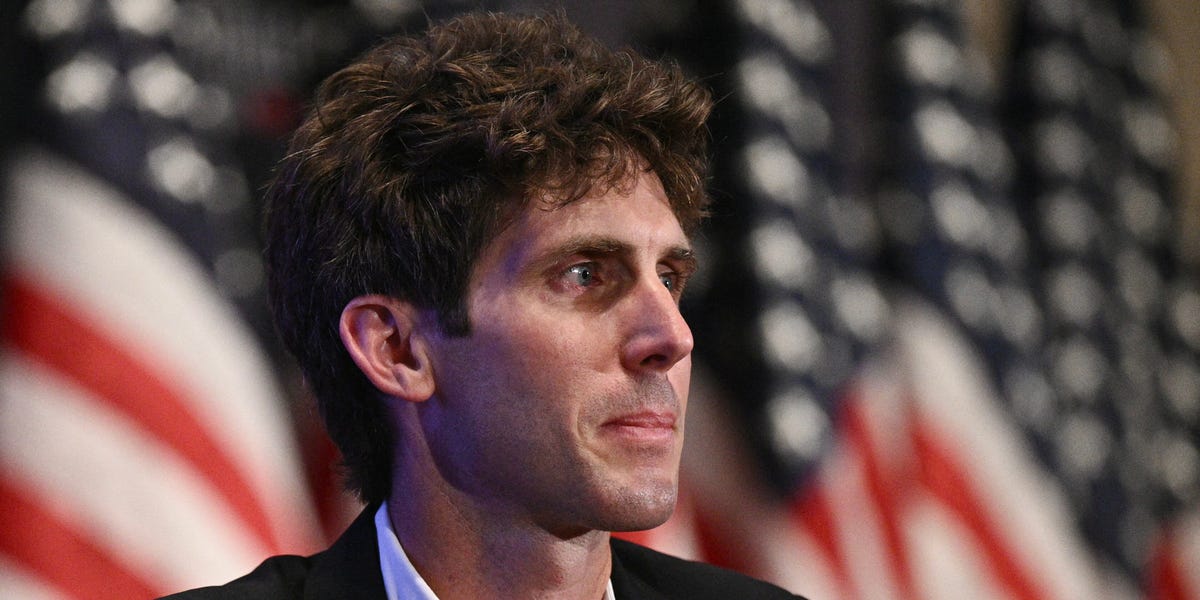
Maguire Backlash Tests VC Investor Confidence
The recent controversy surrounding Shaun Maguire, a prominent partner at venture capital giant Sequoia Capital, has ignited a firestorm within the tech community, drawing accusations of cultural insensitivity and sparking calls for disciplinary action. While seemingly confined to the venture capital ecosystem, this incident offers a potent case study in the escalating importance of social governance and stakeholder relations, lessons that resonate deeply within the global oil and gas investment landscape. In an era where capital markets are increasingly interconnected, and investor confidence is a precious commodity, issues of public perception, ethical conduct, and geopolitical sensitivity are not isolated to one sector; they are universal risks that demand scrutiny from energy investors.
For oil and gas companies, navigating a complex web of environmental, social, and governance (ESG) factors is no longer optional. The Maguire episode underscores how quickly public sentiment can turn, how stakeholder activism can mobilize, and how the actions of key individuals can impact the broader perception of an institution. As we delve into the implications, it becomes clear that the “social license to operate” extends beyond environmental stewardship to encompass a firm’s entire ethical and cultural footprint – a critical consideration for any investor allocating capital in the energy sector.
Social Governance and the Energy Sector’s Mandate
The core of the Maguire controversy centers on public remarks perceived as culturally offensive, leading to widespread backlash and an online petition signed by hundreds of founders and tech workers demanding accountability. This situation highlights a growing trend: the “S” in ESG is gaining significant weight in investment decisions. For oil and gas companies, which often operate in diverse, politically sensitive regions and face intense scrutiny over community engagement, human rights, and workforce diversity, the lessons are stark. A firm’s social license to operate is not merely about regulatory compliance; it’s about maintaining trust with local communities, indigenous populations, and a global workforce. The swift and public condemnation of Maguire’s comments, despite his firm’s initial silence, demonstrates how social missteps by key personnel can quickly erode trust and damage reputation. Investors in the energy sector must increasingly assess not just a company’s environmental footprint or financial performance, but also the robustness of its social governance framework and its ability to manage the human element of its operations and leadership.
The call for Sequoia to establish an avenue for founders to report discrimination and hate speech is particularly telling. It signals a demand for transparent, accountable mechanisms to address social grievances. Energy companies, especially those with vast international operations, are under similar pressure to demonstrate strong internal controls, ethical leadership, and a genuine commitment to social responsibility. Failure to do so can lead to project delays, legal challenges, reputational damage, and ultimately, a higher cost of capital. The Maguire incident serves as a powerful reminder that even in capital-intensive industries, the intangible asset of social trust is paramount.
Geopolitical Sensitivity: A Critical Factor for Global Energy Investment
Maguire’s controversial comments touched upon ethnicity, culture, and geopolitics, specifically referencing an “Islamist agenda.” These themes resonate powerfully within the oil and gas sector, which is inherently global and deeply intertwined with international relations and cultural dynamics. Energy companies operate across continents, negotiate with state-owned entities, and manage supply chains that traverse diverse geopolitical landscapes. Perceived insensitivity or political missteps by prominent figures, whether within a financial institution or an operating company, can have profound and lasting repercussions.
Consider the delicate balance required in securing supply agreements, developing new fields, or transporting energy resources across borders. Trust, cultural understanding, and diplomatic acumen are as vital as geological surveys or engineering prowess. For investors asking about drivers for “Asian LNG spot prices this week” or the operational efficiency of “Chinese tea-pot refineries,” the underlying stability of international relations and the smooth functioning of global trade routes are critical. A perceived lack of cultural sensitivity or an overly politicized stance by a key financial player, as seen with Maguire, can inject unnecessary risk and friction into these delicate global relationships, potentially impacting everything from project approvals to market access and pricing stability. Energy investors must therefore scrutinize not only the technical and financial merits of an investment but also the broader geopolitical and cultural intelligence of the management teams and their partners.
Current Market Realities and Shifting Investor Sentiment
The broader implications of such high-profile controversies on investor sentiment are often reflected in market dynamics. While the Maguire incident is not a direct driver of crude prices, it contributes to an environment where investors are increasingly risk-averse and sensitive to stability. As of today, Brent Crude trades at $94.77, reflecting a slight daily dip of 0.02%, with a day range between $91 and $96.89. WTI Crude follows a similar pattern at $90.93, down 0.38%, trading between $86.96 and $93.3. Gasoline prices, in contrast, have seen a modest uptick to $2.99, up 0.67% within a range of $2.93 to $3.03.
Looking at the recent trend, Brent crude has experienced a notable correction, declining from $102.22 on March 25th to $93.22 on April 14th – an $9 or 8.8% drop in less than three weeks. This downward momentum, while driven by a confluence of supply-demand factors and macroeconomic signals, also underscores a market sensitive to any perceived instability, whether economic, geopolitical, or even social. Episodes that test investor confidence in one segment of the capital markets can subtly ripple through others, amplifying anxieties and making investors more cautious. The consensus 2026 Brent forecast, a frequent topic among our readers, will undoubtedly be shaped not just by fundamental supply-demand models but also by the perceived stability of the global investment climate and geopolitical landscape.
Forward Momentum: Upcoming Catalysts and Investor Outlook
Looking ahead, the energy market is bracing for several key events that will shape short-to-medium term price trajectories, further testing investor confidence. This week, the Baker Hughes Rig Count on April 17th will provide insights into North American drilling activity, a crucial indicator for future supply. Immediately following, the market’s attention will turn to the OPEC+ Joint Ministerial Monitoring Committee (JMMC) meeting on April 18th, culminating in the Full Ministerial Meeting on April 20th. These gatherings are pivotal, as any adjustments to production quotas or even strong rhetoric can significantly impact crude prices. Our readers’ interest in building a “base-case Brent price forecast for next quarter” hinges heavily on the outcomes of these OPEC+ discussions.
Further down the calendar, the API Weekly Crude Inventory reports on April 21st and 28th, followed by the EIA Weekly Petroleum Status Reports on April 22nd and 29th, will offer crucial insights into U.S. supply and demand dynamics. These weekly data releases consistently move the market and provide a granular view of inventory levels. For investors, understanding the interplay between these fundamental data points and the broader sentiment – influenced even by seemingly disparate events like the Maguire controversy – is essential. The market’s reaction to these upcoming catalysts will not only be a function of the numbers themselves but also the prevailing mood of confidence or caution that permeates global capital markets.


