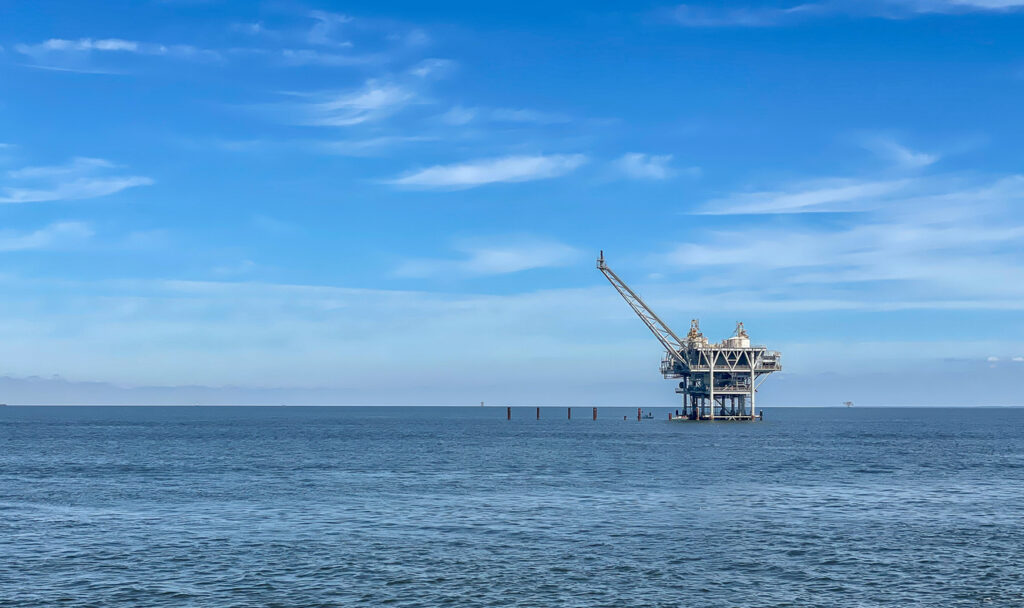
Valaris Limited has significantly bolstered its revenue backlog, announcing multi-year drillship contracts in the Gulf of Mexico that underscore robust demand for high-specification offshore assets. The company secured a substantial 940-day extension for its drillship VALARIS DS-16, set to commence in June 2026. This was complemented by a new 914-day contract for the VALARIS DS-18, scheduled to begin in mid-fourth quarter 2026. Both lucrative agreements are with Anadarko Petroleum Corporation, a wholly-owned subsidiary of Occidental, and collectively add approximately $760 million to Valaris’s contracted revenue backlog. This strategic win not only signals continued strength in the deepwater market but also provides long-term earnings visibility for investors, particularly amidst fluctuating crude prices and evolving global energy policies.
Strategic Backlog Expansion and Financial Resilience
The latest contract awards elevate Valaris’s year-to-date new contract backlog to an impressive $1.9 billion, as highlighted by President and Chief Executive Officer Anton Dibowitz. This substantial figure reflects a focused commercial strategy and the company’s demonstrated operational efficiency in delivering projects for major operators like Anadarko/Occidental. For investors, this translates directly into enhanced revenue predictability stretching well into 2026 and beyond. In an industry often characterized by cyclicality and short-term volatility, securing multi-year, high-value contracts for sophisticated assets like the VALARIS DS-16 and DS-18 is paramount. It de-risks future earnings, strengthens the balance sheet, and provides a stable foundation for capital allocation decisions, including potential shareholder returns or fleet modernization initiatives.
The Gulf of Mexico remains a critical basin for deepwater exploration and production, demanding advanced drillships capable of handling complex geology and extreme operating conditions. Valaris’s ability to repeatedly secure contracts in this premium region confirms its competitive advantage, asset quality, and strong client relationships. These long-term commitments from a major player like Occidental’s subsidiary indicate a sustained investment thesis in deepwater projects, suggesting that the industry’s recovery and expansion in key offshore regions are well underway, despite broader market uncertainties.
Navigating Current Market Dynamics and Investor Queries
These significant contract wins arrive against a backdrop of recent volatility in global crude markets. As of today, Brent crude trades at $94.77 a barrel, experiencing a marginal 0.02% dip, while WTI crude sits at $90.93, down 0.38%. This relatively stable intraday movement belies a more significant shift over the past two weeks, where Brent crude saw an almost 9% decline, falling from $102.22 on March 25th to $93.22 just yesterday. Such price swings naturally lead investors to question the durability of the current market cycle.
Indeed, our proprietary reader intent data reveals that many investors are keenly focused on understanding future oil price trajectories, frequently asking for a base-case Brent price forecast for the next quarter and the consensus 2026 Brent forecast. While short-term price fluctuations can influence sentiment, the long-term nature of these drillship contracts provides a critical counterpoint. Operators are committing capital years in advance, signaling a conviction that future oil prices will support these deepwater investments. This forward-looking commitment from energy majors offers a strong vote of confidence in the long-term fundamentals of global oil demand, providing a degree of insulation from the daily noise of commodity trading.
Forward-Looking Outlook and Upcoming Industry Catalysts
The contracts extending into mid-2026 and beyond highlight the deep-seated, long-cycle nature of deepwater offshore projects. These commitments by operators like Anadarko/Occidental are not made lightly; they reflect extensive planning and a long-term view on energy demand and supply. For investors, this forward visibility is invaluable. It suggests that despite ongoing energy transition narratives, the demand for conventional oil and gas, particularly from reliable, large-scale deepwater basins, is projected to remain robust for years to come.
Looking ahead, several key industry events will provide further color on the market landscape. The Baker Hughes Rig Count, scheduled for release on April 17th and again on April 24th, will offer immediate insights into current drilling activity levels across North America, which can sometimes influence sentiment for offshore markets. More broadly impactful, the upcoming OPEC+ Joint Ministerial Monitoring Committee (JMMC) meeting on April 18th, followed by the full Ministerial meeting on April 20th, will be critical. Any decisions regarding production quotas could significantly impact global supply and, consequently, crude oil prices, affecting the broader investment climate for offshore services. Furthermore, the regular API and EIA weekly inventory reports will continue to provide real-time data on crude and product stocks, offering snapshots of current supply-demand balances that inform short-term market expectations.