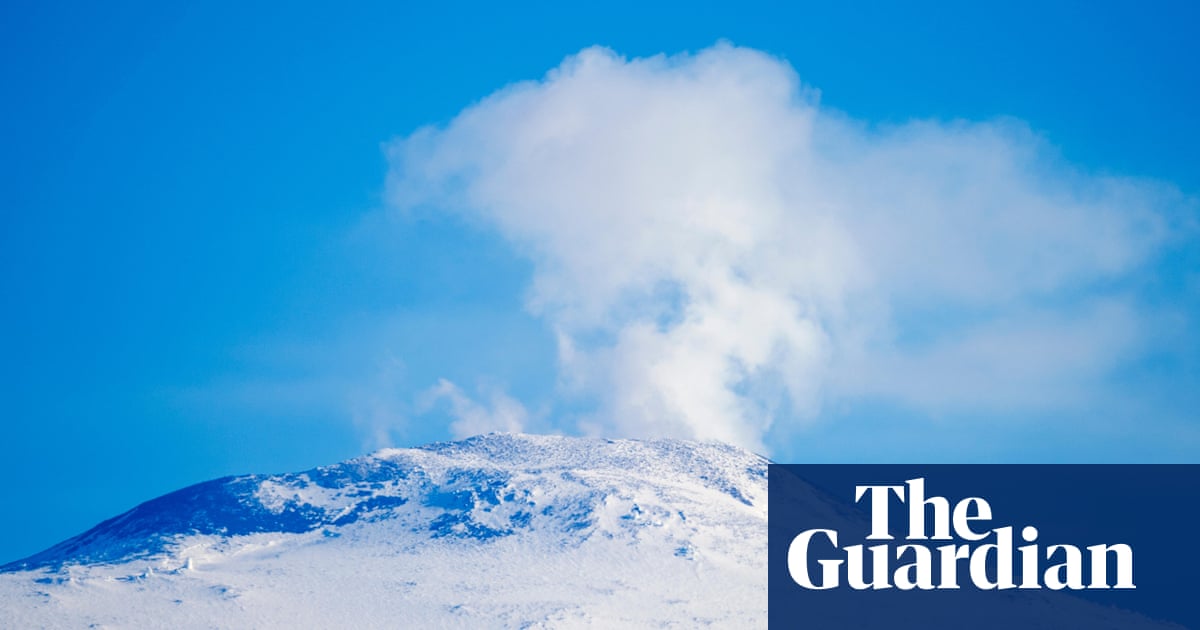
In the complex calculus of global energy investments, analysts typically grapple with geopolitical tensions, supply-demand fundamentals, and economic forecasts. Yet, an emerging scientific consensus points to a less conventional, but potentially catastrophic, risk factor: the accelerating impact of climate change on Earth’s geology. Recent research suggests that the melting of glaciers and ice caps, a direct consequence of global warming, could trigger an increase in volcanic activity. For oil and gas investors, this isn’t merely an academic curiosity; it represents a novel and unpredictable variable capable of disrupting supply chains, damaging infrastructure, and fundamentally altering market stability. Understanding this subterranean threat is crucial for any investor seeking to build a resilient portfolio in an increasingly volatile world.
The Subterranean Threat: Deglaciation and Volcanic Resurgence
The core mechanism linking melting ice to increased volcanism is surprisingly direct: the immense weight of glaciers and ice sheets suppresses the magma chambers beneath them. As this ice melts, the pressure is released, allowing magma to rise and gases within the molten rock to expand, leading to more frequent and potentially more explosive eruptions. This phenomenon has been observed in geologically active regions like Iceland, where increased volcanic activity correlates with glacier retreat. Crucially, new research conducted in Chile, involving detailed radioisotope dating of ancient volcanic rocks, provides continental-scale evidence for this process after the last ice age. The study, presented at the Goldschmidt geochemistry conference, indicates that thick ice cover previously suppressed eruptions, allowing vast magma reservoirs to build up 10-15 kilometers below the surface. Once the ice retreated around 13,000 years ago, a surge in explosive eruptions followed, even altering the magma’s composition to become more viscous and dangerous.
The implications for future energy security are significant. Scientists warn that West Antarctica, home to at least 100 volcanoes currently blanketed by thick ice, presents the biggest risk zone. The loss of this ice, projected over the coming decades and centuries, could unleash a barrage of eruptions in a geopolitically sensitive and ecologically vital region. While individual eruptions might temporarily cool the planet by reflecting sunlight, sustained activity would pump significant greenhouse gases, including carbon dioxide and methane, into the atmosphere, creating a feedback loop that exacerbates global warming and further ice melt. For energy investors, this scenario introduces a layer of unpredictable physical risk, from direct damage to exploration and production facilities in vulnerable regions to the broader disruption of shipping lanes and global trade, impacting the very flow of oil and gas.
Market Realities and Unconventional Volatility
The energy market, even without considering geological wildcards, remains a landscape of dynamic shifts. As of today, Brent Crude trades at $94.81, showing a marginal gain of 0.02%, with an intraday range of $91-$96.89. WTI Crude is slightly down at $90.97, a 0.34% decrease, moving between $86.96 and $93.3. Gasoline prices are up 0.67% to $2.99, fluctuating between $2.93 and $3.03. While these figures suggest a relatively stable day, the broader trend reveals underlying volatility. Over the past 14 days, Brent crude has seen a notable drop of nearly $9, falling from $102.22 on March 25th to $93.22 on April 14th – an 8.8% decline. This demonstrates how quickly market sentiment can shift, even in the absence of major external shocks.
Investors are consistently seeking clarity on future price trajectories, with queries like “Build a base-case Brent price forecast for next quarter” and “What is the consensus 2026 Brent forecast?” frequently surfacing. The introduction of potential, large-scale volcanic disruptions adds an entirely new dimension to these forecasts. While such events are low-probability, their high-impact nature means they cannot be entirely discounted from long-term risk models. A major eruption, particularly in a key shipping choke point or near critical infrastructure, could trigger sudden supply shortages, spike insurance costs, and create unprecedented logistical challenges, all of which would send price forecasts into disarray. The historical data from Chile underscores that these are not mere theoretical risks but processes with deep geological precedents.
Upcoming Events and the Shadow of Unforeseen Shocks
The immediate calendar for the energy sector is packed with events that typically drive market sentiment and price action. The Baker Hughes Rig Count on April 17th and 24th will provide critical insights into North American production trends. More significantly, the OPEC+ Joint Ministerial Monitoring Committee (JMMC) meeting on April 18th, followed by the Full Ministerial meeting on April 20th, are pivotal. These gatherings will determine future production quotas, directly influencing global supply. Additionally, the API Weekly Crude Inventory reports on April 21st and 28th, and the EIA Weekly Petroleum Status Reports on April 22nd and 29th, will offer granular data on U.S. supply, demand, and storage levels. These are the touchstones for short-term market analysis, providing a framework for understanding present and near-future supply-demand balances.
However, the potential for increased volcanic activity introduces a “black swan” element that could entirely overshadow these scheduled events. While OPEC+ nations meticulously strategize production cuts or increases, an unexpected eruption impacting a major oil-producing region, or disrupting critical shipping lanes like the Strait of Hormuz or the Suez Canal, could render their decisions moot in the short term. The very unpredictability of these geological events makes them difficult to factor into traditional risk models. For investors, this highlights the necessity of not only tracking conventional market indicators but also adopting a broader perspective that acknowledges the increasing influence of physical climate risks on global energy infrastructure and supply chain resilience. Such events could rapidly shift focus from scheduled policy decisions to crisis management, underscoring the importance of diversification and agility in portfolio construction.
Investing in Resilience: Navigating Unconventional Geohazards
As the potential for climate-induced geological shifts becomes clearer, investors must re-evaluate their risk paradigms. Traditional energy assets, often located in coastal areas, seismic zones, or regions susceptible to extreme weather, face a compounded threat. The prospect of increased volcanism adds another layer of complexity, demanding a proactive approach to risk assessment. Strategies should move beyond merely assessing carbon transition risks to include comprehensive evaluations of physical climate hazards, encompassing everything from sea-level rise to intensified geological activity. This means scrutinizing the geographical footprint of energy portfolios, identifying assets in regions prone to deglaciation-induced volcanism, and understanding the potential for direct operational disruptions or indirect supply chain bottlenecks.
For those looking to build robust energy portfolios, this evolving risk landscape underscores the value of diversification. Investments in renewable energy infrastructure, often less susceptible to these specific geological disruptions, could offer a hedge against the volatility inherent in fossil fuel markets facing such unforeseen challenges. Furthermore, companies demonstrating strong resilience planning, robust emergency protocols, and adaptive supply chain management will likely outperform. The questions investors are asking about future Brent prices and overall market stability increasingly need to incorporate these unconventional, but scientifically grounded, threats. While the immediate impact of a distant Antarctic eruption might seem remote, the cascading effects on global trade, insurance markets, and investor confidence could be profound, demanding a new level of diligence in energy investment analysis.


