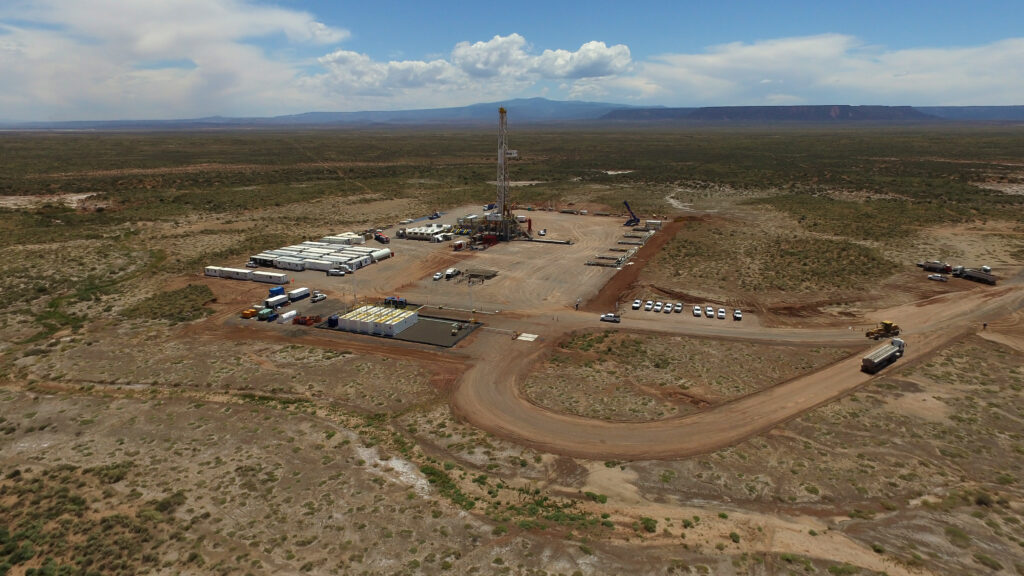
A recent U.S. court ruling demanding Argentina transfer its 51% stake in state energy firm YPF has sent ripples of concern through the global energy investment community. This judicial directive, stemming from a long-standing dispute over the 2012 nationalization of YPF, casts a significant shadow over Argentina’s ambitious plans for its vast Vaca Muerta shale formation and its critical need to re-engage with international capital markets. For investors eyeing the South American energy landscape, this development introduces a fresh layer of risk and uncertainty, threatening to derail the nation’s aspirations of becoming a key global energy producer and alleviating its chronic foreign exchange deficits.
The Vaca Muerta Vision Under Threat
The U.S. District Court’s order mandates Argentina to hand over its majority YPF shares within 14 days to partially satisfy a $16.1 billion judgment. While the pro-market government of Javier Milei has vowed to appeal the decision, the immediate implication is a significant destabilization of YPF’s corporate structure and strategic direction. YPF is not merely a state-owned enterprise; it is the cornerstone of Argentina’s Vaca Muerta development, often partnering with international majors like Shell and Chevron to unlock the region’s immense potential. Vaca Muerta is globally recognized as the second-largest shale gas reserve and fourth-largest shale oil reserve, currently boasting impressive production figures exceeding 400,000 barrels per day of oil and approximately 70 million cubic meters of gas per day. The uncertainty surrounding YPF’s control and ownership could severely impede future investment, project planning, and the continuity of operations that are vital for scaling up production and attracting the sustained foreign capital necessary for such a massive undertaking. This legal entanglement effectively sidelines Argentina’s most critical energy asset at a pivotal moment for its economic recovery.
Macroeconomic Headwinds and Investor Scrutiny
Argentina’s economy is acutely dependent on securing foreign currency and regaining access to international capital markets to bolster its depleted reserves, address persistent fiscal deficits, and combat high inflation. The YPF ruling directly undermines these efforts. Unresolved legal disputes of this magnitude significantly deter foreign direct investment and make it challenging for the country to issue new sovereign debt. For investors monitoring global energy dynamics, the situation in Argentina adds a localized yet impactful element of geopolitical risk. As of today, Brent crude trades around $94.94, reflecting a modest daily uptick of 0.16% within a range of $91-$96.89. This comes after a notable decline of nearly 8.8% over the past two weeks, with prices falling from $102.22 to $93.22. Amidst such market volatility, our proprietary data indicates a strong investor appetite for clarity on price trajectories, with many actively seeking a base-case Brent price forecast for the next quarter and the consensus 2026 Brent outlook. The YPF imbroglio introduces a significant hurdle for Argentina to capitalize on favorable global energy prices, as the perceived risk premium for investing in the country escalates, making it less competitive for critical capital when weighed against other global opportunities.
Navigating the Legal and Political Labyrinth
The path forward for Argentina is fraught with legal and political complexities. Analysts widely suggest that the outright surrender of YPF shares would require constitutional approval from Argentina’s Congress, a scenario deemed highly improbable given the national significance of the company. This suggests that the ruling is more likely a powerful leverage point for litigation funders like Burford Capital, pushing Argentina towards a negotiated settlement rather than a direct transfer of assets. The protracted nature of such negotiations, however, creates a prolonged period of instability for YPF. A company with an unclear majority shareholder faces immense difficulties in strategic decision-making, fundraising, and long-term planning, as highlighted by economists. Looking ahead, the global energy calendar includes key events such as the Baker Hughes Rig Count reports on April 17th and April 24th, along with the API and EIA weekly inventory reports starting April 21st. More critically, the OPEC+ Joint Ministerial Monitoring Committee (JMMC) convenes on April 18th, followed by the Full Ministerial meeting on April 20th. While these events will shape global supply narratives and influence benchmark prices, the YPF situation adds a distinct layer of country-specific risk that could overshadow any positive global market signals for potential investors in Argentina, effectively sidelining a major non-OPEC resource play from significant capital inflows.
Strategic Repercussions and the Investment Horizon
The strategic repercussions of this ruling extend beyond immediate financial penalties. It fundamentally questions Argentina’s reliability as an investment destination and its commitment to legal frameworks for foreign capital. For YPF itself, the inability to confidently pursue long-term projects or secure financing due to an ambiguous ownership structure could stunt its growth and delay the exploitation of Vaca Muerta’s full potential. The vision of Argentina becoming a “key global energy-producing region” hinges on sustained, predictable investment, which is now severely compromised. Investors are increasingly prioritizing stable regulatory environments and clear property rights. Until this YPF dispute is definitively resolved, through appeal or negotiation, Argentina’s energy sector will likely struggle to attract the substantial capital required to transform its vast shale resources into tangible economic prosperity. This ongoing uncertainty creates a high-risk, high-reward profile that many institutional investors may find too volatile given other stable opportunities in the global energy market.