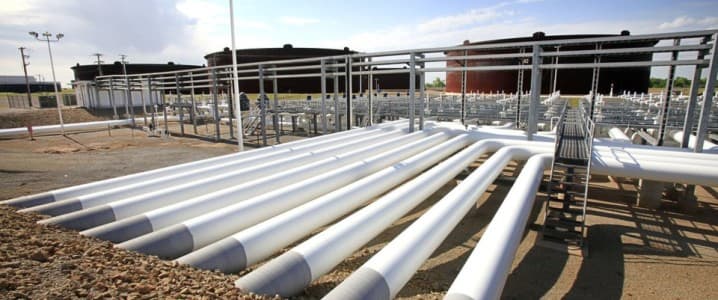
The oil market just delivered a curveball, halting a significant draw streak that had pointed to tightening supply. A recent report by the American Petroleum Institute (API) estimated a crude oil inventory build of 680,000 barrels for the week ending June 27. This figure sharply contrasted with analyst expectations for a 2.26 million barrel draw and put an end to a remarkable five-week run of API-reported inventory declines, which collectively totaled more than 22 million barrels—a pace of reduction not witnessed in recent memory. While this build might appear to soften the bullish narrative, a closer look at the broader inventory picture and current market dynamics reveals a more nuanced investment landscape. For astute investors, understanding these intertwined signals is crucial for navigating the next phase of crude price movements.
The Inventory Reversal: A Nuanced Picture Beneath the Headline
The headline crude build, though surprising, needs to be dissected within the broader context of U.S. petroleum inventories. Despite the recent weekly increase, it’s worth noting that crude oil inventories year-to-date are still up by 4 million barrels, according to calculations based on API data. Adding another layer of complexity, the Department of Energy (DoE) reported a 300,000 barrel increase in the Strategic Petroleum Reserve (SPR) for the same week, pushing total SPR levels to 402.8 million barrels. While a welcome replenishment, these levels remain hundreds of millions of barrels shy of pre-withdrawal figures, highlighting a continued strategic vulnerability.
Beyond crude, the product inventory landscape presents a mixed bag. Gasoline inventories also saw an increase, rising by 1.920 million barrels in the week ending June 27, following a 764,000 barrel increase the week prior. Despite these builds, gasoline inventories are still tracking 3% below their five-year average for this time of year, according to the latest EIA data. In contrast, distillates—a key indicator for industrial activity and heating oil—experienced a significant draw of 3.458 million barrels, building on the previous week’s 1.026 million barrel decline. Distillate inventories are now a staggering 20% below their five-year average as of the week ending June 20, signaling robust demand or constrained supply in this critical segment. Furthermore, the key Cushing, Oklahoma storage hub, a benchmark for U.S. futures contracts, continued its downward trend, falling by 1.417 million barrels, significantly more than the 75,000 barrel drop recorded the prior week. This divergence across product categories suggests that while crude storage saw a temporary bump, underlying demand for refined products and specific crude grades remains robust.
Market Response and Current Price Dynamics
While the API report’s immediate release saw Brent crude edge up marginally by $0.44 (+0.66%) to $67.18 and WTI by $0.50 (+0.77%) to $65.61, the market has since moved considerably. As of today, Brent crude trades robustly at $94.94, reflecting a modest daily gain of +0.16% within a day range of $91 to $96.89. Similarly, WTI crude is priced at $91.58, up +0.33% today, navigating a range between $86.96 and $93.3. These figures underscore a broader bullish sentiment that appears to be shrugging off the single-week crude build.
However, it’s also critical to contextualize today’s prices against recent trends. Our proprietary data indicates that Brent crude has experienced a notable softening over the past two weeks, declining by 8.8% from $102.22 on March 25th to $93.22 as of yesterday, before its current slight recovery. This broader price correction suggests that while the market absorbed the surprise build, it’s also reacting to other macro factors. The persistent strength in current prices, despite the build and the recent two-week downtrend, highlights underlying supply concerns, resilient global demand, or geopolitical premiums that continue to provide a floor for crude values. Gasoline prices, for instance, are currently at $3.01, up +1.35% today, further indicating strong demand for refined products.
Upcoming Catalysts: Shaping the Forward Outlook
The oil market rarely stands still, and several key events on the horizon will be critical in determining whether this recent crude build is an anomaly or the start of a new trend. Investors should closely monitor the next round of inventory data, with the API Weekly Crude Inventory reports scheduled for April 21st and April 28th, followed by the more comprehensive EIA Weekly Petroleum Status Reports on April 22nd and April 29th. These reports will provide crucial clarity on the trajectory of U.S. crude and product stocks.
Beyond North American data, global supply-side decisions will take center stage. The upcoming OPEC+ Joint Ministerial Monitoring Committee (JMMC) meeting on April 18th, swiftly followed by the full OPEC+ Ministerial Meeting on April 20th, carries significant weight. With Brent prices currently near $95, there will inevitably be discussions on production quotas. Any signals from OPEC+ regarding adjustments to current output levels, whether maintaining status quo, considering deeper cuts, or even hinting at a gradual increase, will have an immediate and profound impact on market psychology and price forecasts. Furthermore, the Baker Hughes Rig Count reports on April 17th and April 24th will offer insights into U.S. drilling activity, providing a leading indicator for future domestic supply.
Addressing Investor Concerns: Navigating Price Forecasts for the Next Quarter
Our first-party intent data reveals that investors are keenly focused on defining a base-case Brent price forecast for the next quarter and understanding the consensus 2026 Brent outlook. The recent inventory build, while initially unsettling, must be weighed against the broader market signals. The significant draws in distillates and Cushing, coupled with the overall resilience of crude prices despite a recent 14-day softening, suggest that underlying demand remains robust, particularly for refined products. The market’s ability to maintain Brent near $95 today, even after a surprise build, indicates a strong foundational support likely driven by ongoing geopolitical tensions and the anticipation of supply discipline.
For the next quarter, our analysis suggests that while short-term volatility is likely to persist as new inventory data emerges, the downside for Brent may be limited by structural supply tightness and potential supportive actions from OPEC+. The upcoming OPEC+ meetings are paramount; a decision to maintain current cuts would likely underpin prices, while any hint of increased supply could cap upside potential. Given the mixed inventory signals—a crude build contrasted with strong draws in Cushing and distillates—investors should anticipate a market that remains sensitive to both demand-side indicators and supply-side policy. Our insights point to continued inquiries into global demand, particularly from major Asian economies, as a key factor alongside the aforementioned supply dynamics in shaping the Brent trajectory through Q2 and into Q3 2026.


