Lexus EV Plant Signals Oil Demand Headwinds
The recent groundbreaking of Lexus’s first wholly-owned electric vehicle (EV) factory in China marks a pivotal moment, signaling a tangible acceleration in the global energy transition and presenting undeniable headwinds for future oil demand. Slated to produce up to 100,000 EVs annually from 2027, this Shanghai facility underscores a strategic shift by a major global automaker in the world’s largest and most influential EV market. For oil and gas investors, this development is not merely an automotive news item; it is a clear indicator of the structural forces that will shape crude demand curves in the coming decade, demanding a nuanced understanding of both immediate market dynamics and long-term transformational trends.
China’s Electrification Drive: A Structural Shift for Oil Demand
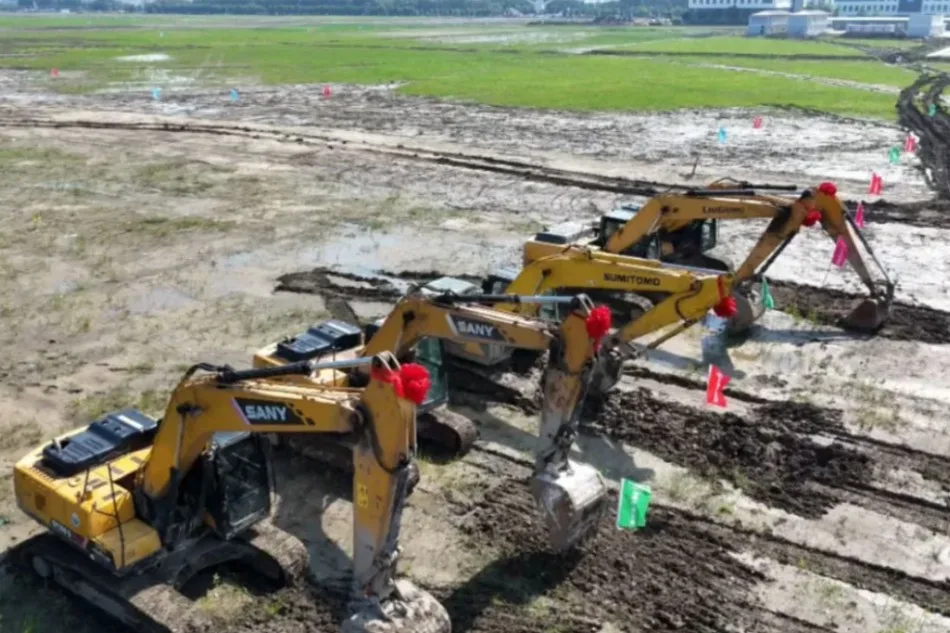
Toyota’s decision to establish a dedicated Lexus EV plant in China, following the relaxation of foreign ownership restrictions, highlights the strategic imperative for automakers to rapidly scale EV production. The 1.13 million square meter industrial plot in Shanghai’s Jinshan district, acquired for RMB 1.353 billion, is a significant investment affirming the long-term commitment. With construction expected to complete by August 2026 and production commencing in 2027, this factory alone represents a potential displacement of gasoline demand from 100,000 internal combustion engine (ICE) vehicles annually. While this number might seem small in the context of global oil consumption, it’s crucial to view it as part of a much larger, accelerating trend. China’s ambition to expand its New Energy Vehicle (NEV) industry cluster, coupled with its immense market scale, ensures that every new EV plant contributes to a cumulative erosion of gasoline demand. This structural shift, driven by both policy and consumer preference, poses a significant, compounding challenge to long-term oil demand forecasts, particularly for transportation fuels.
Navigating Current Market Volatility Amidst Future Headwinds
The long-term implications of electrification are undeniable, yet the oil market continues to grapple with immediate supply-demand fundamentals. As of today, Brent crude trades at $95.19 per barrel, showing a modest 0.42% increase for the day, with WTI crude following suit at $91.74, up 0.5%. Gasoline prices have also seen a slight uptick, reaching $3, a 1.01% gain. However, a broader look at the past fourteen days reveals a more bearish sentiment, with Brent having declined by approximately $9, or 8.8%, from $102.22 on March 25th to $93.22 on April 14th. This recent price depreciation underscores the market’s sensitivity to macroeconomic indicators, geopolitical developments, and inventory levels. While these daily and bi-weekly fluctuations often dominate headlines, the underlying current of long-term demand erosion, exemplified by initiatives like the Lexus EV plant, continues to build pressure. Investors must balance the tactical plays driven by immediate market signals with a strategic perspective informed by these profound shifts in energy consumption patterns.
Investor Focus: Reconciling Short-Term Supply with Long-Term Demand Erosion
Our proprietary reader intent data indicates a strong preoccupation among investors with projecting the next quarter’s Brent price and understanding the operational dynamics of Chinese ‘teapot’ refineries. This keen focus highlights the market’s attempt to reconcile immediate supply-side factors and regional demand nuances with the evolving global energy landscape. The operational capacity and utilization rates of Chinese refineries are directly tied to the country’s overall industrial activity and, crucially, its transportation fuel demand. As China accelerates its EV adoption, supported by new domestic and foreign-owned production facilities like Lexus’s Shanghai plant, the long-term growth trajectory for gasoline and diesel demand in this critical market becomes increasingly uncertain. Investors are rightly questioning how these structural demand changes will impact refining margins, crude import volumes, and, ultimately, their base-case Brent price forecasts for not just the next quarter, but for years to come. The electrification push demands a fundamental re-evaluation of demand models, moving beyond incremental adjustments to embrace a paradigm shift.
Upcoming Events to Watch: Immediate Triggers in a Shifting Landscape
While the Lexus plant’s impact is years away, several key events in the next fourteen days will provide crucial insights into the immediate market balance and potential catalysts for price movements. The upcoming OPEC+ Joint Ministerial Monitoring Committee (JMMC) meeting on April 18th, followed by the Full Ministerial Meeting on April 20th, will be paramount. Any decisions regarding production quotas will directly influence near-term global supply, potentially either stabilizing prices or adding further volatility if output changes surprise the market. Simultaneously, the weekly API and EIA crude inventory reports, scheduled for April 21st, 22nd, 28th, and 29th, will offer granular data on U.S. crude and product stockpiles, providing a real-time pulse on demand and refining activity in the world’s largest consumer market. Furthermore, the Baker Hughes Rig Count on April 17th and 24th will indicate the trajectory of North American upstream investment. These short-term indicators, when viewed through the lens of a rapidly electrifying global vehicle fleet, underscore the dual challenge facing oil investors: managing immediate supply-demand imbalances while strategically positioning for a future with a progressively lower reliance on fossil fuels for transportation.
Strategic Implications for Oil & Gas Investment Portfolios
The Lexus EV factory in China is more than an isolated corporate development; it serves as a powerful symbol of the accelerating energy transition and its profound implications for the oil and gas sector. For investors, this necessitates a proactive reassessment of traditional valuation metrics and long-term growth assumptions. Companies heavily reliant on gasoline and diesel demand, particularly those with significant exposure to Asian markets, face increasing risks. Conversely, integrated majors that are strategically diversifying into lower-carbon energy solutions or refining companies that are adapting their output to petrochemicals or sustainable aviation fuels may prove more resilient. The challenge lies in identifying those entities best positioned to navigate the dual pressures of immediate market volatility and the relentless, structural erosion of oil demand driven by electrification. Successful investing in this environment requires an acute awareness of both the daily market pulse and the long-term technological and policy trends that are fundamentally reshaping the global energy landscape.


