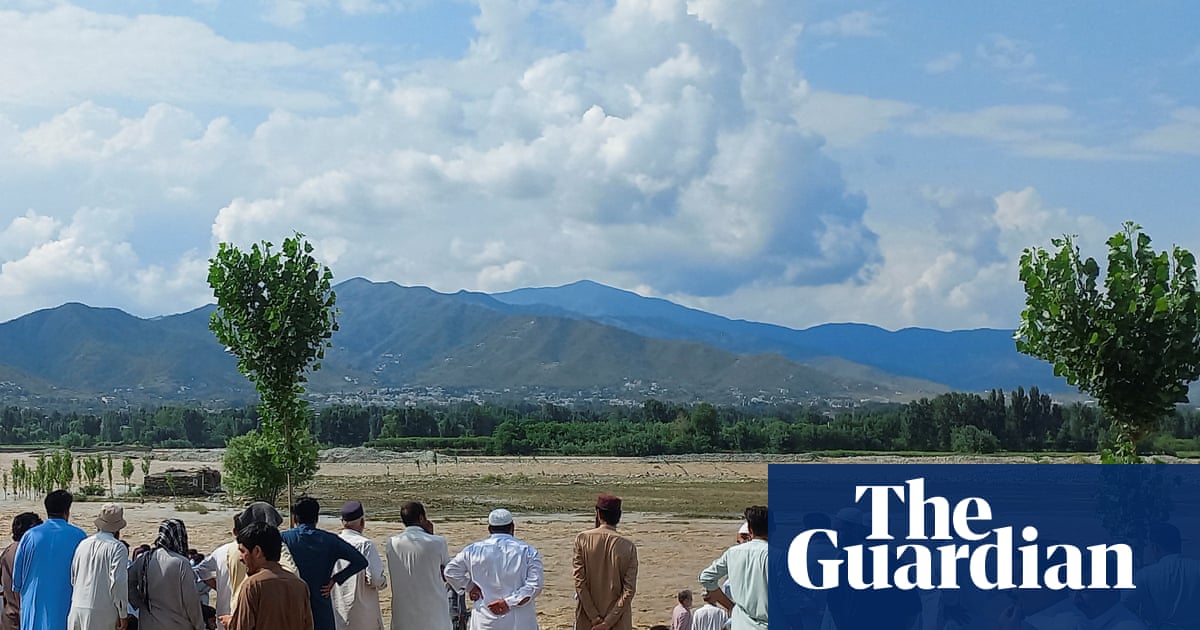
Recent flash flooding in Pakistan, which has tragically claimed dozens of lives and displaced countless others, extends beyond a humanitarian crisis to present tangible risks for global energy investors. While the immediate focus remains on rescue efforts and local government responses in regions like Khyber Pakhtunkhwa, savvy investors must look deeper at the broader implications for energy infrastructure, regional demand dynamics, and the increasing influence of climate volatility on supply chains. This analysis leverages OilMarketCap’s proprietary data to dissect how localized events in a nation of over 240 million people can ripple through the intricate web of global oil and gas markets, offering insights that competitors simply cannot match.
Immediate Risks to Pakistan’s Energy Landscape
The devastating floods sweeping through Pakistan highlight the acute vulnerability of critical infrastructure in climate-prone regions. While the initial reports detail tragic human losses and damaged homes, the widespread nature of the deluge, particularly in agricultural and populated areas, raises significant concerns for energy logistics and consumption. Pakistan relies heavily on imported crude and natural gas to fuel its economy, with a network of pipelines, storage facilities, and transportation routes that are inherently exposed to such extreme weather events. Any disruption to these vital arteries – whether through direct damage to pipelines or roads, or indirectly through prolonged power outages and economic paralysis – directly impacts the nation’s energy security and demand profile. Even localized disruptions can strain national grids and alter demand patterns, creating ripple effects for suppliers and trading partners. As of today, Brent crude trades at $95.19 per barrel, a modest 0.42% increase today within a daily range of $91-$96.89. WTI crude similarly stands at $91.74, up 0.5%. While these global benchmarks reflect broader market sentiment, investors must recognize that such localized events contribute to an elevated risk premium, potentially undermining the recent 14-day trend that saw Brent drop from $102.22 to $93.22 per barrel.
Climate Volatility and Investor Concerns
The scale of the current flooding echoes the catastrophic climate-induced floods of 2022, which killed over 1,700 people and affected 33 million across Pakistan. This recurring pattern underscores Pakistan’s extreme vulnerability to climate change, a factor increasingly prominent in energy investment theses. Our proprietary reader intent data reveals a strong investor focus on understanding the consensus 2026 Brent forecast and building base-case price forecasts for the next quarter. While immediate supply-demand fundamentals often dominate these discussions, the escalating frequency and intensity of climate events introduce a non-linear risk factor that demands serious consideration. For investors asking about drivers for Asian LNG spot prices this week, the situation in Pakistan offers a poignant example. As a significant LNG importer, widespread disruption could temporarily suppress industrial and residential demand in affected areas, or conversely, if local gas infrastructure is compromised, could increase short-term import dependency to compensate for domestic shortfalls. The long-term implications of climate-resilient infrastructure investment in such nations become a critical component of assessing regional energy stability and future demand projections.
Navigating Global Events Amidst Localized Risks
Looking forward, the global energy calendar is packed with events that typically command investor attention. The upcoming OPEC+ Joint Ministerial Monitoring Committee (JMMC) meeting on April 18th, followed by the Full Ministerial meeting on April 20th, will be closely watched for any signals on production policy. Similarly, the regular API and EIA weekly inventory reports on April 21st/22nd and April 28th/29th, alongside the Baker Hughes Rig Count on April 17th and 24th, provide crucial insights into global supply and demand balances. However, investors must not allow these macro-level events to overshadow the growing significance of localized, climate-driven disruptions. While Pakistan’s floods may not immediately impact global crude flows in the same way an OPEC+ decision might, they are indicative of a systemic shift. These events highlight the increasing fragility of energy supply chains in climate-vulnerable regions and the potential for demand destruction or rerouting, factors that must be integrated into any robust forward-looking analysis. The cumulative effect of such recurring incidents demands a re-evaluation of long-term investment strategies, particularly regarding infrastructure development and insurance models in these exposed geographies.
Strategic Implications for Energy Portfolios
For oil and gas investors, the events unfolding in Pakistan serve as a stark reminder that geopolitical and environmental risks are becoming inextricably linked. The increasing frequency of extreme weather events in major energy-consuming and transit nations adds a layer of complexity to supply chain resilience and demand forecasting. Investors should be evaluating their portfolios for exposure to assets in climate-vulnerable regions, assessing the robustness of infrastructure against natural disasters, and scrutinizing corporate strategies for climate adaptation and mitigation. The long-term implications extend beyond immediate financial losses, influencing insurance costs, operational continuity, and ultimately, the valuation of energy assets. A holistic investment approach necessitates integrating climate risk analysis with traditional geopolitical and market fundamental assessments. Understanding how nations like Pakistan navigate these challenges provides critical foresight into the evolving global energy landscape, where resilience against environmental shocks will increasingly dictate investment success.


