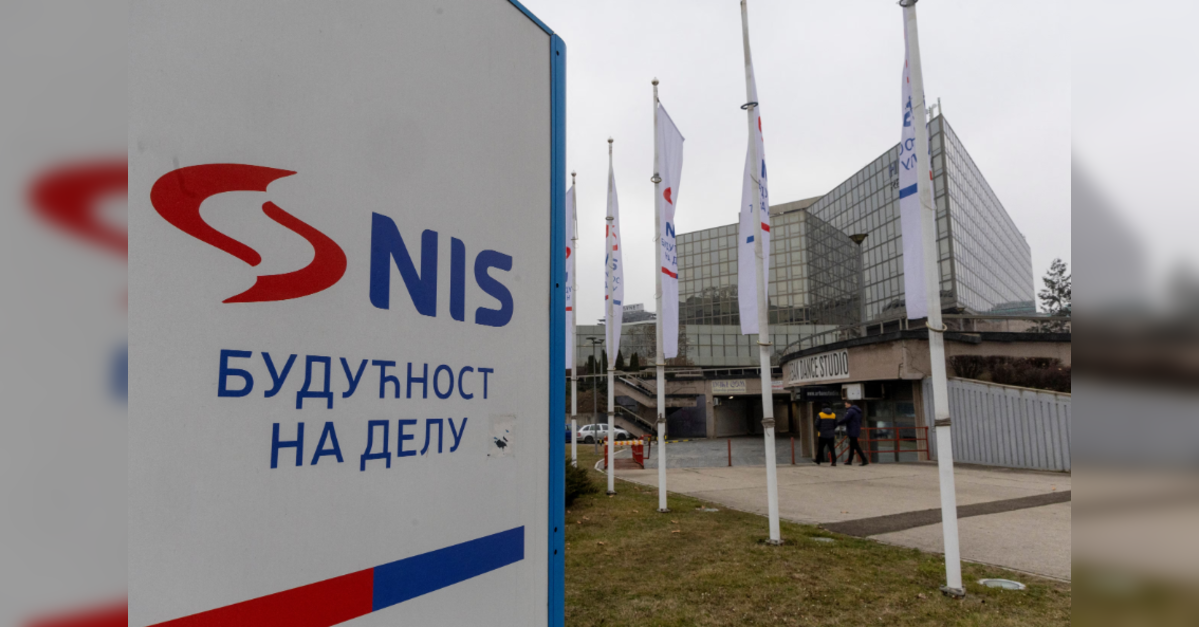
The latest delay in US sanctions against Serbia’s largest energy producer, NIS, for the fourth time, underscores a persistent geopolitical tightrope walk with significant implications for global energy investors. This repeated reprieve, pushing the full implementation of sanctions to July 29, highlights the complex interplay between energy security, economic dependencies, and international diplomacy. Majority-owned by Russian energy giant Gazprom, NIS operates Serbia’s sole oil refinery and serves as a critical conduit for Russian gas supplies to the nation, which has steadfastly refused to impose sanctions on Moscow despite its aspirations for EU membership. For investors, this evolving saga is more than a regional footnote; it’s a living case study in the efficacy of sanctions, the resilience of entrenched energy ties, and the inherent volatility these dynamics introduce into the global oil and gas market.
The Enduring Serbian-Russian Energy Axis
NIS, a cornerstone of Serbia’s energy infrastructure, has once again secured a month-long extension on US sanctions originally slated for February. This latest deferral, moving the deadline to July 29, represents a continued negotiation of geopolitical realities. The sanctions, initially conceived to throttle Moscow’s revenue streams from its lucrative energy sector, would require the complete withdrawal of Russian interests and the sale or nationalization of their shares in NIS. However, Serbia’s profound reliance on Russian gas, channeled through NIS, creates a powerful disincentive for immediate compliance. The gas supply contract between Belgrade and Moscow, signed in spring 2022, was recently extended until the end of September, further cementing these energy ties for the foreseeable future. For investors evaluating geopolitical risk in their portfolios, the NIS situation offers a clear signal: severing long-standing energy relationships, even under significant international pressure, is a complex, drawn-out process with deep economic and strategic ramifications.
Market Pricing Geopolitical Frictions
Despite the ongoing geopolitical maneuvers surrounding NIS, the broader crude market has shown a degree of resilience, albeit within a recently softened trend. As of today, Brent Crude trades at $95.19, reflecting a modest gain of 0.42% for the day, with an intraday range of $91 to $96.89. WTI Crude mirrors this sentiment, sitting at $91.74, up 0.5%, having traded between $86.96 and $93.3. This relative stability comes despite a notable softening in crude prices over the past two weeks, with Brent having declined by nearly 8.8% from $102.22 on March 25 to $93.22 on April 14. While the NIS situation is critical regionally, its direct impact on global crude prices appears muted, suggesting the market views it as a localized, albeit persistent, challenge rather than a systemic shock to global supply. However, the continuous extensions of these sanctions contribute to a broader narrative of geopolitical uncertainty that can keep a floor under risk premiums, especially if perceived as a precedent for other sanctions regimes.
Navigating the Q3 Calendar: Sanctions, Supply, and Investor Outlook
The upcoming calendar holds several critical dates for energy investors, and the NIS sanctions deadline on July 29 looms large as a specific geopolitical flashpoint. Simultaneously, the extension of Serbia’s gas contract with Russia until the end of September adds another layer of long-term strategic importance. Investors are keenly watching how these specific regional developments might interact with broader market catalysts. For instance, the upcoming OPEC+ Joint Ministerial Monitoring Committee (JMMC) meeting on April 18, followed by the Full Ministerial meeting on April 20, will be pivotal in shaping global supply dynamics for the next quarter. Decisions made by OPEC+ regarding production quotas could either amplify or mitigate the market’s sensitivity to geopolitical events like the NIS situation. Weekly data releases, such as the API Weekly Crude Inventory on April 21 and 28, and the EIA Weekly Petroleum Status Report on April 22 and 29, will continue to provide short-term volatility. Many investors are currently seeking a clear base-case Brent price forecast for the next quarter and a consensus 2026 outlook. The ongoing delays in sanction implementation, while seemingly localized, contribute to a broader perception of uncertainty in the global supply landscape, impacting risk premiums. A prolonged non-enforcement could signal a weakening of the broader sanctions framework, potentially influencing long-term supply expectations from other sanctioned entities and thus, influencing those price forecasts.
Strategic Implications and Investor Questions on Sanctions Efficacy
The repeated deferral of sanctions on NIS raises fundamental questions about the efficacy and long-term viability of economic sanctions as a tool of foreign policy, particularly when vital energy interests are at play. For oil and gas investors, this scenario prompts a deeper analysis of the true impact of geopolitical pressures on energy flows and corporate structures. The persistence of Russian interests in key European energy infrastructure, even indirectly through entities like NIS, signals a complex and enduring strategic footprint. This is not merely a technical delay; it’s an ongoing diplomatic negotiation that reflects Serbia’s indispensable energy needs and Russia’s strategic leverage in the region. Investors should consider how such protracted delays might influence other jurisdictions facing similar pressures or holding similar strategic importance. The lack of a decisive resolution could lead to increased market speculation around the enforceability of future sanctions, creating pockets of localized risk and opportunity. Ultimately, the NIS case serves as a crucial reminder that energy markets are not solely driven by supply and demand fundamentals but are deeply intertwined with geopolitical realities that can shift, extend, and redefine investment horizons.


