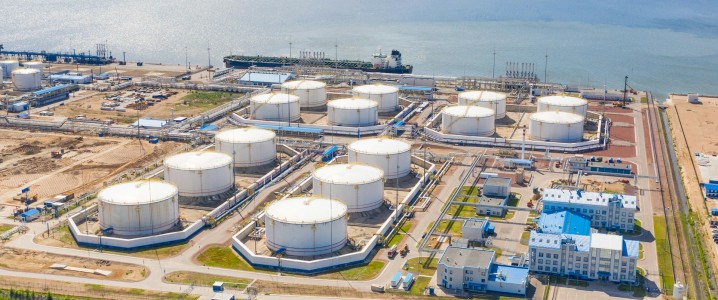
The Department of Energy’s recent announcement regarding a seven-month delay in Strategic Petroleum Reserve (SPR) replenishment purchases sends a significant signal through the crude oil markets. Initially targeting the addition of 15.8 million barrels into the SPR during the first five months of this year, only 8.8 million barrels have been delivered thus far. The remaining scheduled crude oil, along with future solicitations and exchanges, will now be pushed back through December 2025, citing site maintenance as the primary reason. For investors, this isn’t just a logistical hiccup; it’s a development with tangible implications for near-term supply-demand dynamics, price volatility, and the broader energy investment landscape. Understanding the ramifications of this delay requires a deep dive into current market conditions, upcoming catalysts, and prevailing investor sentiment.
Immediate Market Reaction and Missed Opportunities
The timing of this delay is particularly salient given the current state of crude oil markets. As of today’s trading, Brent crude has seen a significant downturn, plummeting to $90.38 per barrel, marking a sharp decline of over 9% within the day’s trading range of $86.08 to $98.97. Similarly, WTI crude has experienced substantial pressure, trading at $82.59, a more than 9% drop from its opening. This recent volatility follows a broader trend; Brent crude has shed a notable $20.91, or 18.5%, over the past two weeks, falling from $112.78 on March 30th to $91.87 just yesterday. These lower price points present a potential missed opportunity for the government to acquire crude at more favorable rates for the SPR, which has been severely depleted to 395 million barrels, its lowest level in 40 years against a total capacity of 727 million barrels. While the official reason cited is maintenance, the deferral means the US will not be adding demand to an already weakened market, potentially allowing prices to soften further in the immediate term. However, it also prolongs the period of heightened supply insecurity, a factor that could re-emerge as a premium in oil prices down the line.
Navigating the Refill Conundrum and Investor Outlook
The strategic petroleum reserve’s replenishment has always been a delicate balancing act. Any significant government buying program for crude oil typically signals increased demand, which, in turn, tends to push prices higher, escalating the final cost of the refill. This “catch-22” is a key reason why the process is projected to cost around $20 billion and take several years. With the current delay extending purchases through December 2025, the market is left to ponder the long-term price trajectory without the immediate supportive demand from the US government. Many investors are keenly asking about the outlook for crude prices by the end of 2026, a question made all the more pertinent by this extended replenishment timeline. Should global demand rebound strongly or supply face unexpected disruptions, the government could find itself re-entering the market at significantly higher price points than those available today. This uncertainty impacts investment strategies, particularly for exploration and production (E&P) companies, where long-term price stability underpins capital expenditure decisions and valuation models. The delay suggests a willingness to absorb current market weakness, but it also defers the inevitable price impact of future large-scale purchases.
Forward-Looking Catalysts and Supply Dynamics
The extended delay in SPR purchases shifts investor focus even more sharply onto other critical supply and demand indicators. Over the next two weeks, the energy calendar is packed with events that will shape market sentiment and potentially influence future SPR refill decisions. This Saturday and Sunday, the OPEC+ Joint Ministerial Monitoring Committee (JMMC) and the full Ministerial Meeting will convene. Investors are closely watching these gatherings for any signals regarding current production quotas or potential adjustments, which could dramatically impact global supply levels. Any decision by OPEC+ to further tighten supply could exacerbate the challenge for the US to refill its strategic reserves at reasonable prices once purchases resume. Additionally, the upcoming API Weekly Crude Inventory reports on April 21st and 28th, followed by the EIA Weekly Petroleum Status Reports on April 22nd and 29th, will provide crucial insights into US inventory levels. Significant draws could indicate tightening domestic supply, potentially putting upward pressure on prices and complicating the SPR’s eventual re-entry strategy. Furthermore, the Baker Hughes Rig Count reports on April 24th and May 1st will offer a snapshot of US drilling activity, signaling future production trends. These catalysts will dictate the market environment into which the SPR will eventually re-engage, making the seven-month delay a period of intense observation for energy investors.
Investor Strategy Amid Prolonged Uncertainty
For investors, the SPR purchase delay introduces a prolonged period of uncertainty regarding a significant source of future crude oil demand. While the immediate impact might be a slight softening of prices due to the absence of government buying, the long-term implications are more complex. The deferral of 15.8 million barrels means this demand will eventually re-enter the market, potentially coinciding with a period of tighter global supply or stronger demand. This extended timeline affects risk assessment for long-term oil price forecasts, which our readers frequently inquire about. Companies with significant exposure to crude oil prices, from upstream producers to midstream operators and refiners, must factor this unpredictable, yet eventually unavoidable, government demand into their strategic planning. The government’s decision signals a prioritization of operational maintenance over opportunistic buying during a dip. This could be interpreted as a belief that current price levels are not necessarily the floor, or that the market could remain subdued for longer than anticipated, allowing for future purchases at equally, or even more, favorable terms. However, it also underscores the political and logistical complexities surrounding the SPR, factors that will continue to influence crude oil market dynamics for years to come.


