EU Green Funding: Decarb Fuels O&G Transition
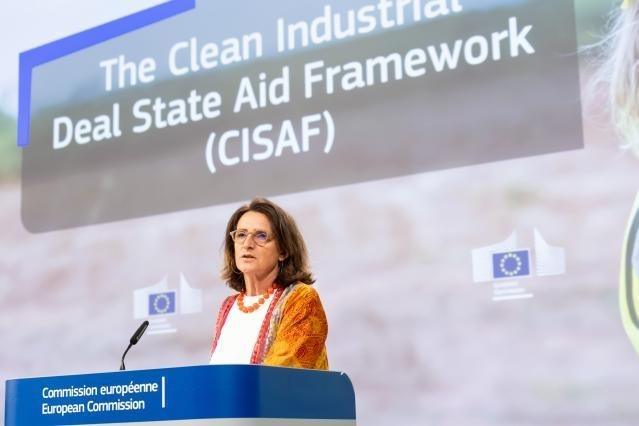
The European Union has signaled a robust commitment to its decarbonization goals with the recent adoption of its Clean Industrial Deal State Aid Framework (CISAF). This new regulatory architecture is not merely an environmental policy; it is a significant economic directive designed to funnel capital into clean energy development, industrial decarbonization, and the buildout of clean technology manufacturing across member states. For oil and gas investors, understanding CISAF’s mechanisms and implications is crucial. This framework directly influences future energy demand, operational costs for energy-intensive industries, and the strategic direction for companies seeking to thrive in a rapidly evolving energy landscape, particularly those poised to capitalize on the burgeoning “decarb fuels” sector.
Shifting Energy Demand: CISAF’s Impact on Traditional Fuels
CISAF is a cornerstone of the broader Clean Industrial Deal, launched earlier this year to accelerate Europe’s green transition while bolstering its industrial competitiveness. At its core, the framework simplifies state aid rules across five critical areas, including the roll-out of renewable energy and, notably, low-carbon fuels. This specific focus on low-carbon alternatives signals a structural shift in demand away from traditional fossil fuels. Member states can now provide significant support for developing these fuels, which could encompass advanced biofuels, sustainable aviation fuels (SAF), or hydrogen. The framework also offers temporary electricity price relief for energy-intensive users, aiming to reduce their costs by up to 25% by covering up to half of the wholesale price for half of their annual electricity demand. While this supports competitiveness, it simultaneously incentivizes a transition to lower-cost, cleaner electricity sources. For O&G companies, this means the long-term viability of high-carbon assets in Europe faces increasing headwinds, while investments in carbon capture, hydrogen production, or other low-carbon energy solutions could see accelerated growth through 2030, the framework’s operational timeline.
Market Volatility and the Long-Term Investment Thesis
In the immediate term, energy markets remain susceptible to a confluence of geopolitical factors and supply-demand imbalances, creating significant price volatility. As of today, Brent Crude trades at $94.79, reflecting a -0.72% daily movement, while WTI Crude stands at $86.47, down -1.09%. This recent dip follows a more pronounced trend, with Brent having declined approximately 19.8% over the past 14 days, from $118.35 on March 31st to $94.86 on April 20th. This kind of movement naturally prompts questions from investors, such as “is WTI going up or down?” or “what do you predict the price of oil per barrel will be by end of 2026?” While short-term price dynamics are critical for trading decisions, policies like the EU’s CISAF introduce a powerful structural element that influences the long-term investment thesis. The strategic shift towards decarbonization in a major economic bloc like the EU suggests that while cyclical demand might still drive near-term prices, the ceiling for sustained high fossil fuel demand could gradually lower. Investors must therefore weigh immediate market signals against the profound, government-backed incentives reshaping the future energy mix, recognizing that the “long game” is increasingly defined by transition rather than stagnation.
Catalyzing Clean Tech Manufacturing and De-Risking Capital
A key differentiator of CISAF is its explicit support for “key enabling industries” under the Net Zero Industry Act, allowing member states to fund investments in new production lines, machinery, or technology licensing for clean tech manufacturing. This isn’t just about energy generation; it’s about building the industrial ecosystem required for a decarbonized future. Beyond direct funding, CISAF introduces mechanisms to de-risk private investments in eligible projects, allowing member states to provide equity, loans, or guarantees to dedicated funds or special purpose vehicles. This financial engineering aims to unlock significant private capital for ventures across clean energy, decarbonization, clean tech, and energy infrastructure. For oil and gas companies with the technical expertise and capital, this presents a clear strategic opportunity to diversify. Investing in areas such as green hydrogen production, carbon capture, utilization, and storage (CCUS) technologies, or advanced materials for renewable energy components could leverage existing capabilities while benefiting from substantial state backing and de-risked capital. Investors should scrutinize the portfolios of O&G majors for their commitments and progress in these areas, as these will likely be the growth engines in the European market over the next decade.
Navigating Upcoming Market Signals and Strategic Shifts
For investors positioning their portfolios, it’s essential to monitor both the immediate market pulse and the forward-looking policy trajectory. Several key energy events in the coming weeks will offer crucial insights into short-term supply and demand dynamics, which, when viewed through the lens of CISAF, help paint a more complete picture. The OPEC+ JMMC Meeting on April 21st, for instance, could influence global crude supply decisions, impacting immediate price stability. However, the EU’s long-term decarbonization strategy, reinforced by CISAF, provides a counter-narrative to purely supply-side considerations. Similarly, the EIA Weekly Petroleum Status Reports (April 22nd, April 29th) and the Baker Hughes Rig Count updates (April 24th, May 1st) will offer granular data on inventory levels and drilling activity, shaping short-term market sentiment. Crucially, the EIA Short-Term Energy Outlook on May 2nd will provide updated forecasts that investors can cross-reference with their own models, particularly regarding the long-term demand implications of global policy shifts like CISAF. While these events provide valuable tactical information, the overarching strategic imperative for investors remains clear: the European energy landscape is undergoing a profound, state-backed transformation, making understanding and adapting to policies like CISAF as critical as tracking daily price movements for sustained success in oil and gas investing.


