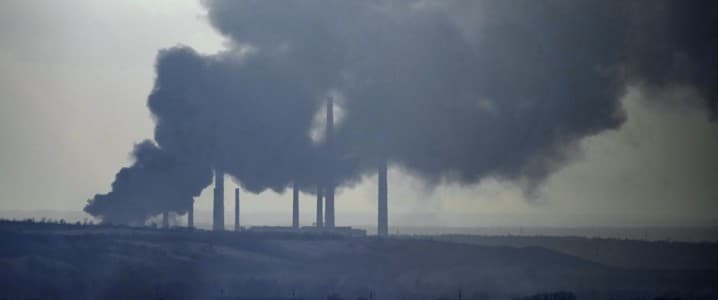
The geopolitical chessboard just saw a critical move, one that underscores the escalating risks to global commodity supply chains beyond traditional oil and gas. Recent reports confirm Russian forces have seized a village in eastern Ukraine, alarmingly close to the Kruta Balka site, a major untapped hard-rock lithium deposit. This development sends ripples across the energy transition landscape, spotlighting Europe’s ambitious yet vulnerable quest for critical minerals essential for electric vehicles and renewable energy storage. For investors navigating a complex market, this isn’t just a regional conflict; it’s a direct challenge to the foundational elements of the green economy, demanding a re-evaluation of long-term supply resilience and geopolitical exposure in investment portfolios.
Geopolitical Grip Tightens on Critical Minerals
The strategic importance of Ukraine’s mineral wealth has been a quiet undercurrent in the broader conflict, but the recent seizure near Shevchenkove brings it to the forefront. The Kruta Balka deposit, part of a cluster estimated to hold over 500,000 metric tons of lithium oxide, represents a cornerstone for Europe’s battery manufacturing aspirations. Its potential to offer an alternative to China’s near-monopoly on refined lithium and South America’s brine-based production was seen as a vital step towards energy independence. Now, with Russian forces potentially expanding control over such strategic mining zones, the future of these development plans, and indeed Europe’s long-term energy transition strategy, hangs precariously. Investors are increasingly concerned about the long-term stability of commodity prices, as evidenced by questions our platform receives regarding oil price predictions for the end of 2026. While these questions typically focus on crude, the underlying theme of supply security and geopolitical influence is now expanding to critical minerals, posing new layers of risk and opportunity that traditional energy forecasts must now incorporate.
Europe’s Lithium Ambition Meets Hard Reality
For years, the European Union has actively sought to de-risk its supply chains for critical raw materials, a policy explicitly formalized through initiatives like the Green Deal and strategic partnerships with mineral-rich nations. Ukraine, with its significant hard-rock lithium prospects like Kruta Balka, Dobry, and Polokhivske, was identified as a priority partner as early as 2021. International mining companies had already secured exploration licenses, signaling serious intent to develop these resources. The vision was clear: secure domestic or near-domestic supply to power the continent’s rapidly expanding electric vehicle industry and grid-scale energy storage solutions. This recent military advance, however, casts a harsh light on the vulnerability of even well-intentioned strategic partnerships. It underscores how geopolitical instability can directly undermine the foundational supply of materials deemed indispensable for global decarbonization efforts, forcing a reassessment of what “secure” supply truly means in a volatile world.
Market Disconnect? Oil Retreats While Mineral Risk Mounts
The broader commodity market currently presents a perplexing picture when viewed against the backdrop of escalating critical mineral supply risks. As of today, Brent Crude trades at $90.38, reflecting a significant 9.07% drop within the day, with its price range oscillating between $86.08 and $98.97. Similarly, WTI Crude has seen a substantial decline, trading at $82.59, down 9.41% from its open, fluctuating between $78.97 and $90.34. This downward pressure extends to refined products, with gasoline prices currently at $2.93, a 5.18% decrease. This recent volatility is not an isolated event; our proprietary data shows Brent has trended down sharply over the past two weeks, from $112.78 on March 30th to $91.87 yesterday, representing an 18.5% decline.
This significant retreat in crude prices, likely driven by broader macroeconomic concerns or shifting demand outlooks, stands in stark contrast to the escalating geopolitical risk faced by critical minerals like lithium. While the market appears to be pricing in a degree of comfort, or perhaps pessimism, regarding traditional energy demand, the long-term supply security for the building blocks of the new energy economy is facing increasingly direct threats. This divergence suggests a potential market disconnect, where the immediate pressures on oil and gas overshadow the growing, structural risks to materials vital for the energy transition, which could manifest as significant price shocks down the line for specific commodities.
Navigating Future Energy Dynamics: Beyond Crude Supply
Looking ahead, the next two weeks are packed with key events that will shape the traditional oil and gas landscape, but investors must now also consider how these events intersect with the burgeoning critical minerals narrative. The upcoming OPEC+ Joint Ministerial Monitoring Committee (JMMC) meeting today, April 18th, followed by the Full Ministerial Meeting tomorrow, April 19th, will undoubtedly set the tone for short-to-medium term crude supply. Our readers are actively tracking these developments, frequently asking about current OPEC+ production quotas, highlighting the immediate focus on oil supply management.
However, while these meetings address immediate crude market balances, the broader geopolitical climate, now exacerbated by the contest for strategic minerals, adds a layer of complexity. The control over critical raw materials could become a powerful geopolitical bargaining chip, potentially influencing alliances and trade flows in ways that ripple back to traditional energy markets. Furthermore, weekly data releases such as the API Crude Inventory on April 21st and 28th, the EIA Weekly Petroleum Status Report on April 22nd and 29th, and the Baker Hughes Rig Count on April 24th and May 1st, will offer insights into current supply and demand. Yet, these traditional metrics only tell part of the story. Investors must broaden their analytical lens to include the security of critical mineral supply chains, recognizing that the long-term viability of the energy transition, and thus demand for new energy technologies, is increasingly intertwined with geopolitical stability in regions rich in these materials. Failure to secure these resources could create bottlenecks that impact the entire energy sector, making portfolio diversification across the full energy spectrum more critical than ever.


