Navigating the New ESG Frontier: GRI’s Enhanced Standards for Oil & Gas Investors
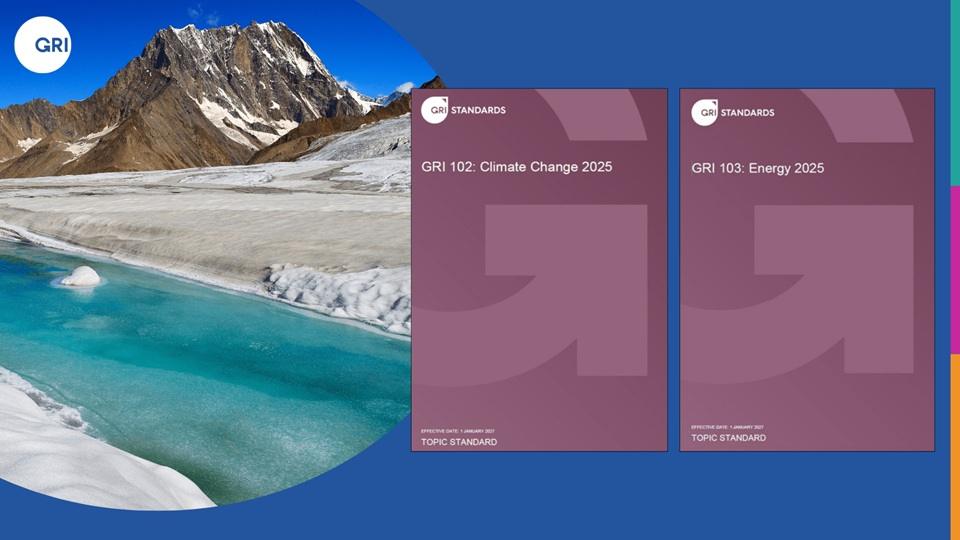
The landscape for environmental, social, and governance (ESG) investing in the oil and gas sector is undergoing a significant transformation. The Global Reporting Initiative (GRI) has recently unveiled its enhanced Climate Change and Energy Standards, a development that will fundamentally reshape how energy companies report their sustainability performance and how investors evaluate their long-term viability. These new standards move beyond basic emissions data, demanding a more comprehensive and nuanced disclosure of climate-related impacts, energy management strategies, and transition plans. For investors navigating the complexities of the energy transition, understanding these updated requirements is not merely academic; it is critical for identifying resilient assets and mitigating risk in a rapidly evolving market.
The Deeper Dive: What GRI’s New Standards Demand
The updated GRI 102: Climate Change and GRI 103: Energy standards represent a substantial evolution in sustainability reporting, driven by what the Global Sustainability Standards Board (GSSB) identified as a remarkable increase in stakeholder demands for climate transparency. These aren’t just incremental tweaks; they introduce entirely new dimensions to corporate disclosure. Under GRI 102: Climate Change, companies must now report on “just transition” principles, detailing impacts on workers, communities, and vulnerable groups affected by climate adaptation and transition strategies. This includes the implications of greenhouse gas (GHG) removals and carbon credits. Crucially, the standard mandates disclosures on transition plans for climate mitigation, requiring information on policies, actions aligned with scientific evidence, and concrete targets and progress toward phasing out fossil fuels. Companies must also provide insights into climate change adaptation plans, specific emissions reduction targets and their achievement, and the use of GHG removals across their value chain.
Complementing this, GRI 103: Energy focuses on significant energy-related impacts. It moves beyond simple consumption figures to require reporting on energy reduction efforts, efficiency gains, and the sourcing of renewable energy. A key addition is the demand for management disclosures on the role of energy policies and commitments in the broader transition to a decarbonized economy. This includes detailed target setting and an assessment of impacts on the economy, environment, and people resulting from energy consumption and the shift to renewable sources. New requirements extend to reporting energy consumption and generation both within the organization and throughout the upstream and downstream value chain. For oil and gas companies, these standards mean a far greater scrutiny of their core business models, necessitating a fundamental shift in how they track, manage, and communicate their environmental footprint and future strategy.
Market Realities and the Enduring ESG Pressure
Even as the immediate market grapples with volatility, the strategic imperative for robust ESG reporting remains steadfast. As of today, Brent Crude trades at $90.38 per barrel, marking a significant daily decline of 9.07%, with its price ranging from $86.08 to $98.97. Similarly, WTI Crude stands at $82.59, down 9.41%, trading between $78.97 and $90.34. This sharp dip in crude prices is mirrored in the gasoline market, which has fallen to $2.93, a 5.18% drop for the day. This current market turbulence follows a notable trend: Brent has seen a substantial decrease of $20.91, or 18.5%, over the past 14 days, falling from $112.78 on March 30 to $91.87 yesterday. Such rapid price fluctuations highlight the inherent volatility of commodity markets and underscore the need for companies to demonstrate resilience and long-term strategic vision beyond short-term price movements.
For oil and gas investors, this dynamic environment underscores why ESG considerations, particularly those related to climate and energy transition, are not luxury items but core components of risk assessment. When commodity prices are high, companies might feel less pressure to accelerate their transition plans. However, during periods of significant price declines like the one we’ve witnessed recently, the spotlight intensifies on operational efficiency, sustainable practices, and strategic diversification. The new GRI standards ensure that even during market downturns, companies cannot simply revert to old habits. Instead, they must transparently articulate how they are managing climate risks and embracing energy transition opportunities, offering investors a clearer picture of their enduring value proposition despite the immediate market headwinds.
Upcoming Events: A New Lens for Investor Scrutiny
The new GRI standards will cast a long shadow over upcoming industry events, transforming how investors interpret outcomes and company statements. This weekend, the OPEC+ Joint Ministerial Monitoring Committee (JMMC) meeting will take place, followed by the full Ministerial meeting. Investors are keenly watching these gatherings for signals on production quotas, a topic frequently raised by our readers. Decisions made by OPEC+ directly influence global supply and, consequently, the economics of individual oil and gas producers. Under the new GRI framework, however, the implications extend beyond market share. Companies will increasingly need to articulate how such macro-level production strategies align with their stated climate transition plans and fossil fuel phase-out targets. A company that touts aggressive emissions reduction goals, yet benefits from increased production facilitated by OPEC+ decisions, will face closer scrutiny under the expanded disclosure requirements.
Furthermore, the regular cadence of industry data releases will now be viewed through an ESG-tinted lens. The API Weekly Crude Inventory (April 21, 28) and EIA Weekly Petroleum Status Report (April 22, 29) provide vital insights into U.S. supply and demand dynamics. Similarly, the Baker Hughes Rig Count (April 24, May 1) offers a leading indicator of drilling activity and future production. While these have always been critical operational metrics, the new GRI standards necessitate that companies connect these operational realities to their energy consumption, emissions profile, and broader transition strategies. For instance, increased drilling activity might imply higher energy consumption or potential methane emissions, which companies must now report with greater granularity. Investors will be looking for how companies integrate these operational data points into their comprehensive climate and energy management disclosures, moving beyond mere compliance to strategic alignment.
Addressing Investor Concerns: Transparency in a Transitioning World
Our proprietary reader intent data reveals a consistent thread of investor questions centered on future performance, market fundamentals, and the reliability of information. For example, questions like “What do you predict the price of oil per barrel will be by end of 2026?” highlight a desire for clarity amidst uncertainty. While we don’t provide price predictions, the new GRI standards offer a mechanism for companies to address the underlying drivers of long-term value that influence such forecasts. A company’s ability to navigate the energy transition, as evidenced by robust GRI reporting on fossil fuel phase-out plans and renewable energy integration, will increasingly factor into its perceived future resilience and, by extension, its valuation.
Another common query, “How well do you think Repsol will end in April 2026?”, underscores investor focus on individual company performance. For companies like Repsol, which operate in regions with high ESG expectations, detailed reporting under the new GRI standards will be paramount. Investors are no longer satisfied with broad statements; they seek granular data on climate adaptation, just transition impacts, and verifiable progress against energy reduction targets. The question about “OPEC+ current production quotas” also connects directly to this. While macro-level decisions, these quotas affect the operating environment for all players. Companies will need to explain how their strategies adapt to these realities while still advancing their declared ESG commitments, providing specific numbers and transparent plans that the new GRI framework demands. In essence, investors are asking for verifiable proof of strategic intent, and the new GRI standards provide the framework for companies to deliver it.


