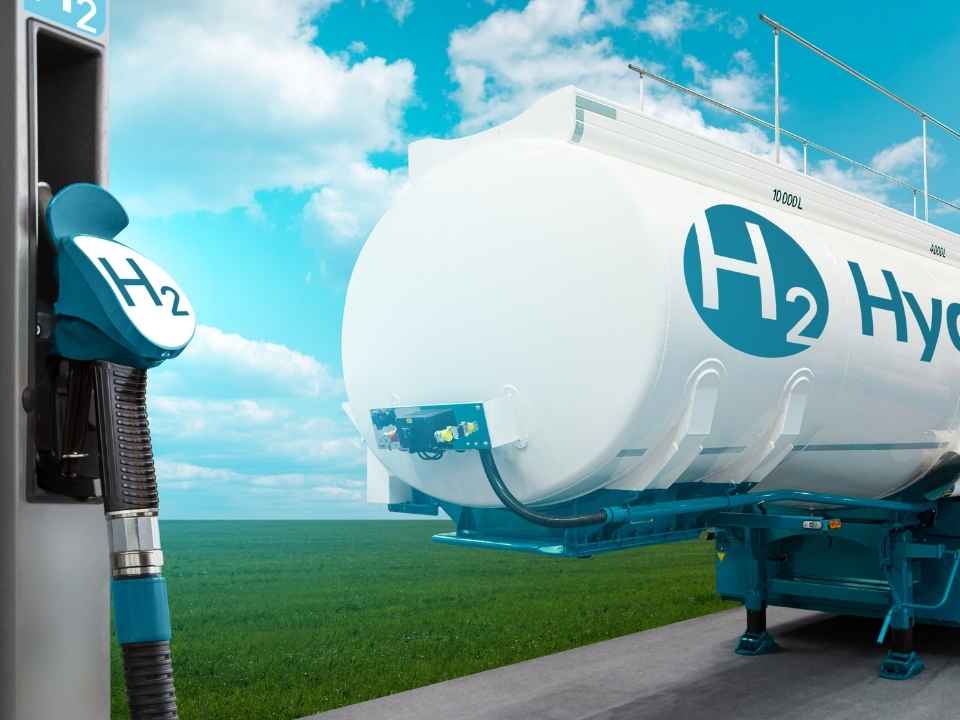
The energy transition is not a distant future but a present reality, reshaping investment landscapes across the globe. Nowhere is this more evident than in the heavy-duty transport sector, a significant contributor to global emissions. Amidst this shift, hydrogen fuel cell technology is emerging as a critical contender, and European industrial giants are taking concrete steps to accelerate its adoption. Daimler Truck, in collaboration with partners like DHL Freight and the BMW Group, is spearheading practical pilot tests for hydrogen-powered heavy-duty vehicles, signaling a pivotal moment for investors eyeing the next wave of energy innovation and decarbonization strategies within logistics. This move represents not just a technological advancement but a strategic repositioning in the broader energy market, warranting close attention from those looking to diversify beyond traditional oil and gas.
Hydrogen: The Strategic Imperative for Heavy Transport
The push for hydrogen in heavy-duty transport is driven by an undeniable economic and environmental imperative. Unlike battery electric vehicles, which face limitations in range, payload, and charging times for long-haul trucking, hydrogen fuel cells offer a compelling alternative. They provide quick refueling, extended range, and sustained power output, making them ideal for the rigorous demands of logistics operations. The European H2Haul project, featuring Daimler Truck’s collaboration with DHL Freight and the BMW Group, is a prime example of this strategic focus. By putting two hydrogen-powered trucks into real-world operation, the partners are moving beyond theoretical models to practical validation. This pilot test aims to rigorously evaluate the day-to-day practicality and operational efficiency of hydrogen fuel cells in heavy-duty applications, an essential step in building the confidence required for widespread commercial adoption and significant capital deployment into hydrogen infrastructure and vehicle fleets.
Navigating Market Volatility: Hydrogen as a Portfolio Hedge
In the dynamic world of energy investments, diversification is key, and the recent market volatility underscores this truth. As of today, Brent Crude trades at $90.38, reflecting a significant 9.07% daily decline and a stark drop from $112.78 just two weeks ago. Similarly, WTI Crude has fallen to $82.59, down 9.41% within the same 24-hour period. This pronounced downturn, with Brent having shed 18.5% in the last fortnight, highlights the inherent price sensitivity of traditional crude oil markets to geopolitical shifts, economic sentiment, and supply-demand dynamics. Against this backdrop, strategic investments in alternative energy sources like hydrogen, particularly within critical sectors such as heavy transport, can act as a valuable long-term hedge. For investors currently weighing the future of oil prices, as evidenced by questions like “what do you predict the price of oil per barrel will be by end of 2026?”, the growth of hydrogen solutions offers a compelling narrative for portfolio resilience and exposure to the energy transition, mitigating some of the risks associated with an exclusively fossil-fuel-centric outlook.
Investor Focus: Future Growth and Upcoming Catalysts
Investors are increasingly scrutinizing how traditional energy companies and industrial leaders are adapting to the evolving energy landscape. The move by Daimler Truck and its partners directly addresses this by demonstrating proactive investment in future-proof technologies. While the immediate outlook for crude oil will be shaped by upcoming events like the OPEC+ JMMC and Full Ministerial Meetings on April 18th and 19th, and subsequent API and EIA inventory reports on April 21st and 22nd, the long-term trajectory for integrated energy players is undeniably linked to their diversification into new energy vectors. These OPEC+ meetings, in particular, will provide critical signals on supply-side management, potentially influencing short-to-medium term crude prices. However, regardless of these outcomes, the fundamental shift towards decarbonization exemplified by the H2Haul project will continue to gain momentum. Investors are keenly asking about the viability of companies like Repsol in this transforming market, indicating a strong interest in firms with clear strategies for transitioning their energy mix. Companies demonstrating leadership in hydrogen, like Daimler Truck, are positioning themselves favorably for sustainable growth in a future where low-emission logistics are not merely an option but a regulatory and consumer expectation.
Forging Alliances: The Path to Scalable Hydrogen Infrastructure
The success of hydrogen mobility, especially for heavy-duty applications, hinges not only on vehicle technology but also on the rapid development of a robust fueling infrastructure. Daimler Truck’s collaboration with DHL Freight and the BMW Group underscores the critical importance of multi-stakeholder partnerships in overcoming the chicken-and-egg problem of hydrogen adoption. DHL Freight’s commitment as a “pioneer in eco-friendly logistics” and its openness to “forward-looking cooperations” highlights the industry-wide recognition that no single entity can build this ecosystem alone. These alliances are vital for sharing the immense capital expenditure required for hydrogen production, distribution, and refueling stations. For investors, these collaborations signal a de-risked approach to market entry and expansion, spreading the financial burden and leveraging collective expertise. The progress of projects like H2Haul offers a blueprint for how large-scale hydrogen deployment can be achieved through strategic alliances, paving the way for further investment opportunities across the entire hydrogen value chain, from electrolyzer manufacturers to infrastructure developers and fleet operators.