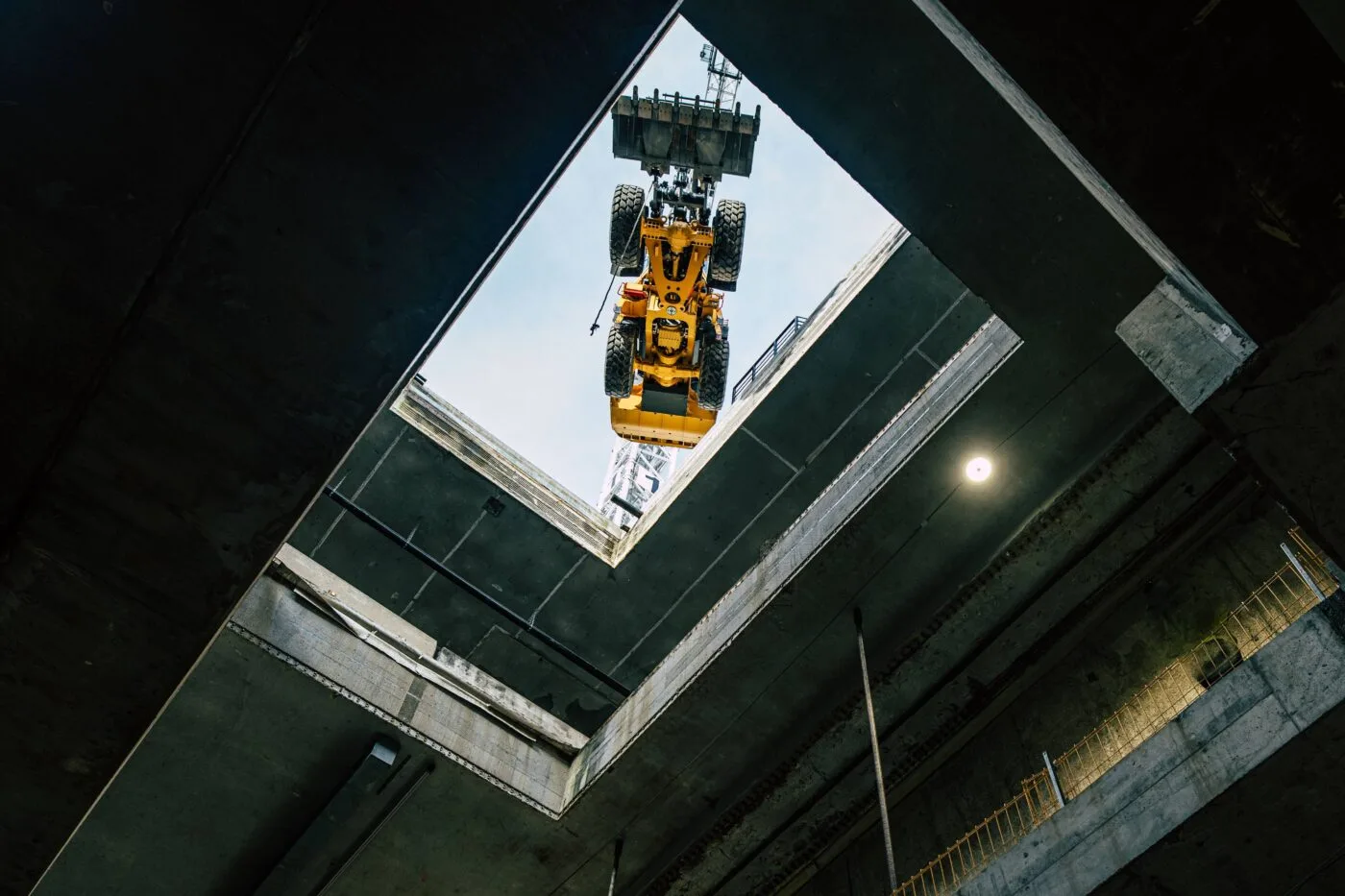
The recent deployment of an all-electric wheel loader in Munich for a complex underground train station build offers a potent microcosm of the evolving energy landscape, signaling niche but growing pressures on traditional diesel demand within urban and specialized industrial operations. While the immediate volumetric impact on global oil consumption remains marginal, this development underscores a persistent, accelerating trend toward electrification in heavy equipment. For oil and gas investors, this isn’t merely an engineering feat; it’s a bellwether for structural shifts in demand patterns, particularly for middle distillates, that warrant close attention in long-term portfolio planning.
The Munich Precedent: A Canary in the Diesel Coal Mine
The successful operation of a 20-ton electric wheel loader, the L120 Electric, at a depth of 27 meters beneath Munich’s historic city center, represents a significant proof-of-concept for battery-electric heavy machinery in demanding environments. This particular project, involving a pressurized tunnel connecting to an existing subway, explicitly mandated electrically powered equipment due to the “incalculable risk” posed by diesel emissions in such confined, air-locked spaces. The vehicle’s ability to match its diesel counterpart’s performance for up to eight hours, all while operating quietly and emission-free, highlights a compelling operational advantage beyond mere environmental compliance. This isn’t just about ‘green’ credentials; it’s about practical necessity and enhanced operational efficiency in specific urban and subterranean contexts.
As of today, WTI Crude trades at $91.28, having seen a relatively stable session so far with a day range between $86.96 and $93.3. Gasoline prices stand at $2.96, down slightly by 0.34% within a day range of $2.93 to $3. While these headline figures reflect broader market dynamics, the Munich case demonstrates how localized, high-value deployments of electric heavy equipment are chipping away at specific segments of diesel demand. The construction sector, particularly in densely populated urban centers with stringent environmental regulations, presents a fertile ground for such transitions. While individual projects may consume hundreds, not thousands, of barrels of diesel, the cumulative effect across a multitude of global cities planning similar infrastructure upgrades could become a measurable factor in regional demand forecasts over the coming decade.
Decarbonization Pressures and Investor Outlook on Diesel Demand
The Munich example feeds directly into a broader narrative of decarbonization that permeates investor strategies across the energy sector. For investors scrutinizing long-term demand models, a key question revolves around the resilience of various refined products. Diesel, traditionally a workhorse fuel for industrial, transportation, and agricultural sectors, is increasingly facing headwinds from electrification. While large-scale electrification of long-haul trucking or heavy-duty off-road machinery is still in its nascent stages, specialized applications like urban construction and mining are proving to be early adopters due to immediate operational benefits.
Addressing the persistent investor query on base-case Brent price forecasts for the next quarter, the continued erosion of specific diesel demand segments, however small initially, contributes to the overall bearish sentiment over the longer term. Brent has seen a notable pullback recently, dropping nearly 9% from $102.22 on March 25th to $93.22 on April 14th. This recent volatility underscores market sensitivity to demand signals, even those emerging from niche sectors. While the market currently focuses on macroeconomic indicators and geopolitical tensions, the underlying structural shifts in energy consumption, exemplified by projects like Munich, will increasingly factor into consensus 2026 Brent forecasts. Savvy investors are already integrating these micro-trends into their fundamental analysis, understanding that while global demand may grow, the composition of that demand is shifting, potentially disadvantaging refiners overly reliant on a static diesel market.
Policy, Upcoming Events, and the Shifting Energy Mix
The adoption of electric construction equipment, particularly in Europe, is not occurring in a vacuum. It is heavily influenced by stringent environmental regulations, urban emission zones, and municipal sustainability goals. The “emission-free” requirement in Munich isn’t an anomaly but a precursor to increasingly common mandates in other major global cities. These policy drivers accelerate the transition away from fossil fuels in specific operational niches, creating a predictable trajectory for the displacement of diesel.
Looking ahead, the next two weeks bring several critical energy events that will provide further context for these evolving demand dynamics. The upcoming OPEC+ Joint Ministerial Monitoring Committee (JMMC) meeting on April 18th and the full Ministerial meeting on April 20th will offer insights into the supply side’s response to the current market. While OPEC+’s immediate focus will likely be on balancing supply with broader demand trends, the cumulative effect of electrification in sectors like construction will eventually need to be factored into their long-term outlooks. Furthermore, the API Weekly Crude Inventory reports on April 21st and 28th, followed by the EIA Weekly Petroleum Status Reports on April 22nd and 29th, will provide crucial data points on inventory levels and refined product demand, offering a snapshot of how these shifts might be manifesting at a regional or national level. These reports are vital for assessing whether the market is beginning to reflect the early impacts of demand-side transitions, moving beyond high-level global forecasts to more granular product-specific analysis.
Implications for Oil & Gas Investment Strategy
For oil and gas investors, the Munich EV loader serves as a potent reminder that the energy transition is not a monolithic event but a series of incremental, sector-specific shifts. Companies heavily invested in the downstream refining sector, particularly those with a significant lean towards diesel production, must carefully assess their long-term exposure. While global diesel demand remains robust, the growth vector is being challenged by electrification in specific high-value segments.
Conversely, opportunities are emerging for companies involved in the charging infrastructure for heavy industrial equipment, battery technology, and even the electricity generation sector that will power these machines. The quiet operation and lack of emissions in urban environments also present a competitive advantage for construction firms adopting these technologies, potentially leading to faster project approvals and reduced operational costs in the long run. Investors should scrutinize the capital expenditure plans of major equipment manufacturers and construction giants for increased allocations towards electrification. Identifying companies that are agile in adapting to these evolving demand patterns – whether through diversifying their product mix, investing in alternative fuels, or exploring new energy services – will be critical for navigating the nuanced shifts in the oil and gas landscape.