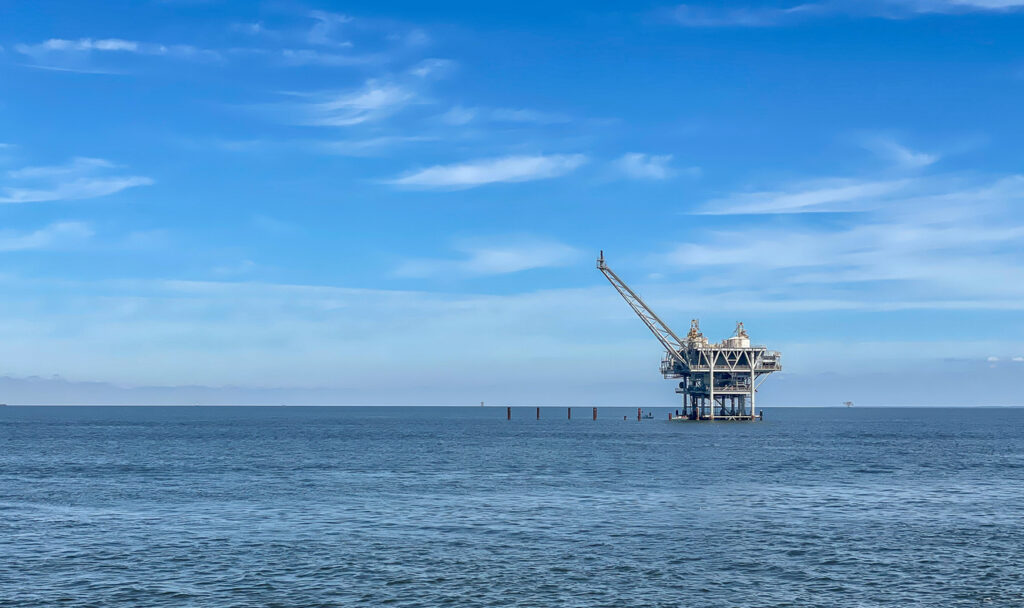
Talos Energy Inc. (NYSE: TALO) laid out an enhanced corporate strategy on June 17, 2025, signaling its determined pivot to become a leading pure-play offshore exploration and production (E&P) company. President and CEO Paul Goodfellow articulated a vision rooted in leveraging the company’s core strengths to capitalize on an anticipated global market shift, where offshore basins are projected to play an increasingly vital role in global oil production. This strategy, underpinned by a commitment to disciplined capital allocation and robust shareholder returns, warrants close examination by investors seeking value in the dynamic energy sector, especially as current market conditions present both challenges and opportunities for offshore operators.
Pillar One: Operational Excellence and Immediate Cash Flow Gains
At the heart of Talos Energy’s enhanced strategy is a robust commitment to improving the business every day, targeting a substantial $100 million increase in annualized cash flow by 2026. This isn’t just about cutting costs; it’s a multi-faceted approach encompassing capital efficiency, margin enhancement, pursuing new commercial opportunities, and broader organizational improvements. In an industry notoriously susceptible to commodity price swings, a focus on internal operational optimization provides a critical buffer. For investors, this immediately addresses a key concern: how a company can generate value even when external market forces are challenging. Efficient operations in the complex offshore environment are paramount, directly impacting profitability and resilience. By shoring up its foundational business, Talos aims to self-fund a significant portion of its growth initiatives and ensure a stronger financial footing, a strategy that resonates well with prudent capital management principles.
Pillar Two: Strategic Growth in a Volatile Market
Talos plans to grow production and profitability through strategic investments in high-margin organic projects, complemented by disciplined, accretive bolt-on acquisitions within deepwater basins. This growth ambition, however, unfolds against a backdrop of significant market volatility. As of today, Brent crude trades at $90.38 per barrel, marking a sharp 9.07% decline from yesterday’s close, with an intraday range spanning from $86.08 to $98.97. Similarly, WTI crude has seen a substantial 9.41% drop, settling at $82.59. This daily downturn is not an isolated event; over the past two weeks, Brent has shed $20.91, falling 18.5% from $112.78 on March 30 to $91.87 just yesterday. Such pronounced price movements underscore the inherent risks in long-cycle, capital-intensive offshore E&P. Talos’s emphasis on “disciplined, accretive” acquisitions and “high-margin” projects becomes absolutely critical in this environment. The market’s current retracement demands that every capital expenditure decision be rigorously evaluated for its ability to generate robust returns even under stressed price scenarios. For investors, the ability of Talos to execute this growth pillar strategically, identifying opportunities that truly enhance value rather than simply expanding footprint, will be a key performance indicator.
Pillar Three: Building a Long-Lived Offshore Portfolio and Investor Expectations
The third pillar of Talos’s strategy involves building a long-lived, scaled portfolio through a strategic and measured approach in the Gulf of America and other conventional offshore basins. This is a clear long-term play, aiming for significant production growth potential and, ultimately, consistent free cash flow generation. This strategic direction directly addresses a core question on many investors’ minds: what do we predict the price of oil per barrel will be by the end of 2026? A long-term offshore strategy inherently bets on a sustained, favorable oil price environment, acknowledging the substantial upfront capital and longer development cycles involved. Our internal reader intent data shows significant investor interest in future oil price outlooks and the impact of global supply dynamics, particularly regarding OPEC+ current production quotas. Talos’s strategy implicitly assumes that global demand will continue to support offshore development, and that the long-term supply-demand balance will favor higher prices, making these capital-intensive projects economically viable. The company’s commitment to being responsible stewards of shareholders’ capital through a disciplined capital allocation framework is crucial here, prioritizing projects that can weather commodity cycles and deliver strong returns over the long haul. This focus on enduring value, rather than short-term gains, positions Talos for sustainable growth, provided its long-term market assumptions hold true.
Macro Tailwinds and Upcoming Catalysts for Offshore E&P
Talos Energy’s strategic bet on offshore basins playing an increasing role in global oil production aligns with a broader narrative of potential supply constraints from conventional onshore sources and the increasing energy needs of a growing global economy. While the market is experiencing significant price corrections today, several upcoming events will provide critical signals for the near-term trajectory and investor sentiment towards the broader oil and gas sector, and by extension, offshore E&P plays like Talos. The OPEC+ Joint Ministerial Monitoring Committee (JMMC) meeting tomorrow, April 18, followed by the Full Ministerial Meeting on April 19, will be closely watched for any indications regarding future production quotas. Any adjustments to supply levels could significantly impact crude prices, either exacerbating current downward pressure or providing a much-needed floor. Furthermore, the weekly API and EIA crude inventory reports on April 21 and 22, respectively, will offer fresh insights into U.S. demand and supply dynamics. These reports, alongside the Baker Hughes Rig Count on April 24, will contribute to the ongoing assessment of market fundamentals. For Talos, a company focused on capital-intensive offshore projects, a stable and predictable macro environment, or at least a clear understanding of its direction, is paramount. These upcoming catalysts will either reinforce the rationale for their long-term offshore vision or highlight the need for even greater agility in capital deployment.