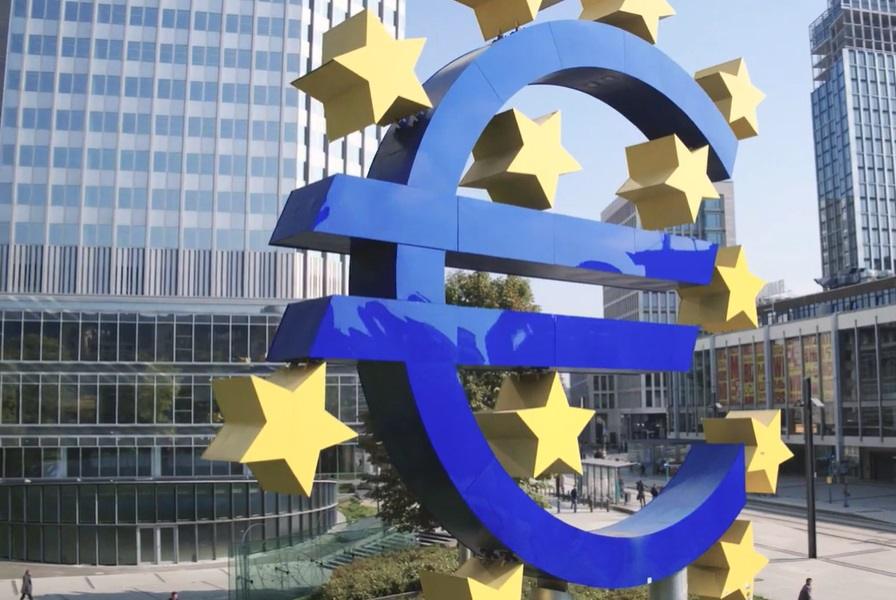
The European Central Bank (ECB) has sent a clear and unequivocal signal to the global financial markets, one with profound implications for energy investors. With its latest climate-related disclosures, the ECB has not only revealed a significant 38% reduction in the carbon intensity of its massive €331 billion corporate bond portfolio between 2021 and 2024 but has also committed to an aggressive new climate goal: an average 7% annual emissions intensity reduction for its corporate holdings. This isn’t merely a nod to environmental concerns; it’s a structural shift in how one of the world’s most influential central banks will allocate capital, directly impacting the cost of financing for companies across Europe, particularly those in carbon-intensive sectors like oil and gas.
ECB’s Green Mandate: A New Hurdle for Hydrocarbons
The ECB’s new climate goal is a powerful declaration that sustainability is now inextricably linked to monetary policy and financial stability. Targeting a 7% average annual reduction in emissions intensity for its corporate bond portfolio holdings under both the Asset Purchase Programme (APP) and the Pandemic Emergency Purchase Programme (PEPP) establishes a rigorous benchmark. This commitment is aimed at aligning the ECB’s vast investment activities with the Paris Agreement and EU climate neutrality objectives. The central bank’s report details a substantial decline in the weighted average carbon intensity (WACI) of its Eurosystem corporate bond portfolio, falling to 165 tCO₂e/EUR million in 2024 from 266 tCO₂e/EUR million in 2021. While the ECB’s deliberate “tilting” of investments towards better climate performers contributed significantly, accounting for approximately 26% of the WACI reduction, the majority came from actual emissions reductions by the issuers themselves. This demonstrates that companies are already responding to these pressures, and the new 7% annual target will only intensify this drive. For oil and gas companies, this translates into an urgent need to demonstrate concrete decarbonization pathways to maintain access to crucial European capital markets and avoid being penalized by increasingly stringent financing criteria.
Market Headwinds Meet Green Finance Pressure
The timing of the ECB’s intensified climate push coincides with a period of significant volatility and downward pressure in the crude oil markets, creating a dual challenge for energy firms. As of today, Brent crude trades at $90.38, a notable 9.07% decline from its previous close, with an intraday range spanning $86.08 to $98.97. WTI crude follows suit at $82.59, down 9.41%, having moved within a day range of $78.97 to $90.34. This sharp downturn is not an isolated event; it echoes a significant 18.5% drop in Brent over the past 14 days, falling from $112.78 on March 30th to $91.87 just yesterday. Gasoline prices have also seen a substantial dip, currently at $2.93, down 5.18%. Such pronounced price weakness directly impacts the revenue and cash flow generation of oil and gas companies. Lower prices reduce the capital available for both traditional upstream investments and, crucially, for the decarbonization projects needed to meet evolving financial requirements like the ECB’s. Energy companies are now caught between the imperative to maintain profitability in a volatile commodity market and the growing pressure from major financial institutions to rapidly transition towards lower-carbon operations. This environment demands strategic agility and a clear roadmap for emissions reduction to secure investor confidence and continue accessing competitive financing.
Forward Implications: Navigating Upcoming Catalysts and Capital Shifts
The interplay between the ECB’s long-term decarbonization goals and immediate market dynamics will be heavily influenced by upcoming industry events. The next 14 days are packed with critical catalysts that investors must monitor. Tomorrow, April 18th, marks the OPEC+ Joint Ministerial Monitoring Committee (JMMC) meeting, followed by the full Ministerial Meeting on April 19th. These gatherings are pivotal for setting global oil supply policy and will directly impact crude price stability. Any decision regarding production quotas, whether maintaining current levels or adjusting them, will send ripples through the market, affecting the financial health of oil and gas producers. Stable or rising prices could provide a much-needed buffer for companies to invest in their green transition, while further weakness would compound the pressure. Additionally, the market will be closely watching the API Weekly Crude Inventory reports on April 21st and 28th, alongside the EIA Weekly Petroleum Status Reports on April 22nd and 29th. These reports offer crucial insights into demand trends and inventory levels in the world’s largest consumer market. Strong demand signals could alleviate some of the current price pressure, while weak data would underscore the challenging environment. For energy companies navigating the ECB’s new 7% annual emission reduction target, the outcomes of these events will either facilitate their transition efforts by providing robust cash flows or make the journey significantly harder, forcing tougher choices on capital allocation between traditional production and green investments.
Investor Focus: Beyond Price Volatility, Towards Sustainable Returns
Our proprietary reader intent data highlights that investors are keenly focused on the future trajectory of the energy market and how individual companies are positioned. We see frequent inquiries about long-term oil price predictions, with many asking for forecasts for the price of oil per barrel by the end of 2026. Similarly, questions around OPEC+ current production quotas underscore the market’s reliance on supply-side management for price stability. These concerns are directly relevant to the ECB’s latest mandate. While short-term price movements and cartel decisions remain critical, the ECB’s actions signal a structural shift that will increasingly influence investment decisions over the medium and long term. Investors are also drilling down to company-specific performance, exemplified by queries such as “How well do you think Repsol will end in April 2026?” This indicates a sharp focus on how individual energy majors are adapting to the evolving landscape. Companies that can effectively articulate and execute a credible strategy for emissions reduction, aligning with the 7% annual target set by the ECB, will likely command a premium and attract a broader pool of capital. Those that fail to demonstrate progress risk higher financing costs and potential exclusion from significant investment portfolios. The prudent investor in today’s energy market must look beyond daily price fluctuations and evaluate companies based on their strategic resilience and verifiable commitment to decarbonization, as these factors will increasingly dictate access to capital and long-term shareholder value.


