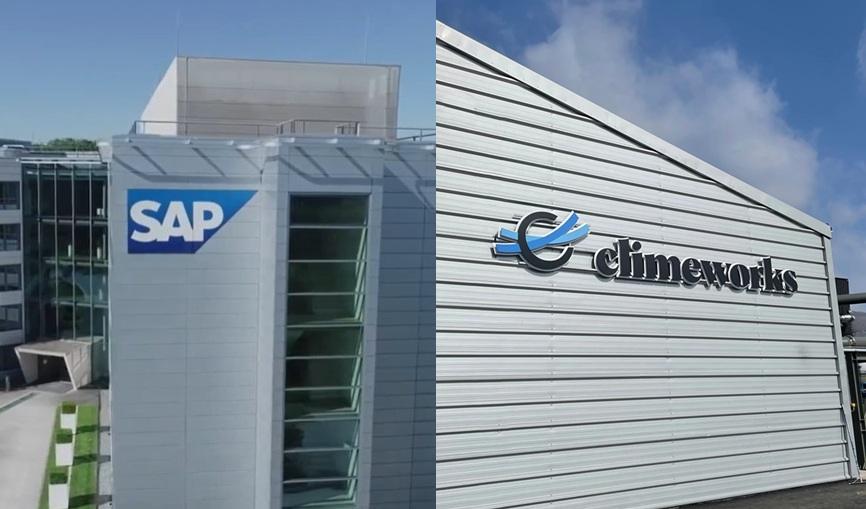
The global energy landscape is undergoing a profound transformation, driven by an accelerating push for decarbonization even as traditional commodity markets exhibit significant volatility. In this evolving environment, strategic partnerships addressing carbon management are becoming increasingly vital for companies navigating net-zero commitments. The recent collaboration between enterprise software giant SAP and carbon removal pioneer Climeworks represents a significant milestone, positioning integrated carbon portfolio management at the forefront of corporate sustainability strategies. For oil and gas investors, understanding these developments is crucial, as they highlight both the challenges facing traditional energy and the burgeoning opportunities in the carbon management sector.
Navigating Volatility: The Imperative for Integrated Carbon Management
The alliance between SAP and Climeworks is not merely a technological integration; it signifies a maturing market for carbon removal solutions. With SAP’s enterprise application expertise, companies can now access an end-to-end platform for managing their carbon removal portfolios, leveraging tools like the SAP Sustainability Control Tower. This move comes at a time when the broader energy market remains highly dynamic. As of today, Brent crude trades at $90.38, experiencing a sharp 9.07% decline, while WTI crude sits at $82.59, down 9.41%. This immediate price contraction follows a significant 14-day trend where Brent fell by $20.91, or 18.5%, from $112.78 to $91.87. Such drastic swings underscore the inherent risks in the commodity market, yet the long-term strategic imperative for decarbonization continues unabated. For companies with hard-to-abate emissions, investing in credible and long-term climate strategies, including carbon removal, is no longer optional but a critical component of risk mitigation and future resilience. SAP’s multi-million euro commitment to purchase 37,000 tons of carbon removal credits from Climeworks through 2034, spanning Direct Air Capture, Biochar, and Enhanced Rock Weathering technologies, demonstrates a tangible investment in securing future capacity and buffering against price volatility in the nascent carbon credit market.
Strategic Positioning Amidst Evolving Carbon Markets and Investor Scrutiny
Our proprietary data on investor intent reveals a significant focus on the future trajectory of traditional energy markets, with investors keenly asking about predictions for oil prices per barrel by the end of 2026 and the implications of OPEC+ production quotas. While these questions are central to conventional oil and gas investment, the growth of integrated carbon management solutions offers a parallel lens for assessing long-term value. Companies like SAP are demonstrating that sustainability is not a trade-off but an economic opportunity. By embedding carbon removal into enterprise technology, they are enabling businesses to build resilience into their operations. This strategic move by SAP, securing high-integrity capacity at preferred rates, not only addresses its own net-zero strategy but also positions it to develop new products that meet evolving customer, partner, and regulatory expectations. For investors, this signals a shift where robust carbon management capabilities will increasingly differentiate corporate performance, potentially offering a hedge against future carbon taxes, regulatory fines, and reputational damage linked to unmitigated emissions. The ability to measure, manage, and mitigate carbon footprints through ERP-centric tools becomes a competitive advantage, allowing companies to thrive even as the cost of carbon continues to climb globally.
The Expanding Toolkit for Hard-to-Abate Emissions and Portfolio Diversification
The partnership highlights the critical need for a diversified approach to carbon removal. Climeworks’ carbon removal portfolio service, launched in 2024, offers companies a broad range of high-quality technologies, including Direct Air Capture (DAC), Biochar, and Enhanced Rock Weathering. This portfolio strategy is crucial because no single technology can address the vast scale of global emissions. DAC directly captures CO2 from the atmosphere, offering a verifiable, permanent solution. Biochar sequesters carbon in soils while improving agricultural productivity, and Enhanced Rock Weathering accelerates natural geological processes to remove CO2. SAP’s role is to provide the operational framework—through its Sustainability Control Tower and SAP Store—to effectively manage this diverse portfolio. This means companies can track, verify, and report on their carbon removal efforts with unprecedented precision, ensuring transparency and credibility. For investors, this signifies a maturing market where carbon removal is moving beyond niche projects to integrated, scalable solutions that can be managed within a company’s core financial and operational systems. Climeworks’ adoption of SAP’s enterprise solutions to scale its own operations further underscores the operational synergy and the potential for rapid expansion in the carbon removal sector.
Future Catalysts and Regulatory Tailwinds for Carbon Removal
Looking ahead, the interplay between traditional energy markets and the burgeoning carbon economy will intensify. The next 14 days bring critical events such as the OPEC+ Joint Ministerial Monitoring Committee (JMMC) meeting on April 18th and the Full Ministerial meeting on April 19th. These gatherings, along with the weekly API and EIA crude inventory reports scheduled for April 21st and 22nd, will undoubtedly shape short-term oil price movements and global supply dynamics. While directly impacting crude, the outcomes of these events indirectly influence the speed and scale of the energy transition. Sustained higher oil prices, for instance, could accelerate corporate investment in decarbonization technologies as companies seek to insulate themselves from commodity price volatility and comply with increasing regulatory pressures. Conversely, a prolonged period of lower prices might temporarily dampen enthusiasm for some high-cost removal technologies. However, the fundamental regulatory push for net-zero emissions, independent of short-term oil price fluctuations, ensures continued momentum for carbon management solutions like those offered by SAP and Climeworks. Investors should monitor policy developments in major economic blocs that could introduce more aggressive carbon pricing mechanisms or mandates for carbon removal, creating significant tailwinds for this sector. The scaling of operations by Climeworks using SAP’s solutions hints at a future where carbon removal becomes an integrated, enterprise-level function, essential for any company aiming for long-term sustainability and shareholder value.


