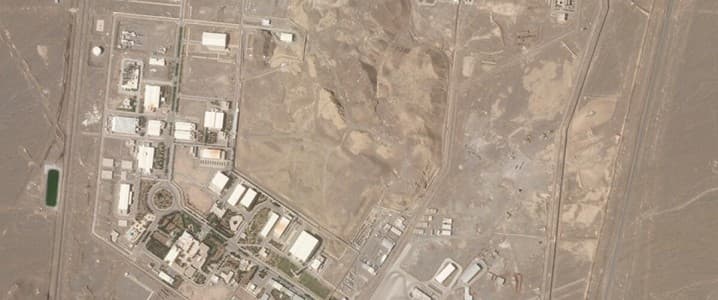
The global oil market is once again navigating treacherous geopolitical waters, with crude benchmarks experiencing significant volatility following a confirmed Israeli airstrike on Iran’s underground uranium enrichment facility at Natanz. This direct hit on critical nuclear infrastructure initially sent shockwaves through energy trading, prompting a sharp repricing of risk and underscoring the enduring sensitivity of oil supply to Middle Eastern tensions. While the initial market reaction saw prices jump, the subsequent days have presented a more nuanced picture, forcing investors to recalibrate their outlook amidst a complex interplay of supply concerns, macroeconomic pressures, and upcoming market signals.
The Geopolitical Spark: Escalation and Immediate Market Reaction
The precision airstrike on Iran’s Natanz facility, targeting critical centrifuge halls, was confirmed by the International Atomic Energy Agency (IAEA) and immediately ignited fears of a wider regional conflict. Such an escalation inevitably raises the specter of disruptions to vital shipping lanes, most notably the Strait of Hormuz, through which a substantial portion of global crude transits daily. In the immediate aftermath, trading desks reacted swiftly. Prices surged, with Brent crude briefly climbing over 3% to $75.55 and West Texas Intermediate (WTI) following suit with a gain of similar magnitude to $73.94. This instantaneous upward movement was a clear manifestation of an increased risk premium being factored into crude prices, as market participants braced for potential retaliatory actions and their implications for global supply stability. Analysts noted a flight-to-safety dynamic, with energy prices contributing to broader inflationary concerns and potentially influencing central bank policy.
Current Market Dynamics: A Volatile Pullback and Underlying Trends
While the initial geopolitical shock sent crude prices soaring, subsequent trading sessions have seen a significant recalibration. As of today, April 18, 2026, Brent crude trades at $90.38, reflecting a notable decline of 9.07% from its intraday high, with a daily range spanning $86.08 to $98.97. Similarly, WTI crude is currently priced at $82.59, marking a 9.41% decrease and trading within a daily range of $78.97 to $90.34. This swift pullback from the initial surge suggests that while the market acknowledges the heightened geopolitical risk, it is also digesting other factors. The downward pressure is further evidenced by the broader 14-day Brent trend, which has seen prices fall from $112.78 on March 30, 2026, to $91.87 on April 17, 2026 – an overall drop of $20.91, or 18.5%. This broader trend indicates that underlying demand concerns or supply perceptions were already exerting downward pressure on prices, even before the recent geopolitical event. The current gasoline price of $2.93, down 5.18% today, also points to a broader energy market sentiment grappling with both supply-side fears and demand-side realities.
Navigating Future Uncertainty: Investor Focus and Critical Calendar Events
Amidst this volatile backdrop, investors are keenly focused on understanding the trajectory of oil prices and the strategic responses from key players. Our internal data indicates that readers are actively seeking insights into long-term price predictions, with questions like “what do you predict the price of oil per barrel will be by end of 2026?” dominating queries. There’s also significant interest in OPEC+’s current production quotas, a testament to the bloc’s pivotal role in global supply management. This focus is particularly relevant given the upcoming energy calendar. The OPEC+ Joint Ministerial Monitoring Committee (JMMC) is scheduled to meet tomorrow, April 18, followed by the full Ministerial Meeting on April 19. These meetings will be critical in assessing the bloc’s stance on production levels, especially as global spare capacity remains a central concern. Any signals from OPEC+ regarding output adjustments, or even just a reaffirmation of current policy, will be heavily scrutinized for their potential to either stabilize or exacerbate market volatility. Beyond OPEC+, investors will be closely monitoring weekly inventory data, with the API Weekly Crude Inventory report due on April 21 and the EIA Weekly Petroleum Status Report on April 22, offering vital insights into U.S. supply and demand fundamentals.
The Enduring Risk Premium and Broader Macroeconomic Implications
The recent geopolitical incident has undeniably elevated the “risk premium” associated with crude oil. While U.S. intelligence sources suggest Iran is not actively pursuing a nuclear weapon and remains years away from deployment, the immediate threat of regional instability is palpable. Financial analysts have warned that a major supply disruption, particularly if the conflict expands or critical shipping lanes are compromised, could send prices soaring above $120 per barrel. Such a scenario would have profound macroeconomic consequences. Elevated energy prices are inherently inflationary, pushing up costs across various sectors and potentially compelling central banks, like the Federal Reserve, to adopt a more hawkish stance. This delicate balance between geopolitical risk, supply stability, and inflationary pressures creates a challenging environment for investors. Monitoring OPEC+’s response, tracking inventory data, and assessing the evolving geopolitical landscape will be paramount for anyone navigating the energy markets in the coming weeks and months. The market remains on edge, awaiting clearer signals on both the demand recovery and the geopolitical temperature.


