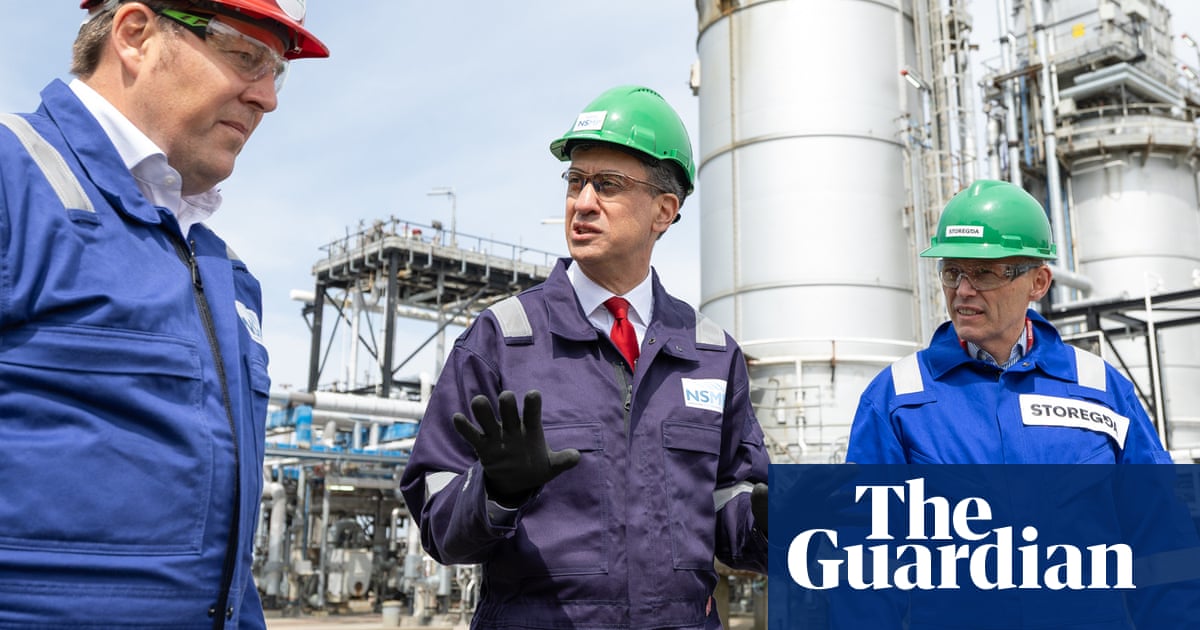
Labour’s Net Zero Stance: UK O&G Investment Risk
The United Kingdom’s energy future is a battleground of political ideologies, with profound implications for oil and gas investors. Labour’s renewed commitment to a “green industrial revolution,” spearheaded by significant investment in offshore wind, stands in stark contrast to growing calls from opposition parties to reconsider or abandon the nation’s Net Zero by 2050 targets. This divergence creates a complex and uncertain landscape, raising critical questions about regulatory stability, fiscal policy, and the long-term viability of traditional hydrocarbon investments within the UK.
The UK’s Shifting Energy Policy Landscape
The current government’s strategy is clear: double down on renewable energy, particularly offshore wind, as a cornerstone of both climate action and economic revitalisation. This includes a substantial £1 billion investment scheme aimed at bolstering the offshore wind supply chain, with £300 million from Great British Energy, an additional £300 million in match funding from the offshore wind industry, and a further £400 million from the Crown Estate. This funding is projected to support thousands of long-term jobs, particularly in former industrial heartlands like Teesside, Scotland, South Wales, and East Anglia, where the wind industry workforce has already expanded significantly, reaching 55,000 people today with projections to exceed 112,000 by 2030.
However, this ambitious push is met with increasing resistance. Leaders from the Conservative and Reform UK parties have expressed strong intentions to drop or reconsider the legally binding Net Zero commitment, citing concerns about its economic feasibility and impact. This political triangulation introduces a significant layer of uncertainty for investors. While the current administration champions green energy as an economic engine, the potential for a future government to pivot away from strict Net Zero targets introduces a binary risk profile for both renewable and conventional energy projects. Investors must now assess not just market fundamentals, but the very political foundation of UK energy policy.
Navigating Political Headwinds: Implications for UK O&G Investment
For oil and gas investors, the UK’s evolving political climate translates directly into heightened policy risk. Stability in regulation, licensing, and fiscal terms is paramount for long-term capital-intensive projects. The current rhetoric, emphasizing a rapid transition away from hydrocarbons, creates an environment where new exploration and development in the North Sea could face significant headwinds, regardless of economic viability. This uncertainty impacts investment decisions, capital allocation, and ultimately, the valuation of UK-based oil and gas assets.
As of today, Brent crude trades at $95.44, reflecting a modest daily gain of 0.69% within a range of $91-$96.89. This follows a notable 14-day decline of nearly 8.8%, dropping from $102.22 to $93.22. Such global price volatility demands clarity on domestic policy, yet UK oil and gas investors face increasing ambiguity. When global commodity prices are already subject to significant swings, the added layer of domestic policy unpredictability makes the UK continental shelf a more challenging proposition compared to jurisdictions with clearer, more consistent energy strategies. Companies weighing investments in the UK must factor in a higher risk premium to account for potential policy shifts post-election, impacting everything from project IRRs to divestment strategies.
Investor Focus: Decoding Uncertainty and Forecasting Futures
Our proprietary data indicates a strong investor appetite for clarity, particularly on base-case Brent price forecasts for the next quarter and consensus 2026 projections. This ongoing demand for forward-looking analysis underscores the need for a comprehensive view that integrates both global macro trends and specific regional policy risks. Investors are actively seeking to understand how the UK’s domestic political landscape, characterized by the Labour government’s net zero drive and opposition’s counter-arguments, might influence their energy portfolios.
For UK-focused upstream companies, the political debate directly impacts their long-term strategic planning. Questions about future licensing rounds, potential windfall taxes, and access to capital markets for hydrocarbon projects are front and centre. Investors are not just asking “What will Brent do next quarter?” but also “How will the UK’s energy policy evolve and what does that mean for companies operating here?” This requires a nuanced approach to forecasting, acknowledging that even a robust global oil price environment might not fully mitigate the idiosyncratic risks introduced by domestic policy divergence and the potential for regulatory instability.
The Road Ahead: Upcoming Global and Domestic Influences
Looking ahead, the global energy market calendar features several pivotal events that will shape the broader price environment. The upcoming OPEC+ Joint Ministerial Monitoring Committee (JMMC) on April 18th, followed by the Full Ministerial Meeting on April 20th, are critical for understanding potential supply adjustments that directly influence Brent crude prices. Furthermore, the regular Baker Hughes Rig Count reports on April 17th and April 24th, along with the API and EIA weekly inventory data starting April 21st, will provide granular insights into supply and demand fundamentals across the globe.
While these global events are crucial drivers of commodity prices, the UK’s internal political debate adds a distinct layer of idiosyncratic risk that investors cannot ignore. The outcome of the next general election, whenever it is called, will likely be a defining moment for UK energy policy. Companies must prepare for scenarios ranging from continued acceleration of the green transition to a potential easing of net zero commitments. Proactive engagement with policy developments and a flexible capital allocation strategy will be key to navigating this dynamic landscape. The interplay between global supply-demand dynamics and domestic policy shifts will dictate the strategic positioning for all capital deployed in the UK’s energy sector.


