Oil Futures Surge as Middle East Conflict Targets Critical Energy Infrastructure
Global crude oil benchmarks witnessed a significant upward trajectory this past Sunday, with futures leaping over 3% as the escalating conflict in the Middle East directly impacted vital energy assets. This development has ignited investor fears regarding potential regional supply disruptions and a broader expansion of hostilities within the world’s most critical oil-producing region.
The immediate market reaction was stark. U.S. crude oil, West Texas Intermediate (WTI), climbed an impressive $2.72, marking a 3.7% increase to settle at $75.67 per barrel. Concurrently, the international benchmark, Brent crude, saw an even more substantial jump of $3.67, or 4.94%, reaching $77.90 per barrel. These gains underscore the acute sensitivity of global energy markets to geopolitical instability, particularly when the conflict directly targets production and transit infrastructure.
The latest market tremors were triggered by a series of targeted attacks. Reports from Iranian state media indicate that Israeli unmanned aerial vehicles struck the colossal South Pars gas field in southern Iran on Saturday. These precision strikes reportedly hit two natural gas processing facilities within the field. South Pars stands as one of the planet’s largest natural gas fields, making any damage to its infrastructure a development of significant concern for global energy security and pricing. While the full extent of the damage remains unconfirmed, the mere targeting of such a strategically vital asset sent a clear signal to markets.
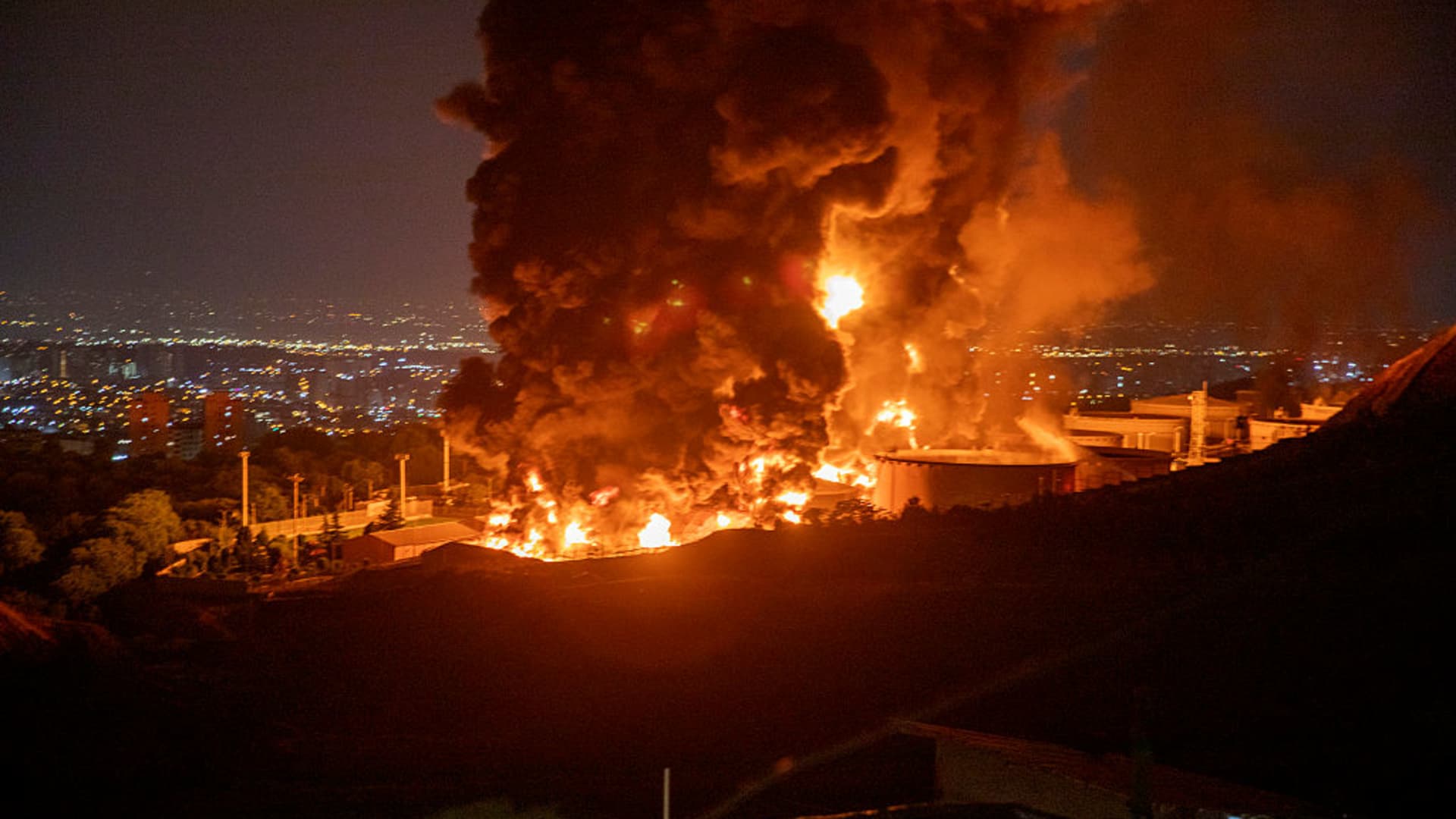
Further amplifying market anxiety, sources close to The Jerusalem Post also reported that Israel targeted a major oil depot situated near the capital city of Tehran. This attack on an oil storage facility, coupled with the strikes on gas processing plants, paints a grim picture of direct engagement with Iran’s energy infrastructure, a departure from previous, more indirect confrontations.
However, the escalation was not one-sided. In retaliation, Iranian missiles reportedly inflicted damage upon a significant oil refinery located in Haifa, according to information from The Times of Israel. This tit-for-tat targeting of critical energy facilities in both nations signals a dangerous new phase in the ongoing geopolitical standoff, where energy assets are increasingly becoming primary targets rather than collateral damage.
This weekend’s events follow an already dramatic week in oil markets. Last Friday saw crude oil prices close more than 7% higher after Israel initiated a wave of airstrikes against Iran’s nuclear and ballistic missile programs, alongside strikes targeting senior military leadership. That single-day surge represented the largest daily move for crude oil since March 2022, a period marked by extreme volatility following Russia’s full-scale invasion of Ukraine. Cumulatively, U.S. crude oil experienced a robust 13% jump over the course of last week, showcasing the market’s growing apprehension even before this latest wave of direct attacks on energy infrastructure.
The conflict has now entered its third day, with little indication that either Israel or Iran is prepared to de-escalate. Both nations have engaged in an exchange of missile barrages throughout the weekend, underscoring the intensity and direct nature of the confrontation. For energy investors, perhaps the most alarming development came on Saturday, when a senior Iranian commander openly stated that Iran is considering the closure of the Strait of Hormuz. This vital waterway is a chokepoint through which approximately one-fifth of the world’s total petroleum consumption, and a substantial portion of global liquefied natural gas (LNG) trade, passes daily.
The prospect of a closure, or even significant disruption, in the Strait of Hormuz would have catastrophic implications for global energy supplies and prices, far beyond the immediate gains observed this weekend. Such a move would effectively cripple a significant segment of international oil and gas transit, triggering an unprecedented supply shock. Investors are now closely monitoring every statement and action, understanding that the implications for crude oil, natural gas, and broader energy markets are profound. The risk premium embedded in current oil prices is likely to persist, and potentially expand, as long as this dangerous escalation continues to unfold.
As the situation remains highly fluid, market participants must brace for continued volatility. The direct targeting of energy infrastructure, coupled with threats to vital shipping lanes, has fundamentally altered the risk profile for oil and gas investing in the region. The coming days and weeks will be critical in determining whether this conflict can be contained, or if it will indeed expand into a full-blown regional crisis with far-reaching consequences for global energy security and the world economy.