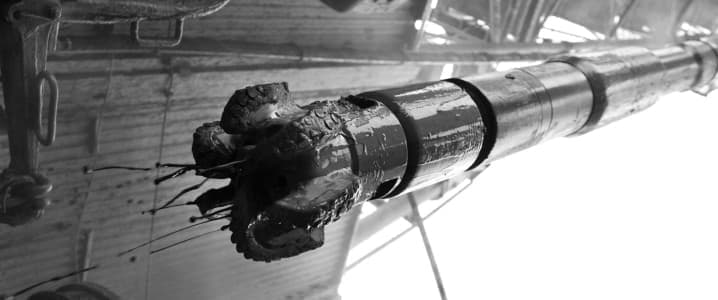
In a global energy landscape defined by volatility and geopolitical shifts, domestic hydrocarbon discoveries, no matter their initial scale, carry disproportionate strategic weight. Pakistan’s state-owned Oil & Gas Development Company Limited (OGDCL) has recently announced a new oil and gas reservoir at its Faakir-1 wildcat well in the onshore Sindh province. This discovery, while not a mega-find by international standards, is a crucial victory for a nation grappling with a deepening energy crisis and offers a vital lifeline in its quest for energy independence. For investors observing emerging markets and the long-term energy transition, Faakir-1 presents a nuanced signal about the resilience of conventional exploration in regions with high domestic demand and significant untapped potential.
Pakistan’s Urgent Energy Imperative and the Faakir-1 Catalyst
Pakistan faces an acute energy supply-demand imbalance, exacerbated by declining indigenous gas production, soaring summer temperatures, and the escalating costs of imported Liquefied Natural Gas (LNG). This situation places immense pressure on the national power grid and strains critical foreign exchange reserves. Against this backdrop, the Faakir-1 discovery by OGDCL is more than just an operational success; it’s a strategic breakthrough. Drilled to a depth of 4,185 meters, the well tested at 6.4 million cubic feet per day of gas and 55 barrels per day of condensate from the Lower Goru formation. While these volumes are modest globally, they represent a significant step towards alleviating domestic energy woes and reducing reliance on costly imports. OGDCL, holding a 95% operating interest in the Bitrisim block, hails this as validation of the region’s hydrocarbon potential, signaling that homegrown expertise can unlock critical resources in an environment often deemed high-risk by international players.
Navigating Volatile Markets: Strategic Value of Domestic Supply
The global energy market continues its tumultuous ride, directly impacting import-dependent nations like Pakistan. As of today, Brent crude trades at $90.38 per barrel, marking a significant 9.07% decline within a single trading session, with its range fluctuating between $86.08 and $98.97. This sharp downturn follows a broader trend, with Brent shedding $20.91, or 18.5%, from its price of $112.78 just two weeks ago on March 30. Similarly, WTI crude has seen a substantial drop, currently at $82.59, down 9.41% today. This extreme volatility, coupled with a 5.18% drop in gasoline prices to $2.93, underscores the precarious position of countries reliant on international markets for their energy needs. For Pakistan, every barrel of oil and every cubic foot of gas produced domestically directly mitigates exposure to these price swings and the associated drain on foreign reserves. The Faakir-1 find, however small in the global context, becomes an invaluable asset in a market characterized by such unpredictable shifts, offering a degree of insulation from the broader market’s downward pressures and upward spikes.
Investor Sentiment and the Search for Growth Amidst Uncertainty
Our proprietary reader intent data reveals that investors are keenly focused on long-term market dynamics and stable investment opportunities in the current environment. A prominent question echoing among our readership is, “what do you predict the price of oil per barrel will be by end of 2026?” This highlights a pervasive demand for clarity on future price trajectories amidst present-day volatility. While the Faakir-1 discovery itself won’t alter global oil prices, its significance lies in addressing a critical aspect of energy investment: security of supply and reduction of sovereign risk for the host nation. Pakistan’s theoretical gas reserves, estimated at 235 trillion cubic feet, have historically struggled to attract foreign direct investment due to security concerns, high development costs, and inadequate infrastructure. OGDCL’s in-house success with Faakir-1 could, however, serve as a proof point, encouraging further domestic exploration and potentially making the onshore sector more palatable for local and regional investors. This aligns with a broader investor interest in understanding energy supply fundamentals, as evidenced by frequent inquiries regarding “OPEC+ current production quotas,” where any non-OPEC+ domestic supply growth is a net positive for importing nations.
The Road Ahead: Upcoming Events and Pakistan’s Long-Term Vision
The coming weeks are packed with events that will shape the global energy narrative, and by extension, Pakistan’s energy outlook. Investors will closely watch the OPEC+ Joint Ministerial Monitoring Committee (JMMC) meeting on April 18 and the subsequent full Ministerial meeting on April 19 for any indications of supply adjustments that could further impact global prices. Following these, the API Weekly Crude Inventory reports on April 21 and 28, along with the EIA Weekly Petroleum Status Reports on April 22 and 29, will provide crucial insights into U.S. supply-demand balances. The Baker Hughes Rig Count on April 24 and May 1 will offer leading indicators for future production trends. These global events directly influence the cost of energy imports for Pakistan. Against this backdrop, the Faakir-1 discovery, while immediate in its impact, also serves as a critical stepping stone towards a much larger ambition. Pakistan recently inked a strategic deal with Turkey for joint offshore exploration in the Makran and Indus basins. Initial surveys suggest these areas could hold what some believe to be the world’s fourth-largest offshore oil and gas cache. If confirmed, such a monumental find would fundamentally reshape Pakistan’s economic future, drastically reducing its import dependency and offering a transformative growth opportunity for its 240 million citizens. The Faakir-1 success, therefore, not only provides immediate relief but also injects renewed confidence into the nation’s capacity to unlock its vast, untapped hydrocarbon potential, laying groundwork for future, larger-scale projects that could attract significant investment over the long term.


